What Is SaaS Purchasing Hygiene?


Updated on April 16, 2026 with new dataOn-premises software typically goes through a formal IT procurement process, but SaaS is a whole different beast.One of the many upsides of SaaS is that it’s easy to obtain. So if a business unit (or even an individual employee) recognizes a need for a SaaS solution, they’ll simply purchase it themselves — without the involvement of IT.So it’s probably not surprising that IT’s share of SaaS spending and management in an organization continues to shrink. Today, according to Zylo's 2026 SaaS Management Index, IT controls 15% of SaaS spend and 13% of applications.
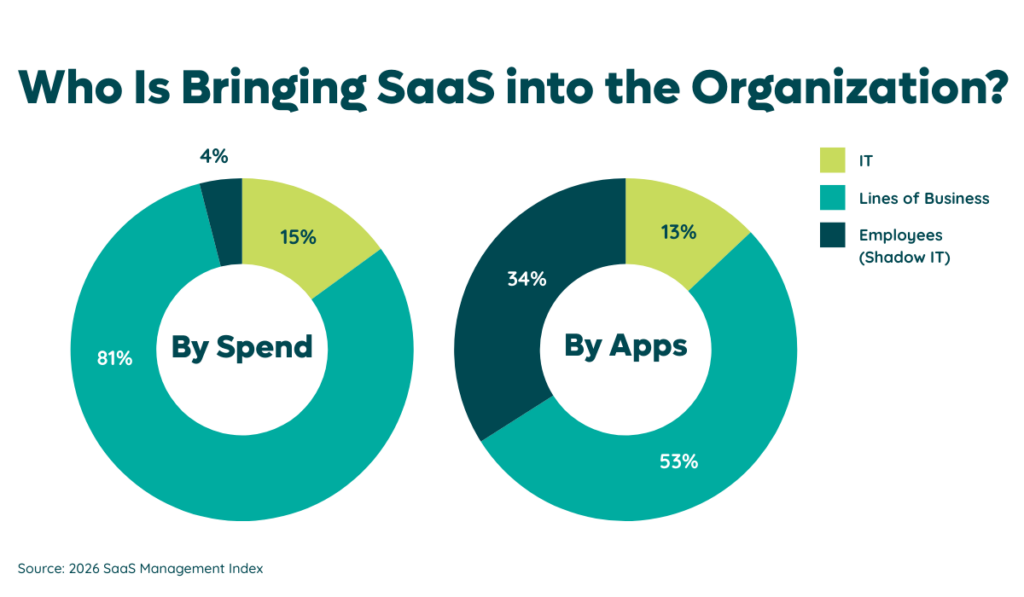
In the meantime, business units’ share of spending continues to grow. Today, line of business (LOB) owners control 81% of SaaS spend.This shift in spending presents some big challenges for organizations looking to reduce the costs and risk of unmanaged SaaS growth. Improving your SaaS purchasing hygiene has never been more important.Read on to learn what purchasing hygiene is, what it means for your organization, and what it takes to improve yours.
What Is SaaS Purchasing Hygiene?
Of course, personal hygiene practices ensure cleanliness, which helps us prevent avoidable health problems. Similarly, purchasing hygiene is a set of practices that ensure a “clean” method of software intake, reducing the unnecessary costs and risk associated with uncontrolled SaaS growth.Purchasing hygiene includes a number of different components, and each is built on a foundation of discovery.Before organizations can tackle any other purchasing hygiene practices, they must first discover all SaaS applications in use. This includes everything from enterprise software obtained through a formal procurement process to rogue applications purchased via employees’ credit cards. Why is this the first step? Because it’s virtually impossible to manage and “keep clean” what you don’t even know exists.Once you’ve gained full visibility into all SaaS at your organization, you’re well-positioned to take on other purchasing hygiene best practices, including cutting down on Shadow IT (in other words, any software not purchase through IT), rationalizing your SaaS portfolio, and consistently evaluating what SaaS tools your organization needs — and making those tools available to those who need them.
Clear Governance Is Essential to Purchasing Hygiene
IT controls a rapidly decreasing amount of SaaS spending and application quantity. However, they still have an important role to play in purchasing hygiene — as well as avoiding unnecessary costs and risk.IT leaders must be responsible for the overall SaaS governance strategy, which helps protect the organization from unnecessary spend and risk. But business units must be given the flexibility to acquire the SaaS tools they need — within the established governance framework.IT must collaborate with business units to develop ground rules for acquiring SaaS. This includes a process for bringing new applications into the organization — and ensuring there are systems in place to onboard and manage those apps. Additionally, IT must be in continuous communication with business unit owners to ensure everyone is on the same page — and all teams understand and follow the proper SaaS purchasing processes and procedures.[zylo_cta id="16363"]
The Consequences of Poor Hygiene — and What to Do About It
SaaS applications purchased by business units and individual employees typically aren’t vetted for security and compliance. And if something goes wrong, the consequences can be costly. According to IBM's Cost of a Data Breach Report, the average total cost of a data breach in the U.S. is $4.44M.What’s more, when SaaS is purchased throughout the organization, duplicate subscriptions and redundant apps are the norm. It’s common for there to be multiple applications in use at an organization that fulfill similar functions. For example, there might be a dozen or more training applications used by different teams throughout the organization.All of those unnecessary costs add up.And the problem is only getting bigger. Every 30 days, the average organization will see 9 new SaaS applications enter its environment, per Zylo's 2026 SaaS Management Index.. That means SaaS portfolios are growing unmanaged — and quickly. In fact, if left unmanaged, the addition of those applications add up to 34% portfolio growth in one year.
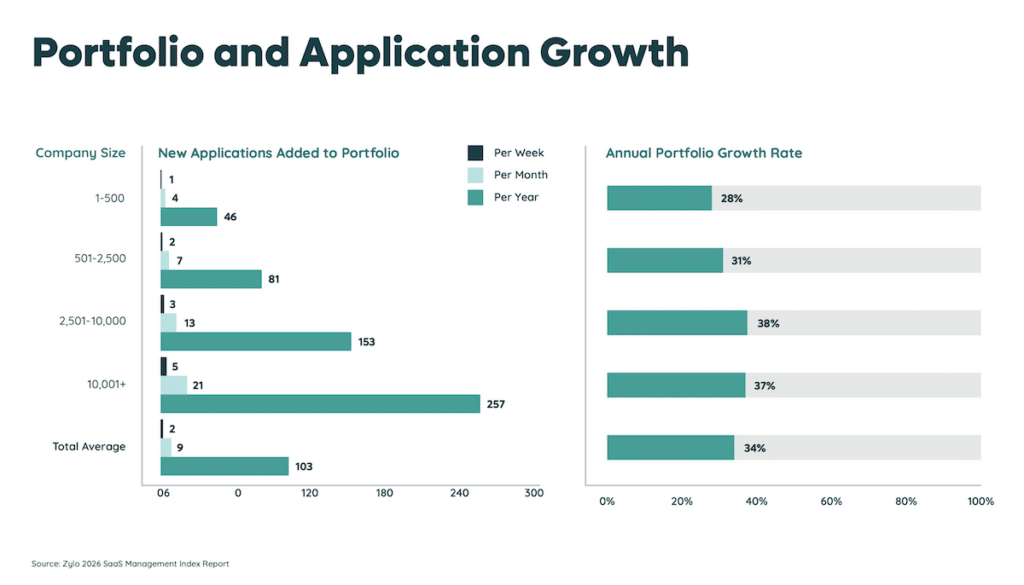
The good news is, good purchasing hygiene can help organizations take control of shadow IT and unmanaged SaaS — and the unnecessary costs and risks associated with these issues.Discovery and rationalization are essential. You’ve got to understand what SaaS applications you currently have and why you have them. The right governance is also key. IT must define ownership and process for bringing new applications into the organization — and work collaboratively throughout the organization to ensure these processes are understood and widely adopted.Ready to improve your purchasing hygiene? Learn how here.