3 AI Risks Hidden in Plain Sight


Updated on March 19, 2026 with new dataAI is changing our world as rapidly as social media or even the internet did, and integrating AI into your business can be a thrilling prospect. Automating simple tasks and streamlining employee experiences? Yes, please.But using AI for business is not without its risks, and you can’t let the excitement of a shiny new toy throw you off your game. AI is a tool that’s often a component of a SaaS application. If you’ve been around for any amount of time, you know SaaS has plenty of risks related that you have to work to mitigate.
3 Key AI Risks for SaaS Management
Depending on your line of work, AI presents various risks – from inaccuracies to plagiarism and more. Today, we’re taking a look at it from a software and SaaS management perspective. Let’s break down the biggest business risks —and how those they may harm, or already be harming your organization. You’ll notice many of these risks are similar or identical to more general SaaS risks, but they can be even more sneaky because AI is so new and so unpredictable.
Risk #1: Security Threats
Like SaaS, unvetted AI—also called shadow AI—can be a huge concern when it comes to security and data protection. There are many questions to keep track of:
- Are your SaaS vendors using third-party AI services to power their products’ capabilities?
- If they are, which ones are they using?
- Is your data being transferred to them (which is almost always a yes)?
- If so, where is it going and how is it getting there?
- Is it encrypted or unsecured, held by that party forever, or sold off again?
- Does it comply with the regulations your company complies with?
If reading all those questions makes you sweat a little, good. Your goal should be to know these risks so that you can face them. Understanding the security risk posed by AI and SaaS programs is crucial to buckling down and mitigating these threats. The potential harms of these risks include the loss or compromise of customer, company, and employee data, as well as damage to your company’s reputation and even fines for noncompliance. These can be dangerous; so how do you stop them?Handling These ThreatsThe first step to mitigating all the risks posed by AI in your business is to apply the same data security measures to AI that you would to any other SaaS application. This means having your IT department vet all AI programs that enter your business. They should be looking top to bottom at each program to check its tools and features and determine what data it accesses and what it does with said data.If you want in-depth guides and advice on how to handle AI and SaaS security risks, we wrote an entire article on how to go about a thorough security review. We also wrote about the security measures you should check your SaaS/AI vendors on, so be sure to check out both of those articles if security threats are your number one concern.
Risk #2: Unexpected Costs
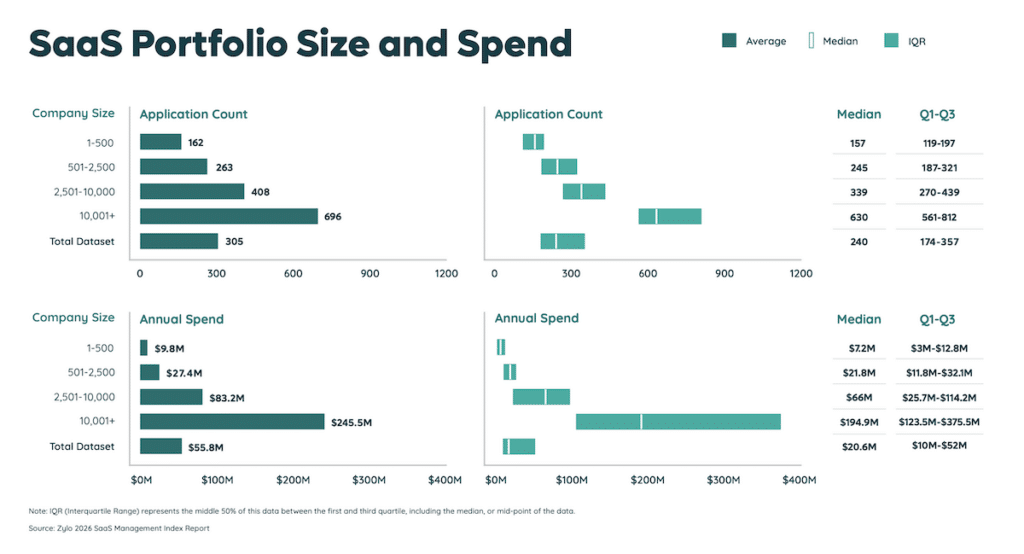
The second risk of unregulated AI in your business is unexpected costs. If you’ve dealt with SaaS sprawl issues, this should immediately ring some bells. Just like with SaaS applications, a lack of oversight adding AI programs and features can lead to unexpected costs. And they can add up quickly.Your goal is to reach out to your SaaS vendors and learn a few key things from them. Is there a platform fee that you will need to pay? Is it a consumption model where you could randomly be spending way more than what you budgeted? Is the AI tied to another feature that isn’t nearly as adopted as the app itself?If you don’t believe that these minor additions can add up, you better start doing so. Companies already spend exorbitant amounts of money on SaaS programs—$55M, on average, according to Zylo's 2026 SaaS Management Index. And these unexpected AI costs can take a significant portion of that budget. Besides, SaaS spending can already be hard to manage and budget accurately, so you need to be prepared as you’re integrating AI programs into your business.
Finally, you need to consider the additional costs associated with adopting or purchasing AI programs. Just because they’re new and shiny doesn’t mean they’re any different than other SaaS tools in terms of procurement and acquisition. Have your teams run their normal procurement vetting processes to ensure you’re making a sound and data-driven decision.
Risk #3: Shadow IT
Shadow IT is a problem rife within SaaS. It’s a simple but devastating phenomenon: unknown software in your organization. These unknown programs mean unknown risks and unknown costs—essentially causing the other two problems we discussed.The root cause of shadow IT is employees procuring tools without IT and Procurement’s knowledge beforehand. In fact, 3.4% of employees expenses SaaS. Will this be the case for AI? Not necessarily.AI is just the new normal. However, as an IT or Procurement professional, you should be putting controls in place to understand it to ensure you are protecting your organization from unknown spend and risk, similar to shadow IT.You need to understand what’s going on. What tools are being used by who and why? What data is being shared within—or without—the company? Are there financial impacts and risks in your company’s SaaS portfolio?These answers are important because they allow you to clear shadow IT from your company and stop all its watershed risks. In addition, it helps you to use your company’s SaaS portfolio to its fullest potential. AI is just another part of this process. If you stay vigilant and do your due diligence, you can mitigate or remove those risks.
Understanding the Impact of AI Risks
It’s clear that AI poses potentially significant risks to your business. You shouldn’t shy away from using it entirely – it’s practically impossible to do so, regardless. Being conscientious of these risks can help you integrate AI into your business in a way that is healthy and safe. The key to embracing AI is setting proper controls and policies around its use, and integrating these rules into existing governance policies. My advice? Build a comprehensive strategy that includes an assessment of apps you are buying and renewing – plus an ongoing discovery effort to keep your company safe.For more thoughts on AI and SaaS, be sure to follow me on LinkedIn. And be sure to join in the conversation!