Best AI Cost Management Tools: A 2026 Buyer's Guide


Search for the best AI cost management tools, and the top results you’ll see are for cloud cost management tools, not software built specifically for AI costs. Those results also lump together tools built for different jobs: a cloud-infrastructure tracker, an API-usage monitor, and a SaaS discovery tool get listed side by side as if you're choosing between them, when each one solves a different problem.
The right "best" depends on which kind of AI cost you're trying to manage. Infrastructure, API tokens, and AI baked into your SaaS are three separate cost surfaces, and the tool that wins for one is often blind to the other two.
The stakes are climbing fast for AI-native applications like ChatGPT, Claude, and Cursor. As of September 23, 2026, Zylo's data shows AI-native software spend surged 334% year over year, and 507% in organizations with more than 10,000 employees. A tool built for the wrong category can't see this spend, so a cost that's doubling or tripling keeps climbing on your bill, unmanaged and unbudgeted.
This guide sorts the AI cost management software market into three categories, shows you how to tell which one fits your spend, and names the leading tools in each, scored on the criteria that matter to IT, procurement, and FinOps buyers.
Why the Best AI Cost Management Tool Depends on Which AI Costs You're Managing
AI cost splits into three buckets: AI infrastructure costs, AI consumption and API costs, and AI software costs. Each one covers different costs and is owned by a different team, which is exactly why no single tool covers them all. Figure out where most of your spend sits before you shortlist anything:
Category 1: AI Infrastructure Costs
AI infrastructure cost is the money you spend running your own models: GPUs, cloud compute, Kubernetes, and model training. This is the most mature category, and it's where classic cloud FinOps (financial operations, the practice of tracking and optimizing cloud spend) tools live. If your engineering or machine learning team operates its own AI workloads on AWS, Azure, or Google Cloud, this is your surface.
Category 2: AI Consumption and API Costs
AI consumption cost is token spend on model APIs like OpenAI, Anthropic, Google Vertex AI, and AWS Bedrock. A token is the unit these providers bill by, so costs scale with usage rather than seats. Engineering teams shipping AI features inside their own products care most about this category, and the tools here are developer-first observability and gateway platforms.
Category 3: AI Software and SaaS Costs
AI software cost covers two things on the SaaS side. First, the AI baked into tools you already own: Microsoft Copilot, Salesforce Einstein, Atlassian Intelligence, and Adobe's AI add-ons. Second, standalone AI-native tools like ChatGPT, Claude, and Cursor, which are AI in their own right rather than a feature of existing SaaS.
The latter is where most enterprise AI spend sits. Spending on SaaS applications with AI functionality jumped 143% year over year, and 447% in organizations with 2,501 to 10,000 employees. The standalone AI-native tools are climbing even faster, so both halves of this surface are reshaping the bill.
Here's how the three categories compare at a glance:
How These Tools Were Evaluated
Six criteria anchor every AI cost management tool ranking below, and they double as a buyer's checklist you can take into any demo:
- Discovery breadth: does the tool surface AI costs you don't know about, pulling from financial feeds, single sign-on (SSO), expense reports, and API logs?
- Token-level visibility: for consumption spend, can it track cost per model, per team, and per feature?
- Integration depth: does it connect to finance systems, procurement, ERP, expense management, and identity providers?
- Vendor consolidation insight: does it flag duplicate AI tools, like three overlapping assistants or redundant categories?
- Stakeholder fit: is it built for engineering, for procurement and finance, or for both?
- Renewal and contract intelligence: does it surface AI-specific contract risk like mandatory bundling, consumption commitments, and opt-out rights?
The visibility gap here is substantial: 78% of IT leaders reported unexpected charges tied to consumption-based or AI pricing in the past 12 months. Score a tool well on discovery and token-level tracking, and you turn those surprises into forecasts.
Best AI Cost Management Tools for Infrastructure FinOps
The most established AI cost visibility tools grew out of cloud FinOps, and several now attribute GPU and cloud-billed AI spend well. Five tools stand out for teams running their own AI workloads, ranked by how well they fit that buyer:
- Cloudzero
- IBM Apptio (Cloudability)
- Mavvrik
- nOps
- Vantage
1. CloudZero
CloudZero allocates cloud and AI spend down to unit economics like cost per customer, feature, or model, and reviewers cite per-token and per-model views for Anthropic and OpenAI usage billed through the cloud.
- Best for: Engineering and FinOps teams that want per-model, per-feature cost visibility across cloud and AI infrastructure.
- Key strengths:
- Per-token and per-model cost views alongside Kubernetes and GPU spend
- Ingests Snowflake and Databricks costs through its AnyCost API
- SOC 1 Type 2 and SOC 2, plus FinOps Foundation platform certification
- Not built for: Teams that need to catch AI spend arriving through SaaS invoices or expense reports. CloudZero reads cloud and billing feeds, not the software portfolio.
- Ratings: G2: 4.6/5 across 64 reviews as of September 2026.
- Verdict: A strong pick when most of your AI cost is cloud-billed, and you want it tied to unit economics.
2. IBM Apptio (Cloudability)
- Best for: Large, mature enterprises with a dedicated FinOps team that want cloud, Kubernetes, and AI cost in one governed platform.
- Apptio's Cloudability is one of the longest-running cloud FinOps platforms, and since IBM acquired Apptio in 2023, it has been converging with Turbonomic and Kubecost into the IBM FinOps Suite. It applies FinOps to GenAI cloud spend across the build, train, and inference phases.
- Key strengths:
- Consolidated multi-cloud visibility, with business mapping that allocates spend to teams, products, and business units
- FinOps-for-AI coverage of GenAI cloud spend across build, train, and inference
- Enterprise-grade governance, and a Leader in the 2025 Gartner Magic Quadrant for Cloud Financial Management Tools
- Not built for: Smaller teams or token-level API tracking. Reviewers cite a steep learning curve and heavy onboarding, and its AI cost coverage is thinner than newer tools, so heavy LLM workloads usually pair it with a dedicated AI cost platform.
- Ratings: Gartner Peer Insights: reviewed (IBM Cloudability); G2: 4.2/5 for IBM Cloudability, as of September 2026.
- Verdict: The enterprise incumbent, best when AI is one line in a broader cloud FinOps mandate rather than the main event.
3. Mavvrik
Mavvrik (formerly DigitalEx) covers GPU clusters, LLM API tokens, agent and session attribution, data platforms, and some SaaS tools, sold to finance, FinOps, and engineering teams.
- Best for: Teams that want the widest AI cost surface in one view, from GPUs to tokens to agent workflows.
- Key strengths:
- Token-level tracking across OpenAI, Anthropic, Google, and Meta models
- Agent- and session-level attribution through an OpenTelemetry SDK
- Flat-rate pricing rather than a percentage of your spend
- Not built for: Buyers who need vendor maturity signals. Mavvrik is seed-stage with no third-party rating yet, so weigh capability against company stability.
- Ratings: No G2 or Capterra listing captured as of September 2026.
- Verdict: The deepest AI-native feature set in the category, best for teams comfortable adopting a newer vendor.
4. nOps
nOps automates reserved-instance and savings-plan purchasing and claims full cost allocation across cloud, Kubernetes, and AI spend, with the strongest review signal in this category.
- Best for: AWS-first teams that want commitment automation alongside cost visibility.
- Key strengths:
- Highest peer rating among infrastructure FinOps tools
- Commitment automation that can lower AWS costs directly
- Integrations with Slack, Jira, Datadog, Snowflake, and Terraform
- Not built for: API token tracking or SaaS AI. Its GenAI story is cloud-billed services like Bedrock and SageMaker, and commitment management uses share-of-savings pricing worth checking closely.
- Ratings: G2: 4.8/5 across 141 reviews as of September 2026.
- Verdict: Best when your AI runs on AWS and commitment optimization is the goal.
5. Vantage
Vantage tracks costs across AWS, Azure, Google Cloud, Kubernetes, Snowflake, Databricks, and AI services, and publishes its pricing openly, which is rare in this category.
- Best for: Engineering teams that want self-serve, multi-cloud cost visibility with named AI service coverage.
- Key strengths:
- Broad native provider coverage, including AI services and OpenAI
- Public, fixed-rate pricing tiered by monitored spend
- SOC 2 Type 2 since 2023 and SOC 1 Type 2 since 2025, useful if you treat the tool as a financial system of record
- Not built for: SaaS-embedded AI or expensed AI discovery. Vantage sees cloud and data-platform bills, not Copilot or ChatGPT charges.
- Ratings: G2: 4.7/5 across 70 reviews as of September 2026.
- Verdict: The most transparent general-purpose option for cloud-billed AI, with pricing you can evaluate before a sales call.
Best AI Cost Management Tools for API and Token Cost Control
The best AI cost optimization tools for token spend are developer-first, priced by trace or request, and usually free to start. Clarifai appears here, too, but it's a model-serving platform rather than a cost tool, so its cost story only applies to models you run through it.
Five entries lead here; three commercial platforms plus the two native provider consoles:
- Anthropic native dashboard
- Helicone
- LangSmith
- OpenAI native dashboard
- Portkey (Palo Alto Networks)
1. Anthropic Native Dashboard
The Anthropic Console reports usage and cost by model and workspace for Claude API consumption. Like OpenAI's, it's free and exact for its own bill, and it's the baseline a paid observability tool has to improve on.
- Best for: Teams that want a free, accurate view of their Anthropic (Claude) API spend.
- Not built for: Multi-provider or SaaS-embedded AI. The Console sees only Anthropic usage, so any spend on other providers or inside SaaS stays invisible.
- Ratings: Not applicable (first-party console).
- Verdict: A solid free option when Claude is your primary model, best paired with a cross-provider tool as you scale.
2. Helicone
Helicone is an open-source observability platform and gateway. A one-line change to your base URL routes requests through its proxy and returns per-request cost, latency, and token metrics across 100-plus models.
- Best for: Teams that want token-level cost tracking live in an afternoon.
- Key strengths:
- Fast, one-line integration with a free tier of 10,000 requests per month
- Self-host or SDK-only options for teams with data-residency needs
- SOC 2 Type II, HIPAA, and GDPR coverage
- Not built for: Finance stakeholders who need chargeback and procurement workflows. Helicone is an engineering tool focused on request-level observability.
- Ratings: No G2 listing; roughly 5,800 GitHub stars as of 2026.
- Verdict: The easiest low-cost entry point for per-token visibility, ideal for lean teams.
3. LangSmith
LangSmith monitors inference cost per trace, including tool calls, and serves customers including Cisco, LinkedIn, and monday.com. Parent company LangChain reached a $1.25 billion valuation in October 2025.
- Best for: Teams building on LangChain that want cost and latency tracked per trace across agent workflows.
- Key strengths:
- Per-trace cost and latency across agent and tool-call workflows
- Framework-agnostic, with the deepest LangChain and LangGraph support
- SOC 2 Type II with transparent, published per-trace pricing
- Not built for: Anyone needing visibility beyond model APIs. LangSmith sees your traces, not GPU, SaaS, or expensed AI spend.
- Ratings: Gartner Peer Insights: reviewed as of September 2026.
- Verdict: The category's most established option, especially if you already build with LangChain.
4. OpenAI Native Dashboard
The OpenAI usage dashboard reports token consumption and cost inside the platform's own console, broken down by model and project. It's free and precise for OpenAI spend, and it sets the baseline any paid tool has to beat for that provider.
- Best for: Teams that need a free, accurate view of their OpenAI API and ChatGPT spend.
- Not built for: Any spend outside OpenAI. The dashboard sees only OpenAI usage, so it misses Anthropic, Vertex, Bedrock, and AI billed through SaaS invoices.
- Ratings: Not applicable (first-party console).
- Verdict: The right starting point if OpenAI is your only model provider, with a third-party tool needed once usage spreads.
5. Portkey (Palo Alto Networks)
Portkey unifies access to 250-plus models with routing, caching, guardrails, and metadata-tagged cost tracking. Palo Alto Networks completed its acquisition of Portkey in May 2026 and folded it into the Prisma AIRS security platform.
- Best for: Teams that want an AI gateway with routing, budgets, and per-request cost tracking across many models.
- Key strengths:
- Cost per request with metadata tags for per-user and per-team breakdowns
- Routing to cheaper providers plus semantic caching and budgets
- SOC 2 Type 2, ISO 27001, GDPR, and HIPAA at the enterprise tier
- Not built for: Buyers who need pricing certainty today. Packaging and roadmap now sit inside a security platform, so confirm current terms before committing.
- Ratings: G2: 19 reviews (star rating not published in captured data) as of September 2026.
- Verdict: The strongest gateway feature set in the category, with an ownership change worth a second look.
Best AI Cost Management Tools for SaaS-Side AI Spend
This is the underserved surface, and the market moved fastest here in 2026. These SaaS management platforms discover AI spend across the software portfolio, from AI baked into tools you already own to shadow AI—the tools employees buy and expense.
A few SaaS management platforms didn't make the cut. Some aren’t built around AI cost like the tools below, and Productiv shut down abruptly in August 2026.
Four tools lead for IT, procurement, and FinOps:
- 1Password SaaS Manager
- Flexera
- Vendr (Vertice)
- Zylo
1. 1Password SaaS Manager
1Password SaaS Manager (formerly Trelica) introduced AI Spend and Consumption Management in July 2026 (public preview, with general availability slated for fall), tracking token usage and spend for Anthropic, OpenAI, and Cursor by vendor, team, and model, with burn-rate alerts against prepaid budgets.
- Best for: Security-minded IT teams that want SaaS discovery with a new AI token-consumption view.
- Key strengths:
- New AI token-consumption tracking with budget and burn-rate alerts
- Shadow IT and shadow AI discovery through SSO, browser, and finance signals
- Named a Leader in the 2026 Gartner Magic Quadrant for SaaS Management Platforms
- Not built for: Deep finance chargeback. Its ERP and cost-allocation workflows are lighter than dedicated SaaS spend platforms, leaning on threshold alerts instead.
- Ratings: G2: 4.6/5 across roughly 1,700 reviews for 1Password overall as of September 2026.
- Verdict: The closest new competitor to a dedicated consumption tool, strongest for teams already invested in 1Password.
2. Flexera
Flexera acquired ProsperOps and Chaos Genius in January 2026 to add cloud commitment automation and Snowflake and Databricks optimization, making it a genuine crossover between infrastructure FinOps and SaaS management.
- Best for: Large enterprises that want IT asset management, cloud FinOps, and SaaS management under one roof.
- Key strengths:
- Spans cloud FinOps, data-platform optimization, and SaaS management in Flexera One
- Discount and savings automation through the ProsperOps acquisition
- Mature ITAM and finance integrations for enterprise governance
- Not built for: Smaller organizations. Reviewers point to a steep learning curve and heavy onboarding, and it's priced and scoped for the enterprise.
- Ratings: No dedicated G2 rating captured for Flexera One FinOps as of September 2026.
- Verdict: Best for enterprises that want one heavyweight platform across every cost surface, staffing and budget permitting.
3. Vendr (Vertice)
Vendr built software pricing intelligence and negotiation services, and Vertice acquired it in June 2026, combining a dataset of more than $75 billion in indirect spend across 32,000 vendors.
- Best for: Procurement teams that want pricing benchmarks and negotiation help on AI SaaS contracts.
- Key strengths:
- Price benchmarking and renewal negotiation for AI SaaS contracts
- Intake-to-procure workflows across the buying cycle
- Large negotiated-contract dataset behind its benchmarks
- Not built for: Usage or token tracking. Vendr and Vertice manage the price of AI contracts, not the consumption underneath them, so pair it with a tool that watches usage.
- Ratings: No current G2 rating post-acquisition; Vendr held 4.6/5 across 111 reviews before the deal.
- Verdict: The right addition when contract and renewal intelligence is the gap, not consumption visibility.
4. Zylo
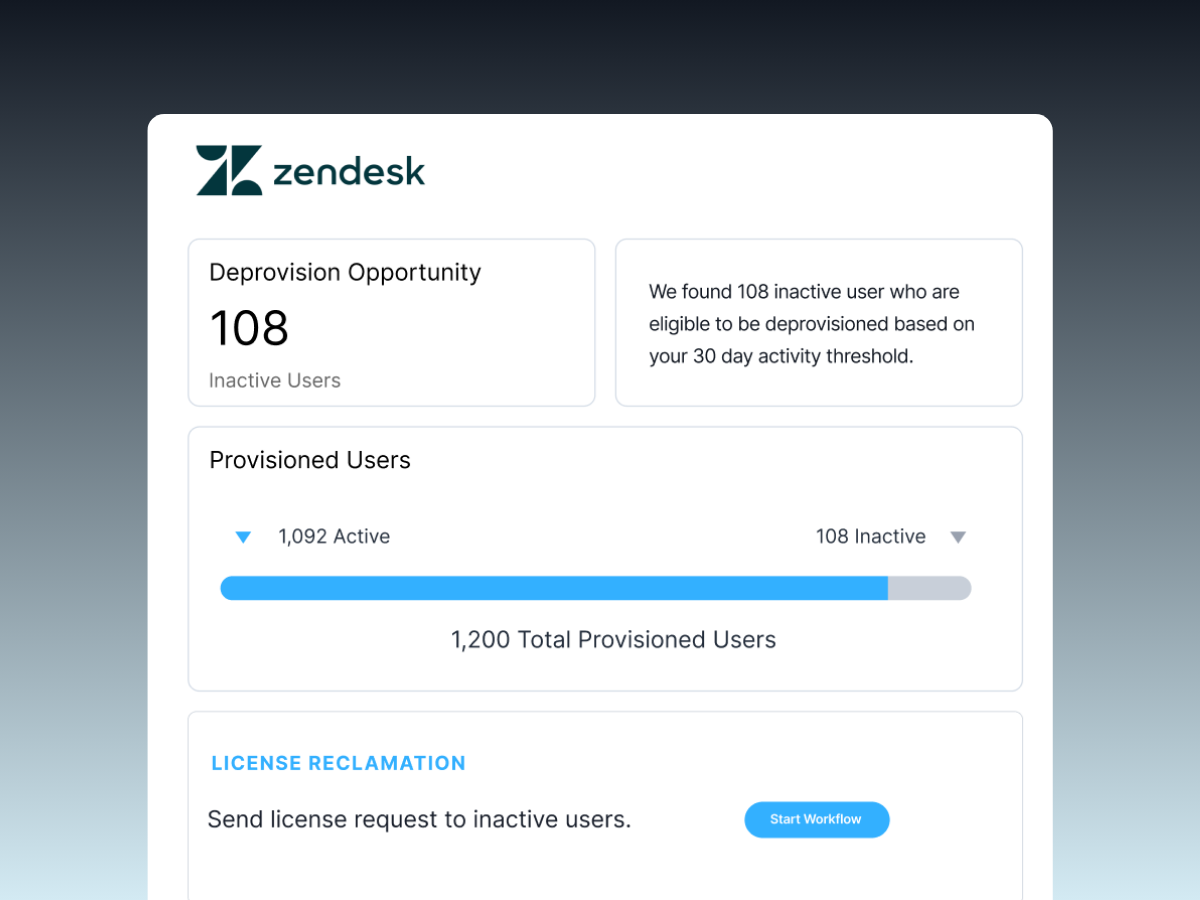
Zylo discovers software and AI purchases through accounts payable and expense feeds, then, since its Consumption Cost Management launch in April 2026, integrates directly with OpenAI, Anthropic, Databricks, Snowflake, and Google Vertex AI to monitor token and credit spend against commitments. Its discovery engine is trained on the industry's largest dataset, $100B+ in SaaS, cloud, and AI spend.
- Best for: IT, SAM, procurement, and FinOps teams that need one system of record for SaaS and AI consumption spend.
- Key strengths:
- Financial-based discovery of AI-native applications and SaaS embedded with AI—even shadow IT and shadow AI—based on $4T+ data processed.
- Direct API consumption cost tracking, attribution, and forecasting.
- Vendor consolidation insight that flags duplicate AI tools across the portfolio
- Built for the IT and finance stakeholders, with license reclamation and renewal and contract workflows.
- Not built for: Teams that only need GPU or Kubernetes optimization.
- Ratings: G2: 4.8/5 across 51 reviews; Gartner Peer Insights: reviewed as of September 2026.
- Verdict: The most complete option when your AI cost lives across SaaS invoices, expenses, and model APIs at once.
How to Choose Your AI Cost Management Tool
To determine the best AI cost management tool for you, start with the category that holds most of your AI spend. Then, layer in a second tool only if a real gap remains. Use this quick decision guide:
Most large enterprises land in that last row. When spend spans infrastructure, APIs, and SaaS, lead with the SaaS-side platform that covers the largest and least-visible cost surface, then add an infrastructure or API tool where engineering needs depth.
Where to Start
Use of artificial intelligence has ramped up significantly, bringing with it compounding costs. Among IT leaders surveyed for the 2026 SaaS Management Index, 61% had to cut projects or initiatives because of unplanned SaaS cost increases, AI pricing a growing driver.
To get started, introduce a 90-day phased rollout of AI cost management.
- First 30 days: identify where the majority of your AI sits: AI infrastructure, AI consumption, or AI software.
- 31-60 days: run discovery to surface what AI exists, especially expensed and AI-embedded SaaS.
- 61-90 days: Set up alerts to stay apprised of anomalies and changes in spending and assign ownership to manage costs.
For IT, procurement, and FinOps teams managing enterprise AI spend, Zylo's AI consumption cost management brings consumption costs into the same system of record as your SaaS. For broader visibility across the full software and AI portfolio, Zylo Clarity AI surfaces savings and prioritizes where to act next.
Frequently Asked Questions About AI Cost Management Tools
An AI cost management tool is software that discovers, tracks, and controls the money an organization spends on AI, whether that spend is cloud infrastructure, model API tokens, or AI features inside SaaS. The strongest tools tie usage to cost, attribute it to teams or projects, and alert you before spend passes a threshold, giving IT, procurement, and FinOps a single view instead of scattered invoices.
Cloud cost management tools track infrastructure spend like compute, storage, and Kubernetes, and many now report GPU and cloud-billed AI usage. AI cost management tools go further by covering model API tokens and the AI embedded in your SaaS, which never touches a cloud bill. Most tools ranking for "AI cost management" today are really cloud tools, which is why matching intent to category matters.
Your existing FinOps tool handles AI costs only if that cost is cloud-billed. Infrastructure FinOps platforms see GPUs, Kubernetes, and cloud-billed model services well, but they don't see token spend on external APIs or AI charged inside SaaS invoices and expense reports. If your AI spend spans those surfaces, you'll need a SaaS-side or API-focused tool alongside the FinOps platform you already run.
Pricing splits by category. Developer API tools publish list prices and start free, with Helicone free up to 10,000 requests a month and LangSmith's paid plan at $39 per seat. Infrastructure FinOps platforms are mostly custom-quoted, and their pricing models vary: Mavvrik advertises a flat rate, CloudZero charges on a tier that scales with your cloud spend, and nOps takes a share of the savings it finds. SaaS-side platforms like Zylo are custom-quoted and scoped to the size of your organization.
Yes, and for AI baked into SaaS, they're often the only tools that can. SaaS management platforms discover software through finance and identity feeds, so they catch expensed AI tools and AI add-ons that infrastructure tools miss. Zylo extends this further with direct OpenAI, Anthropic, and Vertex AI integrations, adding cost-level consumption tracking to portfolio discovery in one system of record.
Shadow AI cost tracking starts with discovery across financial, expense, and identity signals rather than cloud bills. Most unsanctioned AI enters on employee credit cards. That visibility matters now that ChatGPT is the single most expensed application by transaction count across Zylo's dataset. A platform built for shadow IT and AI discovery surfaces those purchases, assigns owners, and pulls the spend into your managed portfolio.