SaaS Offboarding Automation: What Zylo Actually Automates

Not every SaaS management platform automates offboarding the same way. Before you choose a tool, it’s important to understand the difference between what's truly automatic and what still requires a manual step.
What Is SaaS Offboarding Automation?
SaaS offboarding automation is a specific application of IT process automation, the broader practice of using software to execute repeatable IT tasks without human intervention at each step. It uses software to handle the license lifecycle tasks that otherwise fall on IT manually:
- Detecting unused or underused licenses
- Notifying users and managers when a threshold is hit
- Removing or reclaiming access when an employee leaves (what's often called termed license removal)
The catch is that "automation" means different things depending on which part of the offboarding process you're describing. Most platforms have a mix of automated detection, communication, and/or access removal.
This article covers exactly which parts of that process Zylo handles automatically, which still require a manual step, and how Zylo connects with identity providers like Okta and Microsoft Entra to complete enforcement.
The Three Layers of IT Process Automation: Detection, Workflow, and Enforcement
SaaS offboarding automation operates across three distinct layers: detection, workflow, and enforcement. Most platforms handle each one differently.
Detection Automation
Detection automation is the continuous, system-driven process of identifying unused, underused, or orphaned SaaS licenses, without requiring IT to run manual audits. Platforms with strong detection capabilities pull user and usage data from direct application integrations and SSO logs, using that data to surface patterns like seats that haven't been touched in 60 days or licenses provisioned to termed employees.
Workflow Automation
Workflow automation is the rules-based process of triggering user surveys, manager alerts, or license reclamation requests when usage data crosses a defined threshold. A SaaS license workflow runs on a schedule where IT sets the rules once.
Enforcement Automation
Enforcement automation is the system-executed removal or downgrade of a user's access to a SaaS application. This is the hardest layer to fully automate because it depends on how an application is provisioned. Apps behind SSO can be deprovisioned at the identity provider level, while apps accessed with individual logins often can't. Most platforms, including Zylo, rely on a connected identity provider to complete enforcement.
How Zylo Automates Detection and Workflow
Zylo's automation covers the first two layers end to end. Here's how the sequence works in practice.
1. Usage Detection Refreshes Daily
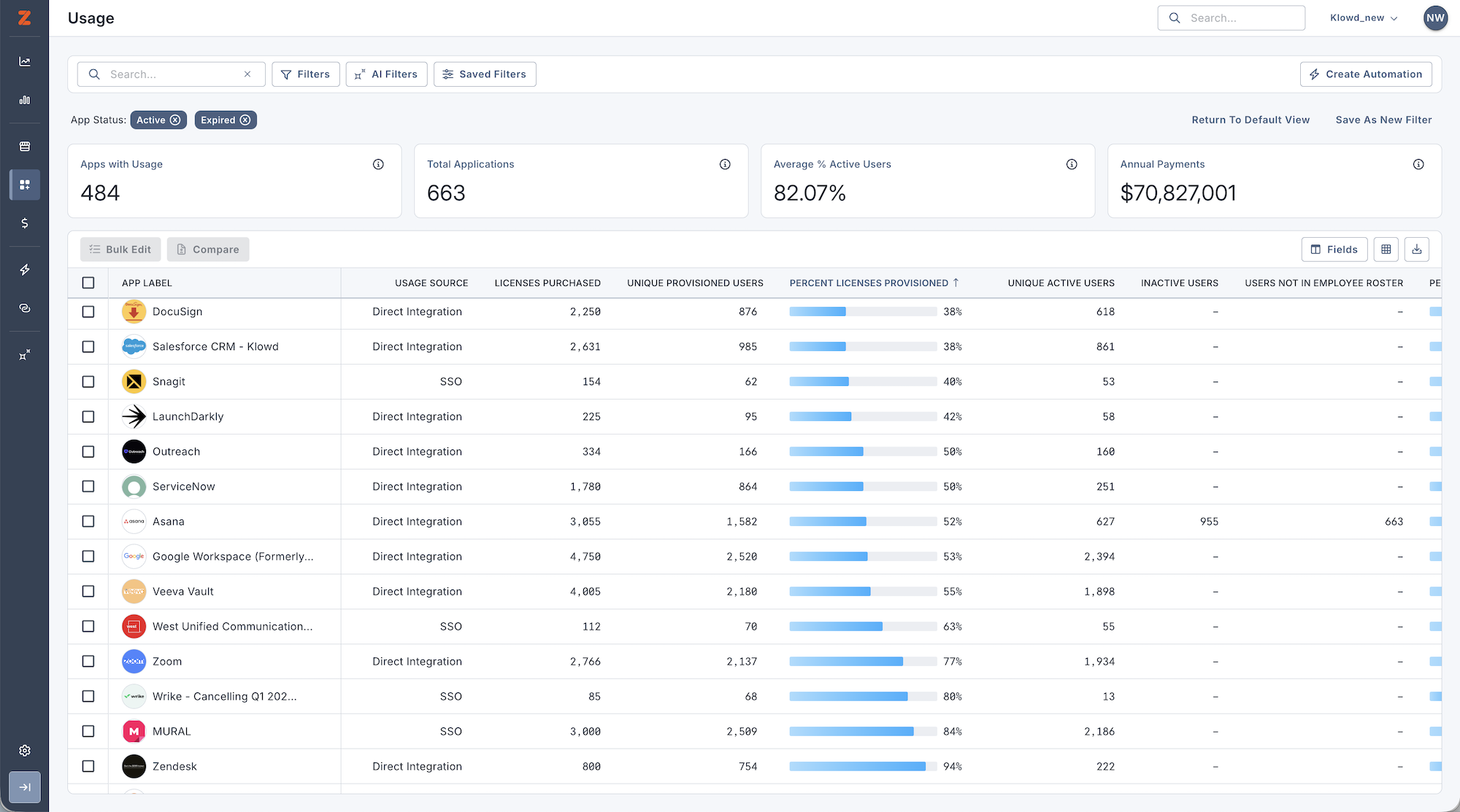
Zylo pulls license usage data through direct integrations and API connections, updating every 24 hours. When utilization drops below a threshold you configure (such as users with no activity in the last 30 days), Zylo flags those seats automatically.
For a closer look at how Zylo surfaces that data, see how Zylo surfaces usage data.
2. Alerts and Surveys Fire
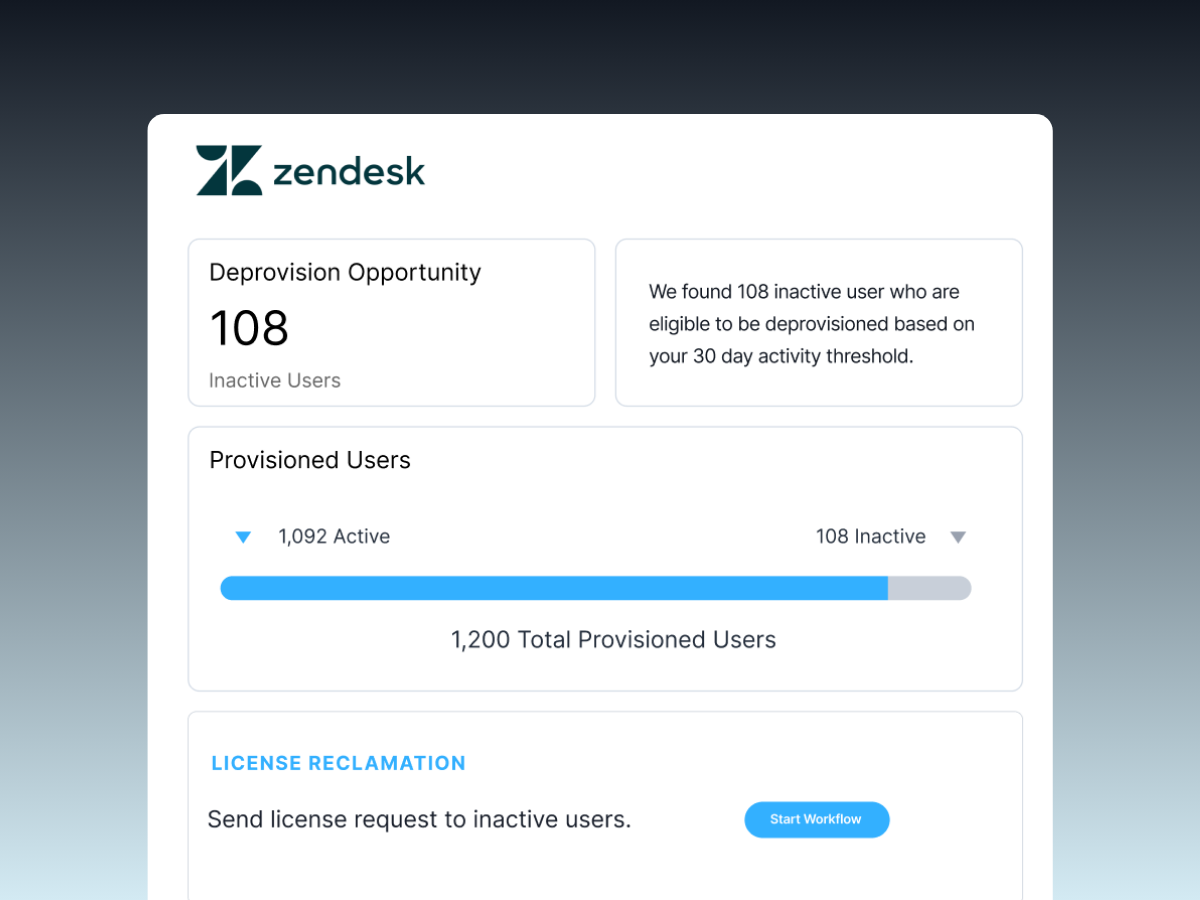
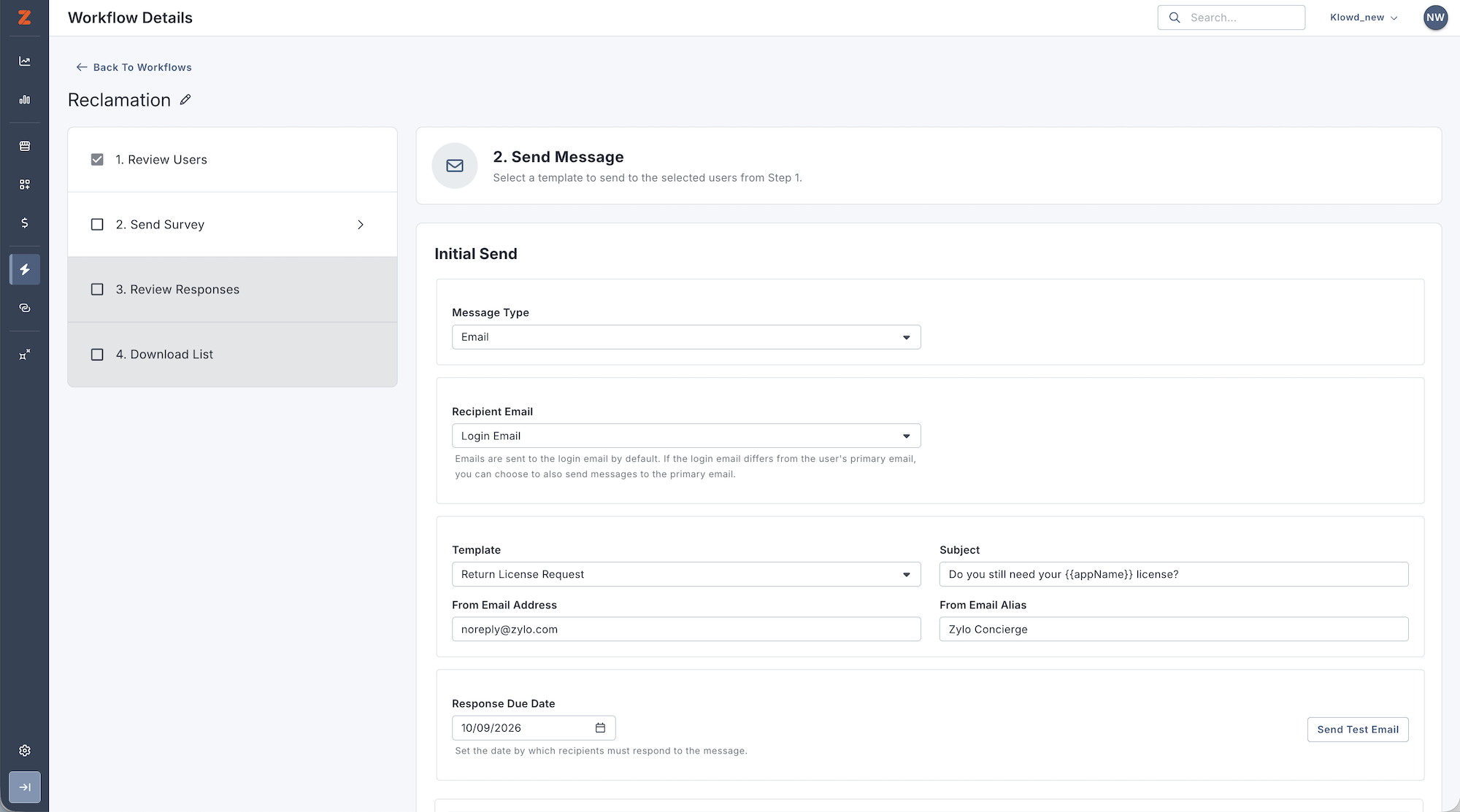
Once low or over-usage is detected, Zylo Workflows send automated alerts to IT, finance, or app owners to let them know a threshold has been hit. These automations are initially built by the user, where you customize the detection, triggers, and alerts. From there, it can push surveys directly to users asking whether they still need the license. This prevents IT from tracking down users one by one.
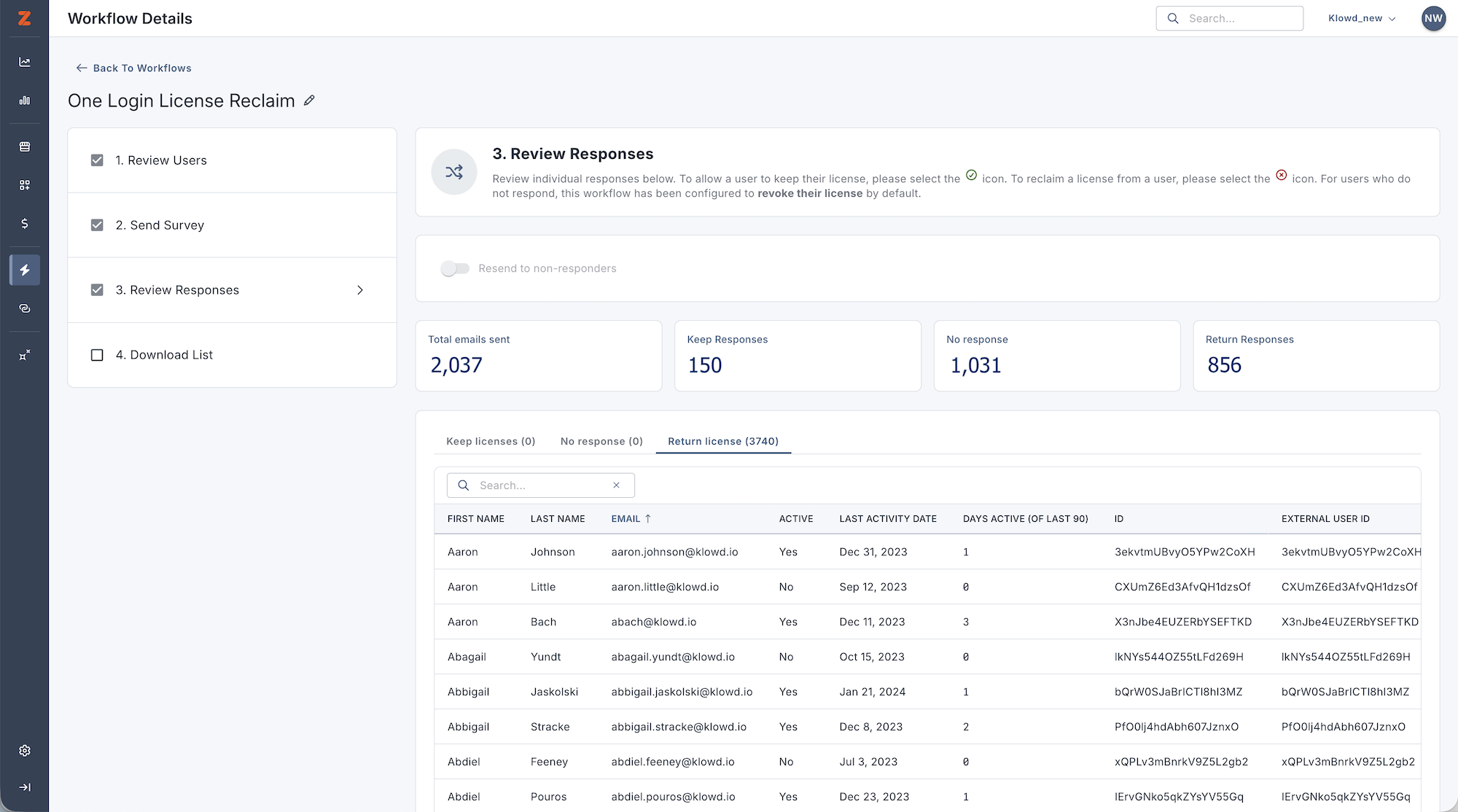
3. Reclaim or Downgrade Triggers
When a user responds that they no longer need a license (or doesn't respond within the window you set), Zylo automates the next step. IT can submit a Jira ticket for next steps from Zylo or start deprovisioning/downgrading via SSO.
For the full Workflows walkthrough, see Zylo Workflows best practices.
Modernizing Medicine used Zylo Workflows to reclaim 2,800 unused licenses and avoid $1.4M in costs. See how they did it.
How Enforcement Works: Native vs. Partner-Executed Automation
Enforcement happens through native automation where the platform executes the action or a connected tool.
Partner-executed automation means that Zylo supplies the data and triggers, and a connected tool carries out the enforcement step. Understanding which mode applies tells you exactly what Zylo does and what it hands off.
What Zylo Automates Natively
Zylo natively automates the detection and survey-to-reclaim loop of offboarding. It does not execute deprovisioning or downgrading natively but rather relies on partners like Okta and Microsoft Entra.
What Okta Actions and Microsoft Entra Automate as Connected Partners
For SSO-connected apps, Zylo hands the enforcement step to Okta Actions or Microsoft Entra. It supplies the usage data and triggers. Then, Okta or Entra executes deprovisioning at the identity layer, removing access across every application tied to that user's SSO session. This partner-executed model is available on Premium and Enterprise plans.
For implementation details, read the full Okta Actions announcement.
What's Still Manual Today
Applications not directly integrated with Zylo and not provisioned through Okta or Entra SSO can't be deprovisioned automatically. IT still needs to log in, remove the user, and document the action outside of Zylo.
Offboarding and license deprovisioning overlap but are not identical. Zylo is purpose-built for SaaS license lifecycle management, focused on license reclamation as a means to cost savings and avoidance. You can find license waste, reduce unnecessary SaaS spend, and give IT visibility into what the organization is paying for.
For the manual steps that belong alongside any automated workflow, see the full SaaS offboarding checklist.
How Zylo Compares to BetterCloud on Automation
Zylo isn't an end-to-end offboarding automation tool, but BetterCloud is. Here's how they compare across the three automation layers.
BetterCloud is purpose-built for SaaS management task automations, with offboarding as a core use case. It supports no-code workflow automation across a wide catalog of SaaS connectors and can execute provisioning and deprovisioning actions natively for supported apps. IT does not require a separate IAM partner for enforcement in many cases.
If license waste and cost reduction are your primary drivers, Zylo's detection and workflow layers are built for exactly that. If you need enforcement automation across a large catalog of non-SSO apps, BetterCloud's native SaaSOps model may be a closer fit, though it comes without Zylo's SaaS spend management and benchmarking depth.
The Bottom Line on Zylo’s SaaS Offboarding Automation
SaaS offboarding automation encapsulates user and usage detection, operational workflows, and enforcement through license deprovisioning. It solves an operational problem for IT and security, while license management, though similar, focuses primarily on waste removal and cost optimization.
As you evaluate different tools, consider whether you need end-to-end offboarding for every application or to reduce license waste and control spend. If you said the latter, Zylo is the better fit for your organization.
See how Zylo helps reduce license waste and where SaaS spend management fits into the full picture.
Frequently Asked Questions About SaaS Offboarding Automation
Zylo reduces license waste by combining daily usage detection with automated Workflows that survey low-usage users and trigger reclaim or downgrade requests. For clients on Premium or Enterprise plans, Zylo extends that into automated deprovisioning through Okta Actions or Microsoft Entra for SSO-connected applications. The result is a closed loop from identifying an unused seat to removing it, for apps within Zylo's integration scope.
SaaS management platforms detect unused licenses by pulling usage data through direct integrations, API, and SSO, then applying thresholds to flag low- or zero-activity seats. Reclamation typically starts when a workflow sends a survey to the assigned user to confirm whether they still need the license. If the user confirms they don't (or doesn't respond), the platform initiates a reclaim or triggers a connected identity provider to remove access.
Zylo Workflows automate the detection-to-survey-to-reclaim sequence within the Zylo platform. They identify low-usage licenses, notify users and managers, and initiate reclaim or downgrade requests. Okta Actions handles the enforcement step. Once Zylo identifies a license to deprovision, Okta executes the SSO-level access removal across every app tied to that user's identity.
No. Zylo automates offboarding for applications directly integrated with the platform. For deprovisioning, it relies on partner-execution via Okta or Microsoft Entra SSO (for Premium and Enterprise plans). Applications not behind SSO or don't have a direct Zylo integration still require manual deprovisioning. Zylo is designed for license lifecycle management and spend optimization, not as a dedicated offboarding tool for every app in your portfolio.
Zylo and BetterCloud automate detection and workflow, but differ on enforcement. Zylo enforcement runs through connected IAM partners (Okta, Entra), making it strongest for organizations using SSO. BetterCloud supports native enforcement for a broader app catalog without a separate IAM dependency, which suits teams where direct deprovisioning at scale is the requirement. Zylo's advantage is deeper spend visibility, benchmarking, and license optimization.