Best Spend Management Software (2026): Top 12 Tools Compared


The best spend management software gives you real-time visibility into every dollar your company spends on software, credit cards, travel, and vendors. It also automates the approvals and controls that keep that spending in check.
Without financial control, you risk cutting into profits and higher scrutiny from the board. While people are typically your top operating expense, software often comes in second. Zylo's 2026 SaaS Management Index puts median SaaS spend per organization at $20.6M a year, or roughly $11,530 per employee. And it only continues to grow each year.
A SaaS Management Platform (SMP) is one type of spend management software. In this article, you’ll find the top 12 platforms for more general spend management. Compare these tools based on ratings, ownership, pricing, and the capabilities that separate them, so you can match the right tool to how your team buys and pays.
What Is Spend Management Software?
Spend management software is a platform that helps you track, control, and optimize the money your company spends with outside vendors. That includes software subscriptions, corporate cards, employee expenses, and supplier invoices. Instead of scattering that spending across expense reports, card statements, and accounts payable, it pulls everything into one system. There, you set budgets, route approvals, and see where money goes in real time.
Consolidating spend into one system pays off, because most of it recurs and is easy to lose track of. Zylo's benchmark data shows that about 87% of software spend goes toward renewals rather than new purchases. A platform that monitors renewals and flags creeping costs protects most of your budget.
Key Capabilities of Spend Management Software
Strong spend management software combines five core jobs: visibility, control, payments, automation, and reporting. In practice, that means:
- Real-time dashboards that show committed and actual spend across every vendor and department
- Approval workflows and budget rules that stop out-of-policy purchases before they happen
- Corporate charge or credit cards, plus virtual cards with limits tied to teams, projects, or single transactions
- Accounts payable and invoice automation that captures, codes, and pays bills
- Accounting and ERP syncing that keeps your books current without manual entry
Together, these features move you from chasing receipts after the fact to steering spend as it happens.
How Spend Management Differs From Expense Tracking
Expense tracking records what employees already spent, while spend management controls spending before it happens. Expense tools focus on receipts and reimbursements after a purchase clears. Spend management platforms add proactive controls, corporate charge and credit cards, vendor payments, and live budgets, so finance sees commitments as they form rather than weeks later in a report.
Most buying now happens in the business units, not IT. Zylo's 2026 SaaS Management Index shows business units control 81% of software spend while IT directly manages just 15%. That leaves a lot of spending outside finance's view unless a platform captures it as it happens.
When Do You Need Spend Management Software?
You need spend management software when spreadsheets and card statements can no longer keep up with how much your company buys and how many teams do the buying. The clearest signal is losing the ability to answer a simple question in real time: what are we spending right now, and on what?
A few patterns tend to show up together:
- Software spend grows faster than you can track it, with the average organization adding roughly nine applications every month.
- Unexpected charges keep surfacing after contracts are signed.
- Purchases spread across many teams, so finance sees them late or not at all.
- Renewals auto-charge before anyone reviews whether the tool still earns its keep.
If two or more of those problems sound familiar, your current process has probably hit its limit. At that point, a dedicated spend management platform usually pays for itself through recovered budget and cleaner data. Smaller teams may get by with a card-first tool, while larger or more decentralized organizations need approval controls and reporting that scale across departments.
How to Evaluate Spend Management Software
Evaluate spend management software on how well it gives you visibility, control, and automation across every kind of spend. Then weigh integrations, security, and total cost against how your team buys today. When choosing spend management software, evaluate it on five capabilities that determine how well you can see, control, and automate every kind of spend:
- Real-time spend visibility
- Approval workflows and policy controls
- Corporate and virtual cards
- Accounts payable and invoice automation
- Integrations, security, and compliance
Getting this right protects real money. The average organization wastes $19.8M a year on unused SaaS licenses, with a median of $7.4M, and uses only 54% of the licenses it pays for. That means nearly half of your license spend can disappear before anyone notices, which is exactly the leak these five capabilities are built to close. From there, weigh each option's total cost against how your team actually buys today.
Real-Time Spend Visibility
Look for a live view of committed and actual spend across every vendor, team, and category. The best platforms replace month-end guesswork with dashboards that update as transactions clear, so you spot overspending while you can still act on it. SaaS is often the largest and least visible slice, which is why dedicated SaaS spend management has grown into its own discipline.
Approval Workflows and Policy Controls
Strong tools enforce budgets and approval rules automatically, routing requests to the right owner and blocking purchases that break policy before money moves. Configurable limits by role, department, or project keep control in place without slowing your team down.
Corporate and Virtual Cards
A corporate card program turns policy into something employees feel at the point of purchase. These are the platform's own charge or credit cards, not traditional purchasing cards, with preset limits tied to a team, vendor, or single transaction. At the same time, finance keeps a real-time record and automatically captures receipts.
Accounts Payable and Invoice Automation
The right platform ingests invoices, codes them, routes approvals, and pays vendors, then syncs the entry to your general ledger. Automating AP cuts manual data entry and shortens the close, especially as invoice volume grows. Look for duplicate detection and three-way matching if you process a high volume of supplier bills, since those controls catch overpayments a card program alone would miss.
Integrations, Security, and Compliance
Confirm the platform connects to your accounting or ERP system, card networks, and HR tools. It should also meet SOC 2 and, for enterprise use, ISO 27001 and GDPR standards. Coverage should extend to single sign-on, so every tool sits behind one set of access controls, and you can cut off access the moment someone leaves. Finally, match the shortlist to your size and stage: SMBs usually favor speed and easy corporate cards, while enterprises weigh procurement depth and ERP fit.
Best Spend Management Software in 2026
The best spend management platform for you depends on your organization’s size, stack, and whether you lead with credit cards, travel, or procurement. The 12 platforms below appear in alphabetical order, not ranked by quality, with each one's ideal fit, limitations, current G2 rating, and ownership verified as of August 2026.
| Tool | Best For | G2 Rating (Reviews) | Ownership / Status |
|---|---|---|---|
| Airbase | Unified mid-market spend | 4.5 (via Paylocity) | Part of Paylocity |
| BILL Spend & Expense | Free cards and budgeting | 4.5 (2,000+) | Part of BILL |
| Brex | Startup cards and spend | 4.8 (1,500+) | Acquisition by Capital One announced |
| Coupa | Procurement-led spend management | 4.2 (560+) | Owned by Thoma Bravo |
| Emburse | Mature enterprise expense | 4.5 (1,100+) | PE-owned (K1) |
| Expensify | Simple SMB expenses | 4.5 (5,600+) | Public (EXFY) |
| Navan | Travel and expense | 4.7 (9,000+) | Public (NAVN) |
| Pleo | European SMB cards | 4.7 (1,400+) | Independent |
| Ramp | All-in-one finance automation | 4.8 (2,400+) | Independent |
| Rydoo | Global mobile expense | 4.4 (740+) | Owned by Marlin Equity |
| SAP Concur | Enterprise travel and expense | 4.0 (6,500+) | Part of SAP |
| Spendesk | European mid-market spend | 4.6 (400+) | Independent |
Airbase
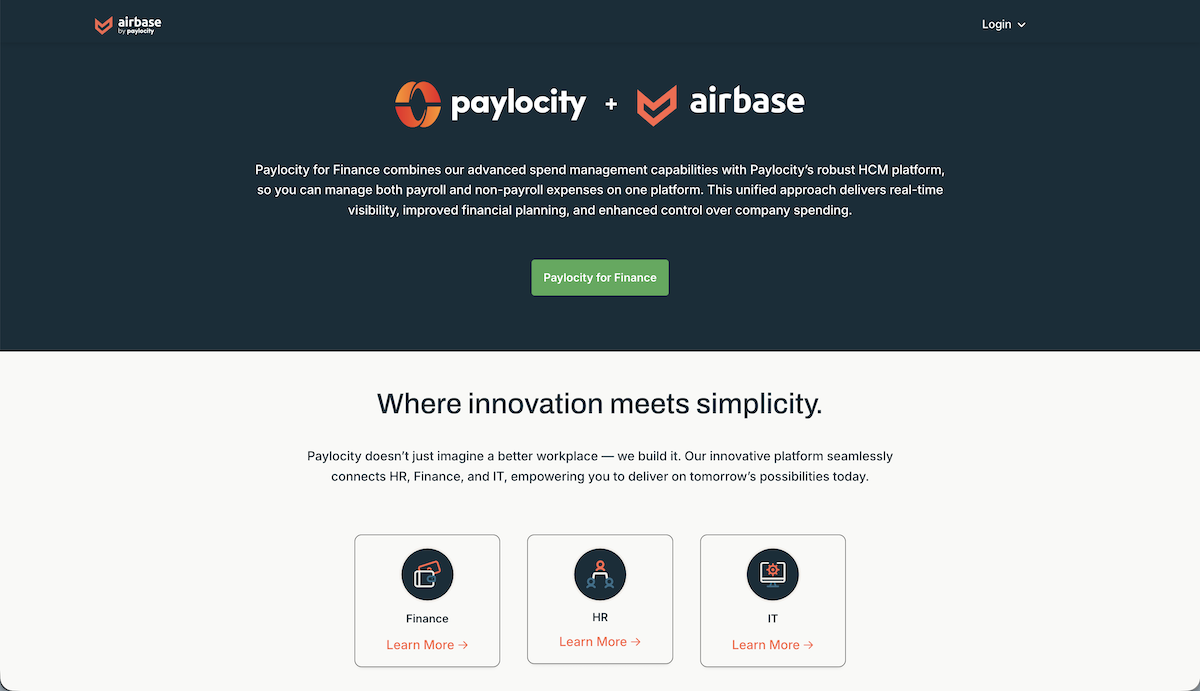
- Best for: Mid-market companies that want AP automation, cards, expense, and procurement unified.
- Key strengths:
- Combines guided procurement, AP automation, corporate cards, and expense
- Real-time visibility into all non-payroll spend
- A long track record as a top-rated spend platform on G2
- Not built for: Buyers who want a standalone product, since Airbase now sits inside Paylocity's platform.
- Funding: Raised about $91 million in equity; acquired by Paylocity in a deal that closed in October 2024.
- Ratings: Delivered within Paylocity, which holds 4.5 on G2 from 5,000+ reviews.
- Verdict: A strong unified spend option for mid-market finance teams already open to Paylocity's broader suite.
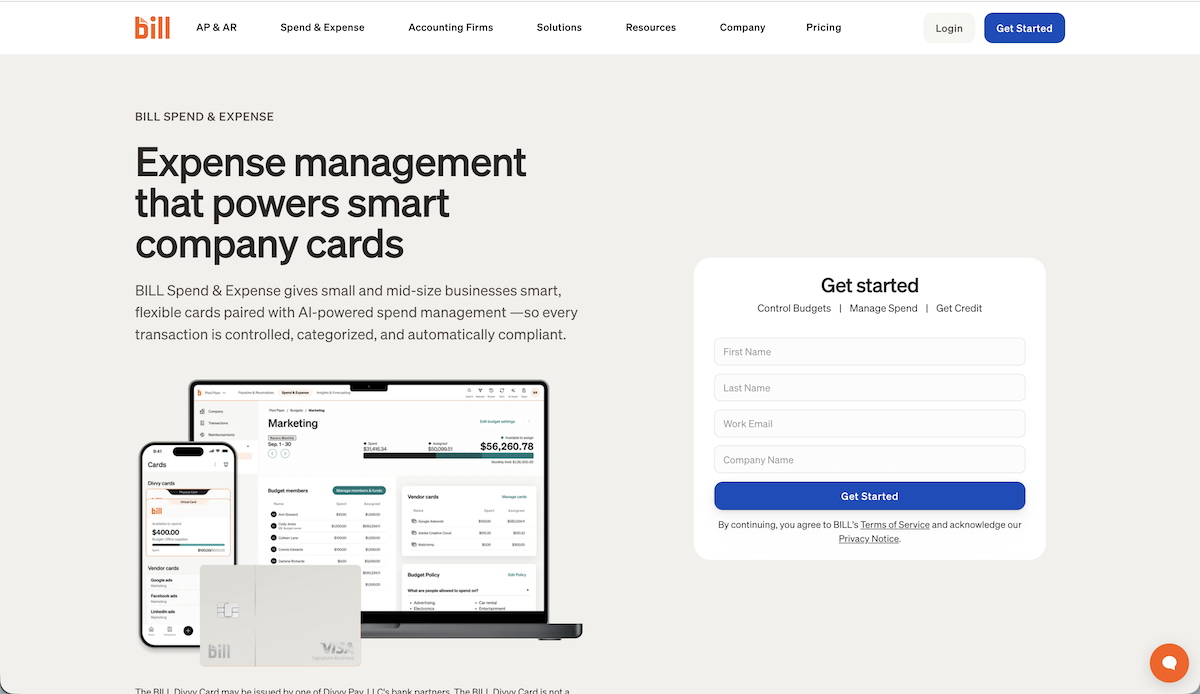
BILL Spend & Expense
- Best for: Small and mid-sized businesses that want free cards and budgeting inside the BILL ecosystem.
- Key strengths:
- Free corporate cards with real-time, customizable budgets
- Proactive spend controls that rate highly for meeting user requirements
- Ties into BILL's accounts payable and receivable tools
- Not built for: Teams that need advanced, granular expense rules or enterprise procurement.
- Funding: Part of BILL, which acquired Divvy for about $2.5 billion in 2021.
- Ratings: 4.5 on G2 from 2,000+ reviews.
- Verdict: A budget-friendly card-and-spend platform, strongest for companies already using or considering BILL.
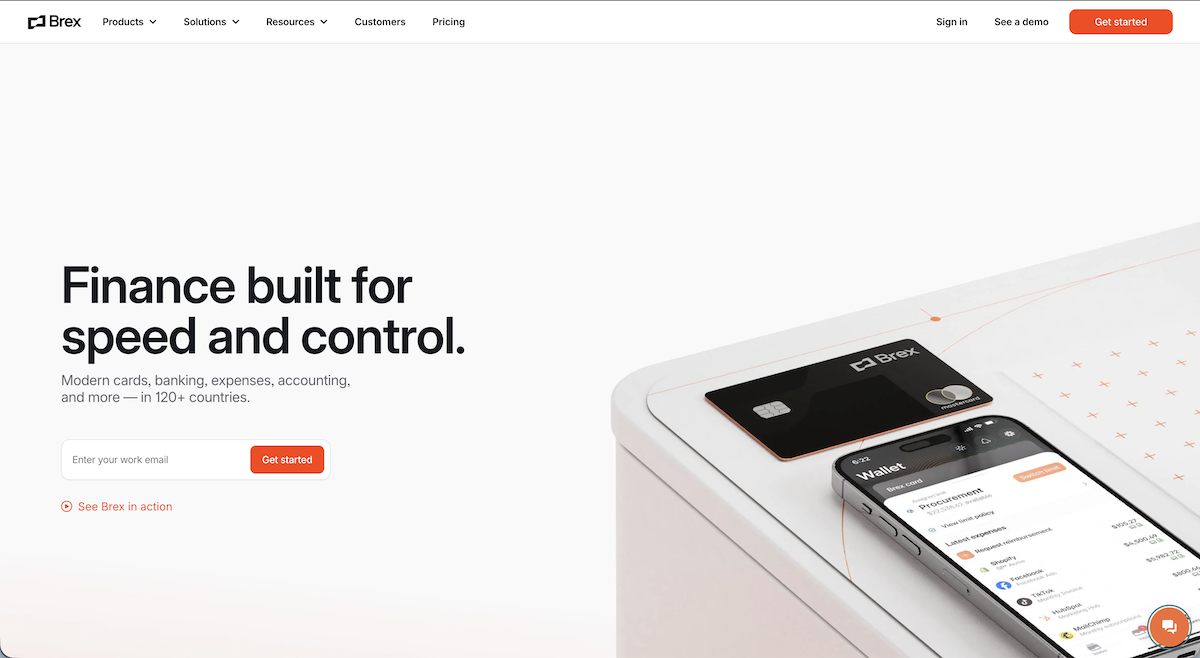
Brex
- Best for: Venture-backed startups and tech companies that want high limits and global cards.
- Key strengths:
- Corporate cards with dynamic limits, plus expense, travel, and bill pay in one system
- Rewards up to 7x on categories like rideshare when you run all spend through Brex
- Strong mobile receipt capture and automated expense coding
- Not built for: Bootstrapped or non-tech businesses that don't meet its eligibility thresholds.
- Funding: Raised roughly $1.5 billion; Capital One agreed to acquire Brex for about $5.15 billion, announced January 2026.
- Ratings: 4.8 on G2 from 1,500+ reviews.
- Verdict: A polished, card-first platform for startups, though the pending Capital One deal adds some uncertainty about long-term direction.
Coupa
- Best for: Enterprises that want procurement, invoicing, and expense in one business spend management suite.
- Key strengths:
- Broad suite spanning procurement, sourcing, invoicing, and expenses
- Enterprise-grade spend governance and supplier management
- Wide integration ecosystem for large, complex organizations
- Not built for: Smaller finance teams, given the complexity and quote-based enterprise pricing that third-party trackers put near $2,500 a month (as of August 2026).
- Funding: Owned by Thoma Bravo, which took Coupa private for $8 billion in 2023.
- Ratings: 4.2 on G2 from 560+ reviews.
- Verdict: A powerful choice for procurement-led enterprises, at the cost of complexity smaller teams won't want.
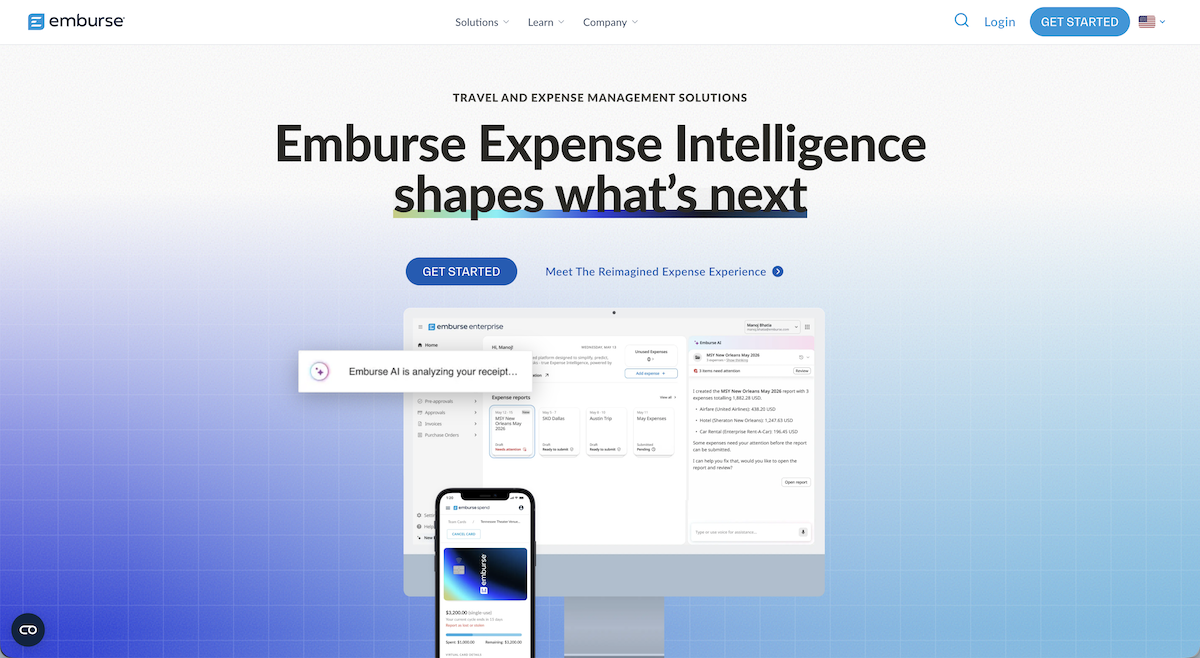
Emburse
- Best for: Mid-market and enterprise finance teams standardizing on mature expense and AP tools.
- Key strengths:
- Expense, travel, AP, and analytics across products like Certify, Chrome River, and Abacus
- Serves more than 20,000 organizations and 12 million users
- Deep ERP, HR, and travel integrations
- Not built for: Teams wanting a single modern, card-first product rather than a product family.
- Funding: Privately held, backed by K1 Investment Management.
- Ratings: 4.5 on G2 for its spend product, from 1,100+ reviews.
- Verdict: A dependable choice for larger organizations that value maturity and integration breadth over a single unified interface.
Expensify
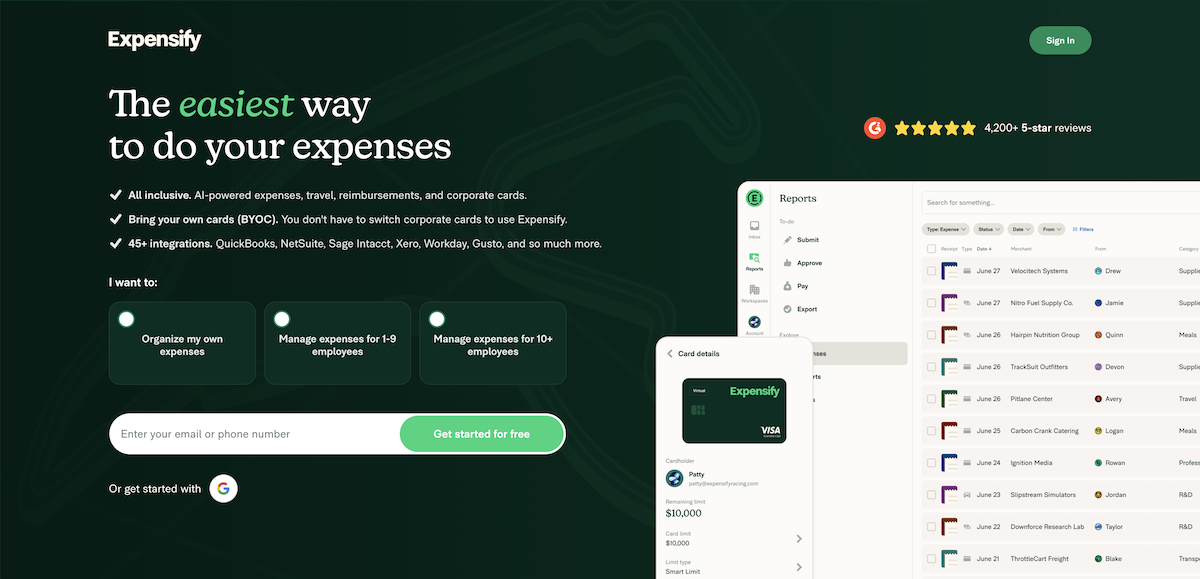
- Best for: Small businesses and individuals that want fast, simple expense reports and receipt scanning.
- Key strengths:
- SmartScan receipt capture and automated expense reports
- Quick setup, often in minutes, with a free tier to start
- Widely adopted, with one of the largest review bases in the category
- Not built for: Enterprises needing deep procurement or complex multi-entity spend controls.
- Funding: Publicly traded on the Nasdaq (EXFY); raised about $28 million before its 2021 IPO.
- Ratings: 4.5 on G2 from 5,600+ reviews.
- Verdict: The go-to for SMBs that want low-friction expense reporting without a heavy rollout.
Navan
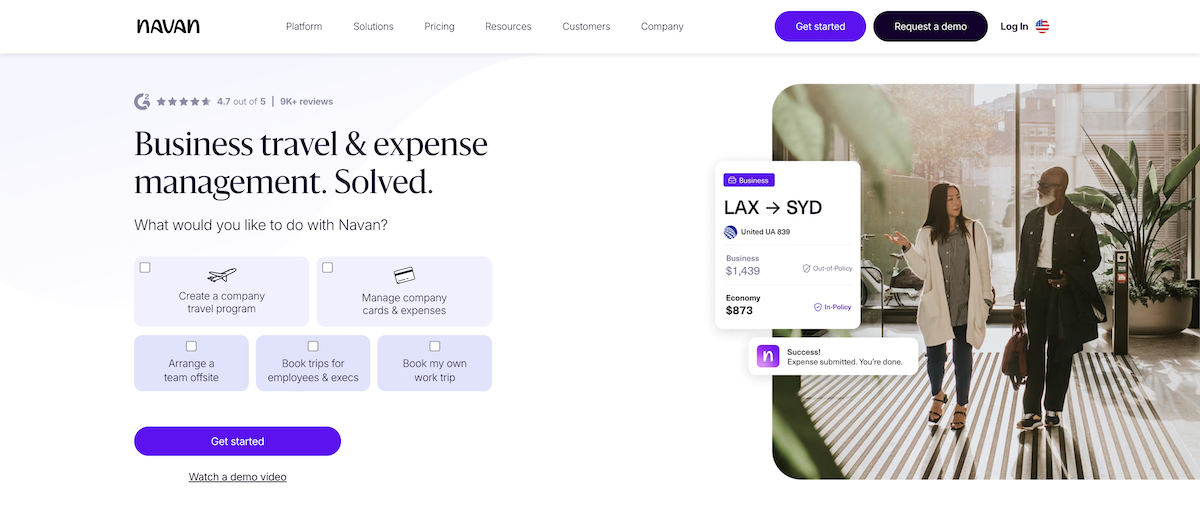
- Best for: Companies that want corporate travel booking and expense management in one place.
- Key strengths:
- Unifies travel booking, corporate cards, and expense in a single workflow
- Serves more than 10,000 customers, including large enterprises
- Real-time policy enforcement and automated receipt capture
- Not built for: Small teams with little travel may find setup heavier than a plug-and-play expense tool.
- Funding: Raised about $2.2 billion privately; now public on the Nasdaq (NAVN) after its October 2025 IPO.
- Ratings: 4.7 on G2 from 9,000+ reviews.
- Verdict: The strongest pick when travel is a major spend category, and you want it managed alongside everyday expenses.
Pleo
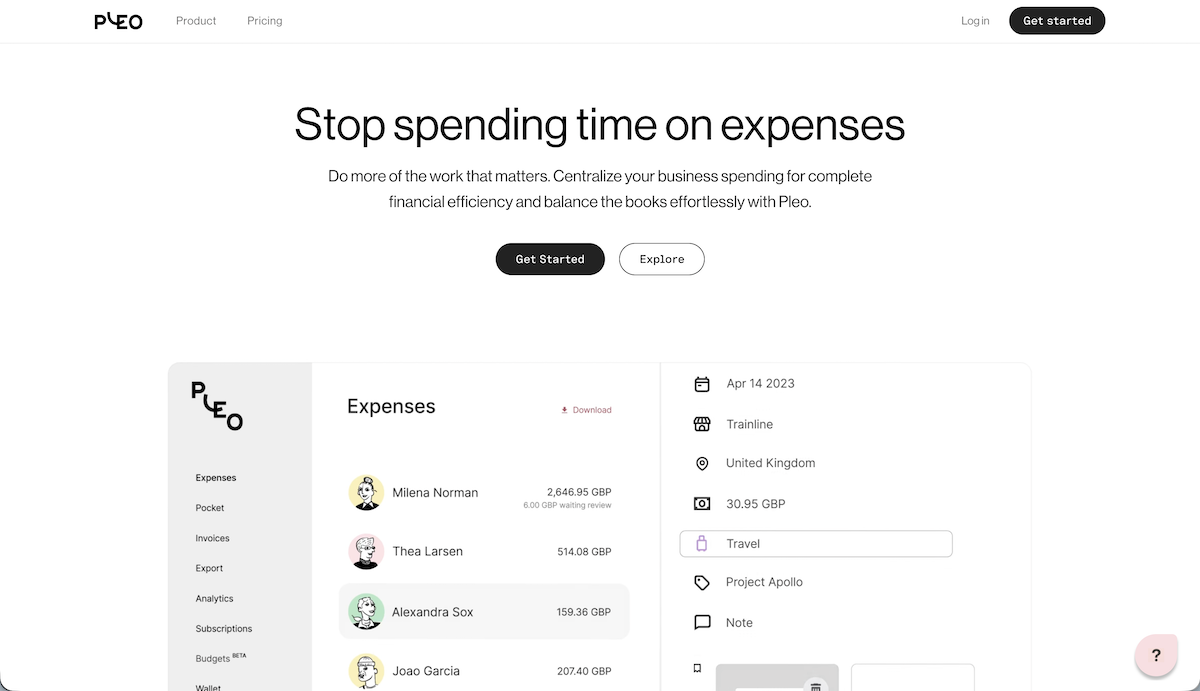
- Best for: European small and mid-sized businesses that want smart cards and simple expense control.
- Key strengths:
- Company cards with real-time spend tracking and receipt capture
- Automated expense management that Pleo says saves admins up to 138 hours a year (as of August 2026). Popular across European markets with strong ease-of-use scores
- Not built for: Large U.S. enterprises needing deep procurement or ERP-heavy workflows.
- Funding: Raised about $430 million; valued at $4.7 billion in 2021.
- Ratings: 4.7 on G2 from 1,400+ reviews.
- Verdict: A card-first favorite for European SMBs that value speed and simplicity over enterprise breadth.
Ramp
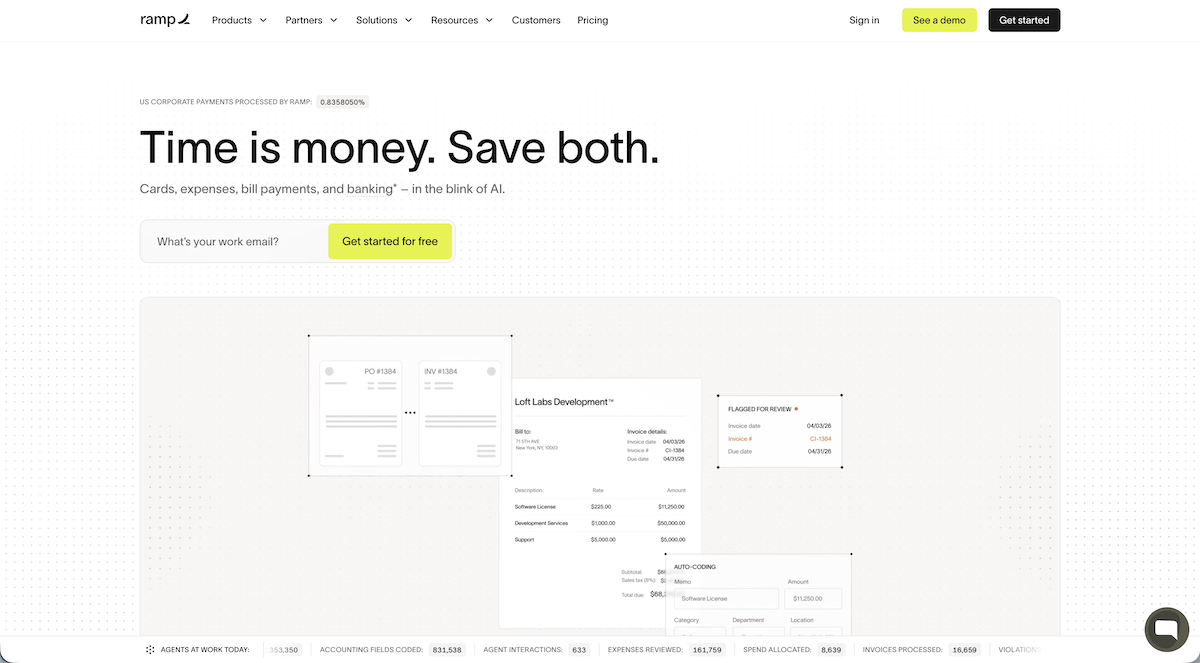
- Best for: Fast-growing companies that want cards, expenses, AP, and procurement in one automated platform.
- Key strengths:
- Combines corporate cards, expense management, bill pay, and procurement, so finance runs on one system
- Serves more than 70,000 organizations and moves over $200 billion in annual purchase volume
- Automation that Ramp reports saves the median customer 5% on expenses in the first year (as of August 2026)
- Not built for: Teams that only need simple receipt tracking will pay for breadth they won't use.
- Funding: Raised about $3.2 billion; valued at $44 billion in its June 2026 Series F.
- Ratings: 4.8 on G2 from 2,400+ reviews.
- Verdict: The most complete all-in-one option for scaling finance teams, with a free base tier and paid Ramp Plus at $15 per user per month.
Rydoo
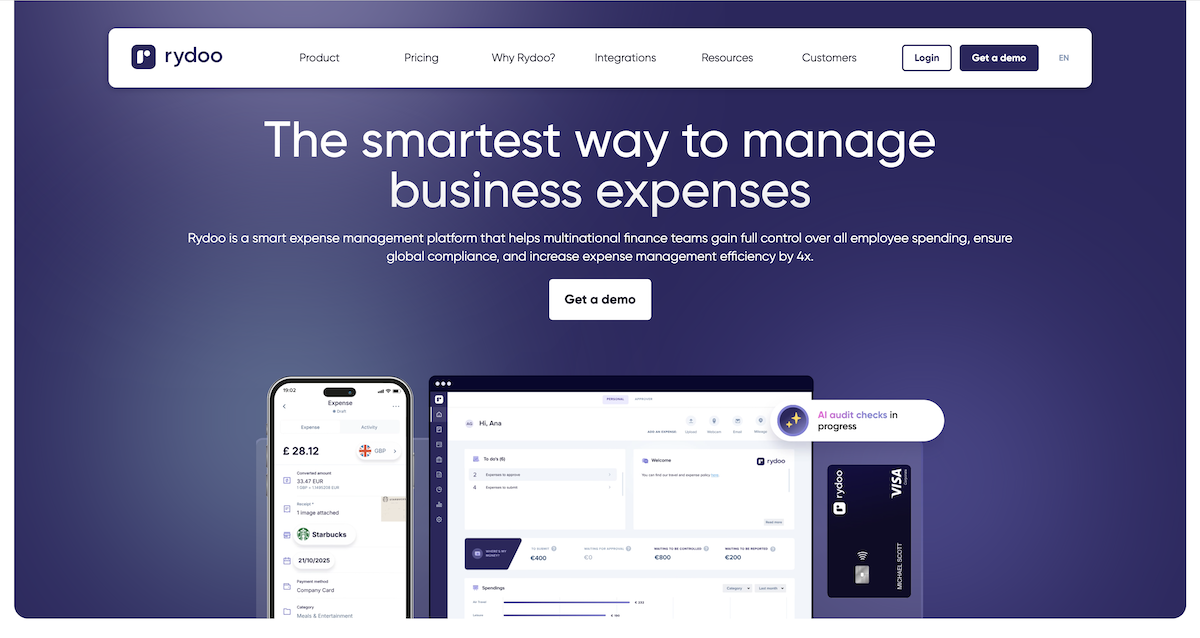
- Best for: Global, mobile-first teams that want fast expense submission and strong tax compliance.
- Key strengths:
- Mobile-first expense capture used by more than 1 million users
- Built-in compliance across 60-plus countries with per diem and tax rules
- Connects to 35-plus HR, finance, and ERP tools
- Not built for: Teams needing built-in cards, AP, or full procurement in one platform.
- Funding: Majority-owned by Marlin Equity Partners since 2024; grew out of Sodexo's Xpenditure and iAlbatros.
- Ratings: 4.4 on G2 from 740+ reviews.
- Verdict: A focused, global expense tool for distributed teams that prize mobile speed and compliance over an all-in-one suite.
SAP Concur
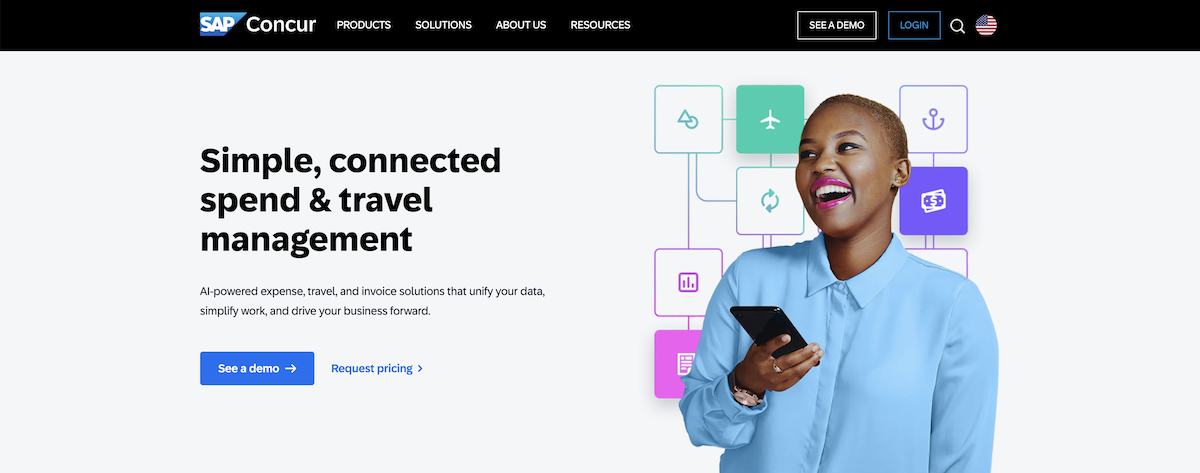
- Best for: Large enterprises that need deep, configurable travel and expense management tied to ERP.
- Key strengths:
- Mature travel, expense, and invoice management used across thousands of enterprises
- Deep integration with SAP and other ERP systems
- AI that can audit transactions for policy issues and duplicates
- Not built for: Smaller or fast-moving teams, which often find setup long and the interface dated.
- Funding: Part of SAP, which acquired Concur for about $8.3 billion in 2014.
- Ratings: 4.0 on G2 from 6,500+ reviews.
- Verdict: The enterprise incumbent, best when configurability and ERP depth matter more than setup speed.
Spendesk
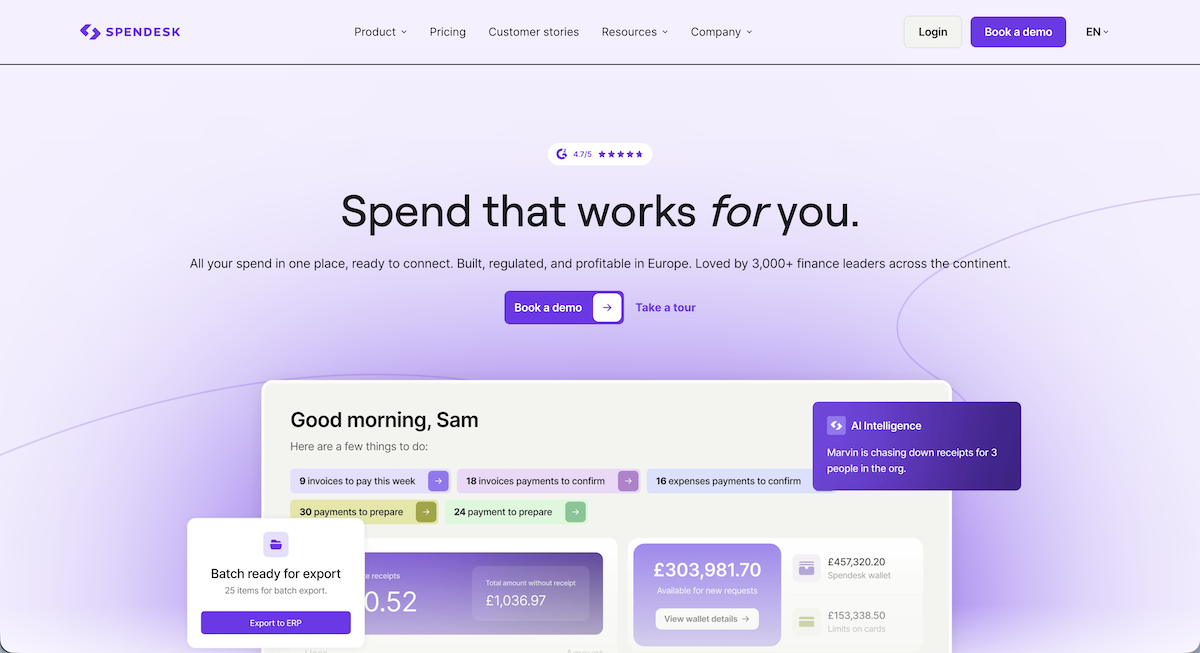
- Best for: European mid-market finance teams that want spend, cards, and procurement in one platform.
- Key strengths:
- A seven-in-one platform covering cards, invoices, approvals, and reimbursements
- Procure-to-pay built for businesses up to 1,000 employees
- Serves roughly 3,500 customers with strong employee-card controls
- Not built for: Very large enterprises or teams that need heavy U.S. ERP integration.
- Funding: Raised more than $300 million; reached unicorn status above $1 billion in 2022.
- Ratings: 4.6 on G2 from 400+ reviews.
- Verdict: A well-rounded European option for mid-market teams standardizing spend on one system.
Manage and Optimize Your Software Spend with Zylo
The tools above manage credit cards, travel, and expenses well. However, most miss the biggest and fastest-growing cost in your portfolio: the SaaS and AI subscriptions your teams buy on their own. Software is often your second-largest operating expense, behind payroll, and it's climbing fast. AI-native app spend grew 108% year over year, according to Zylo's 2026 SaaS Management Index—and that’s just one category. When that spend is scattered across dozens of teams, it's easy to lose and easy to overpay for.
Zylo gives you a single, organized view of every SaaS and AI purchase, so you can take control of renewals, negotiations, and the licenses no one uses. Its AI-powered discovery, informed by more than $100B+ in SaaS, AI, and cloud spend, finds every application, flags waste, and alerts you before a renewal auto-charges. Paired with your spend platform, that visibility closes the gap the tools above leave open, so you reclaim budget across your entire software portfolio.
Frequently Asked Questions about Spend Management Software
There's no single best spend management software. The right pick depends on your company’s size and priorities. Ramp and Brex are strong picks for fast-growing companies; Navan for travel-heavy teams; SAP Concur and Coupa for large enterprises; and Pleo, Spendesk, or Expensify for SMBs that want speed and simplicity.
When choosing spend management software, prioritize the capabilities that match how your team spends:
- Real-time spend visibility
- Approval and policy controls
- Corporate cards (charge or credit) and virtual cards
- AP and invoice automation
- Integrations with your accounting or ERP system
Then weigh security and compliance coverage and total cost against how your team buys today.
Yes. Most leading spend management platforms connect to systems like NetSuite, QuickBooks, Xero, and Sage Intacct, and many sync with credit card networks and HR tools. Integration depth varies, so confirm your specific stack is supported before you commit.
When you evaluate spend management software, hold it to a few security and compliance standards:
- SOC 2, at minimum
- ISO 27001 for enterprise deployments
- GDPR coverage if you handle EU data
- Single sign-on, so access is centrally controlled
Because finance and employee data flows through these tools, ask any vendor for a trust center or current audit reports before you commit.
Spend management software gives finance real-time visibility into committed versus actual spend across every vendor. It then enforces that visibility with budget thresholds, approval workflows, and alerts before purchases go through. By flagging overspend at the point of commitment rather than after the invoice arrives, it keeps costs aligned to budget and stops surprises before they hit the books.