10 Best Application Portfolio Management Software for IT Teams


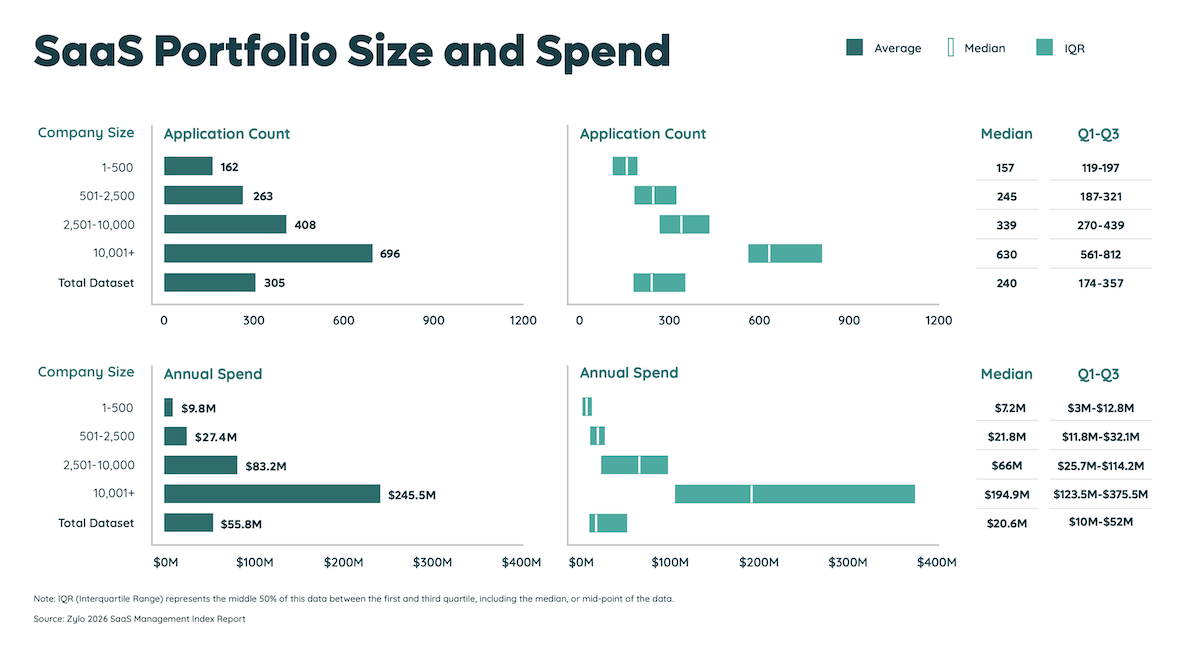
The average large enterprise manages 696 SaaS applications and spends $245.5 million annually on software—according to Zylo’s 2026 SaaS Management Index. At that scale, application portfolio management is paramount. Software portfolios grow at 37% per year, with AI tools accelerating adoption, shadow IT widening governance gaps, and vendor pricing models shifting toward consumption-based structures that make costs harder to predict.
For IT leaders, enterprise architects, and procurement teams, the challenge goes beyond knowing what applications you have. You need to understand which ones deliver value, which ones overlap, where spend is leaking, and how to make better decisions at renewal.
That's the job application portfolio management software is built to do. And in 2026, the market has expanded well beyond classic enterprise architecture tools.
Today's best application portfolio management platforms span three overlapping categories: architecture-led rationalization tools, SaaS management platforms that govern the modern software stack, and adjacent identity and cost-governance solutions that address specific portfolio problems.
This guide covers the top tools across all three categories to help you find the right fit for how your organization actually manages applications.
What Is Application Portfolio Management Software?
Application portfolio management (APM) software catalogs, evaluates, and manages applications across their lifecycle, with the goal of maximizing value while controlling cost and risk. Gartner defines APM tools around this inventory-to-decision workflow, while Forrester frames APM as part of a broader digital and IT portfolio strategy that now spans hybrid on-prem, cloud, and SaaS components.
In practice, the definition has widened significantly. What used to be a discipline owned entirely by enterprise architecture teams now touches IT operations, procurement, finance, and security.
That's because the portfolio itself has changed. Large enterprises routinely operate 561 to 812 applications, with hundreds of those being vendor-managed SaaS products that were never part of the traditional architecture model.
The result is that "application portfolio management software" in 2026 means different things depending on the problem you're solving:
- Architecture-led rationalization and modernization planning calls for a classic APM platform built around business capability mapping, TIME-model assessments, and technology road-mapping.
- SaaS sprawl, contract timing, license waste, and shadow AI governance calls for a SaaS management platform that functions as application portfolio management software for the modern software stack.
- Access governance or cost transparency challenges bring adjacent tools in the identity and ITFM space into the picture, addressing specific portfolio problems from a different angle.
According to public excerpts from Gartner's 2025 SaaS Management Platforms research, organizations without centralized SaaS lifecycle management will overspend on SaaS by at least 25%. With 78% of IT leaders reporting unexpected charges tied to AI or consumption features in the past year, the need for portfolio-level visibility has never been more pressing.
How Application Portfolio Management Software Benefits Your Company
The right application portfolio management software gives you control over your technology investments in ways that scattered spreadsheets, siloed tools, and tribal knowledge can't. Four advantages stand out across the most common use cases:
- Visibility into your full application inventory
- Reduced spend and license waste
- Stronger governance and risk management
- Better decision-making at renewal
Gain Visibility Into Your Full Application Inventory
You can't optimize what you can't see. APM software creates a centralized, continuously updated record of every application in your environment, including the ones purchased outside of IT.
Zylo’s 2026 SaaS Management Index found that IT is responsible for just 15% of software spend and 13% of applications, meaning the vast majority of the portfolio lives outside IT's direct line of sight.
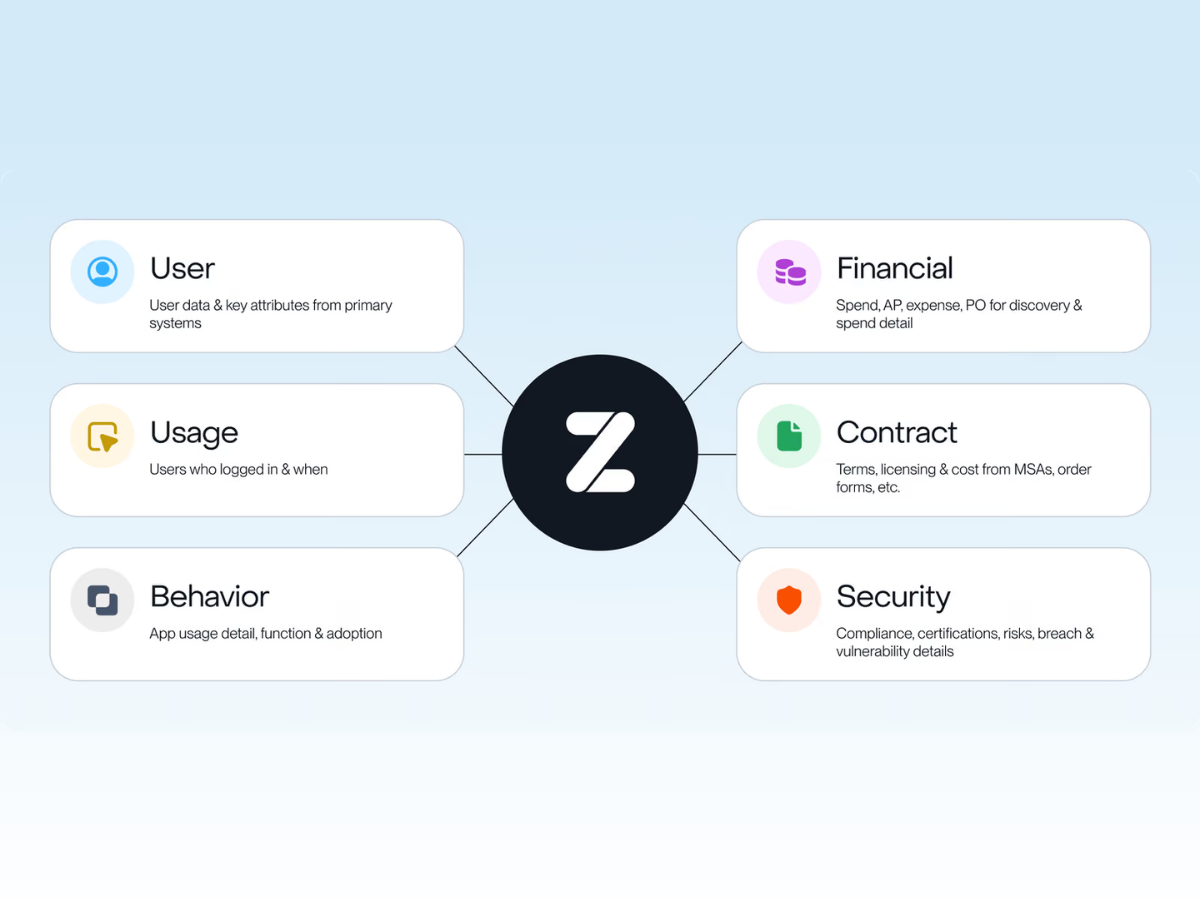
APM tools close that gap by pulling data from SSO, financial systems, expense reports, and direct integrations to surface what's actually in use.
.png)
Reduce Spend and License Waste
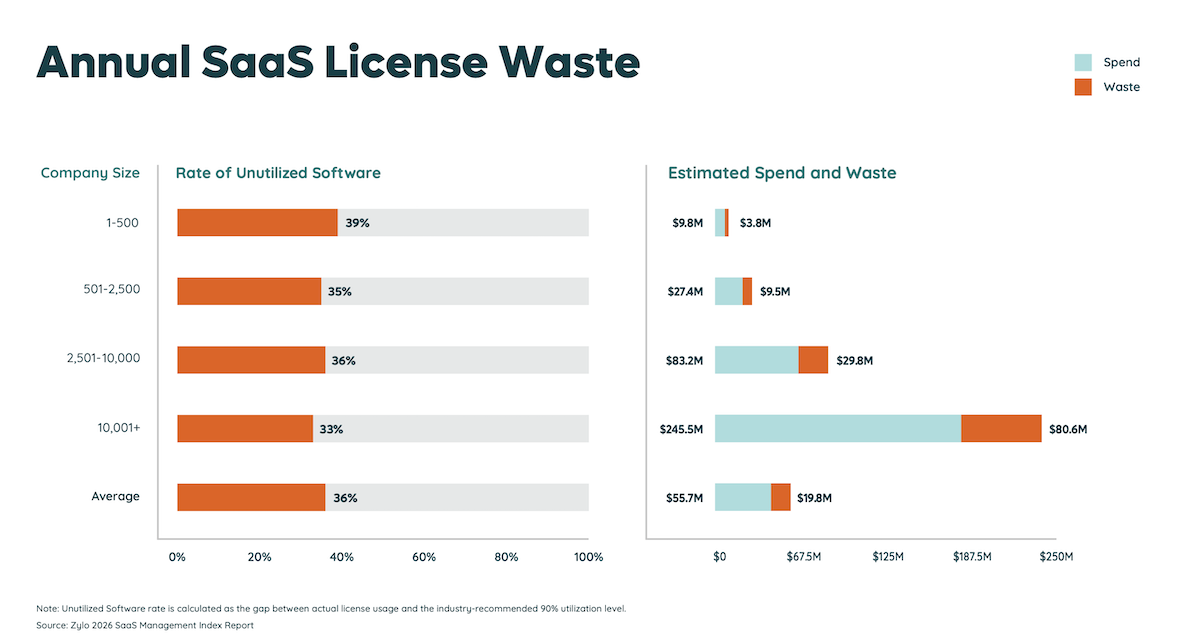
Large enterprises waste an average of $80.6M annually on unused SaaS licenses, according to Zylo's data. Application portfolio management software helps you identify redundant tools, reclaim unused seats, and enter renewal conversations with better leverage.
It also surfaces multi-channel spend, when the same application is purchased multiple times through accounts payable and expense. On average, enterprises have 66 applications with multi-channel spend, creating duplicate costs that go unnoticed without centralized tracking.
Strengthen Governance and Risk Management
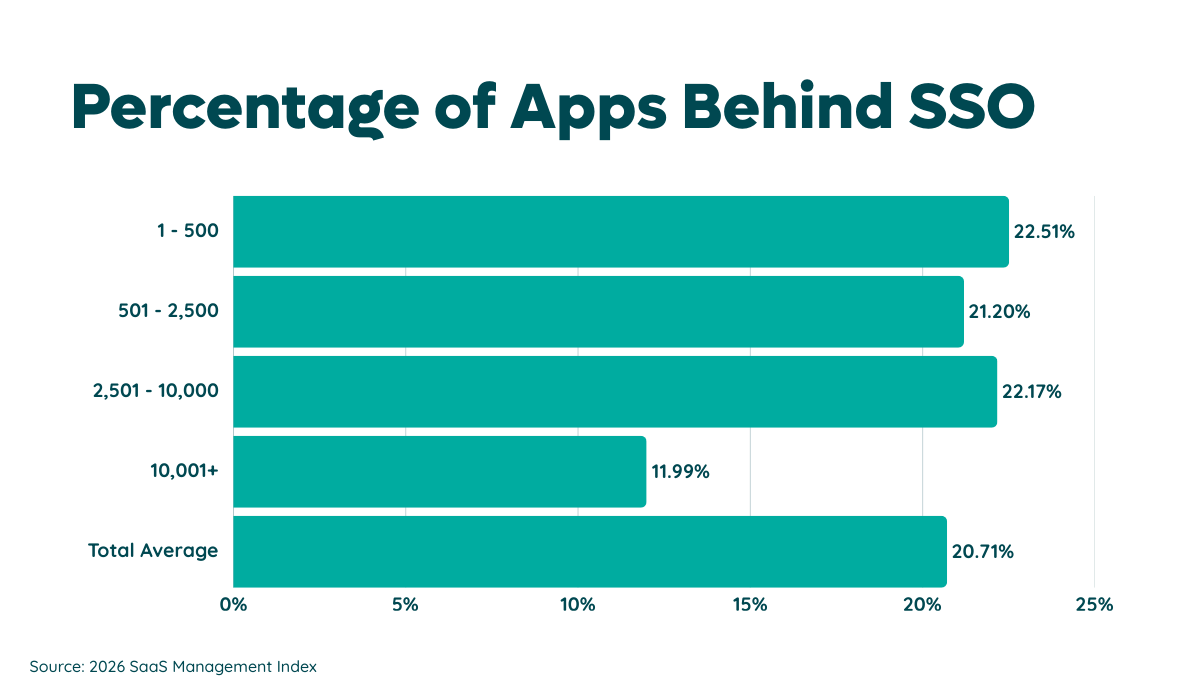
More than half of applications (53.5%) in large enterprise environments carry a poor or low Cloud Confidence Index rating, and just 21% of apps are secured behind single sign-on. APM tools help you:
- Enforce access policies
- Flag unvetted applications
- Manage compliance requirements
- Reduce the security exposure that grows every time an unapproved tool enters the environment
Improve Decision-Making at Renewal
With the average large enterprise managing 476 renewals per year, renewal windows are where you have the most leverage to reduce contracted spend. APM software surfaces usage data, contract terms, and pricing benchmarks before renewal conversations happen. That way, you can rightsize licenses, consolidate overlapping tools, and negotiate from a position of informed confidence rather than scrambling at the last minute.

Key Features to Look for in Application Portfolio Management Software
Not all application portfolio management tools solve the same problems. The right platform depends on whether you're managing a classic enterprise architecture portfolio, a SaaS-heavy stack, or a hybrid of both. Six capabilities separate the strongest platforms from the rest:
- Automated application discovery
- Usage and license tracking
- Spend analytics and cost transparency
- Rationalization and redundancy analysis
- Renewal and contract management
- Integration depth
Automated Application Discovery
Manual inventories go stale almost immediately. The platform you choose should continuously discover applications across SSO, financial systems, HR data, and expense feeds, without requiring your team to maintain the list manually. The faster your portfolio grows, the more discovery needs to run in the background rather than depend on periodic audits.
Usage and License Tracking
Knowing what applications you have matters less than knowing how they're being used. Strong APM platforms track license utilization, identify inactive seats, and flag applications where consumption doesn't match what you're paying for. This capability tends to drive some of the fastest cost savings because it converts existing contract data into actionable rightsizing decisions.
Spend Analytics and Cost Transparency
The best application portfolio management software connects applications to spend data from contracts, invoices, and expense systems. This gives you a complete picture of what each tool costs, who's paying for it, and where money is being wasted on redundant or underutilized software.
Rationalization and Redundancy Analysis
Your portfolio almost certainly has overlap. Rationalization features help you identify which tools to consolidate, retire, or keep by mapping applications against business functions and flagging categories where multiple tools serve the same purpose.
Generative AI tools now appear in the top 10 most redundant application categories for the first time, making this capability increasingly relevant as AI adoption accelerates.
Renewal and Contract Management
Renewals represent the vast majority of annual SaaS spend. Any APM tool worth evaluating should centralize contract data, surface upcoming renewal dates, and provide the usage and pricing intelligence you need to negotiate better terms before the window closes.
Integration Depth
An APM platform is only as good as the data it can access. Look for native integrations with your SSO provider, HRIS, financial systems, contract management tools, and ITSM platform. If the tool can't ingest the operational signals that prove application existence, ownership, usage, and spend, the inventory quickly becomes stale.
10 Best Application Portfolio Management Software
The best application portfolio management tools in 2026 span classic enterprise APM, SaaS management, and adjacent governance platforms. The right choice depends on whether you're solving for enterprise architecture-led rationalization, SaaS sprawl and spend governance, or access-centric portfolio control.
| Vendor | Category Fit | Best For | Core Strengths | Notable Limitations |
|---|---|---|---|---|
| BetterCloud | SaaS-focused APM | SaaS operations, onboarding/offboarding, and governance-heavy administration | Mature operational automation, broad integration center, strong review volume | Acquisition-related roadmap questions in 2026; less classic architecture depth |
| CloudEagle | SaaS-focused APM | Fast-moving SaaS and AI governance with procurement and identity overlap | Broad direct integrations, strong G2 sentiment, procurement and identity governance in one motion | Newer vendor with lighter independent public validation than top-tier peers |
| Torii | SaaS-focused APM | SaaS and AI governance with strong discovery and automation | Strong discovery, governance, automation, and compliance workflows | Public analyst recognition is easier to verify through company announcements than open analyst pages |
| Zylo | SaaS-focused APM | SaaS spend, renewals, license optimization, and benchmark-driven governance | Enterprise SaaS management focus, strong review quality, mature spend and renewal workflows | Classic EA modeling is not the focus |
| Flexera | Core APM-adjacent | Hybrid IT and SaaS rationalization with strong technology intelligence | Application rationalization plus ITAM/SaaS visibility, strong normalization, hybrid-estate breadth | Less architecture-centric than LeanIX; some evidence of steep learning curve |
| SAP LeanIX | Core APM | EA-led rationalization and modernization | Strong APM depth, business-capability mapping, road-mapping, strong review standing | Less natural fit for buyers who want APM embedded inside ITSM workflows |
| ServiceNow | Core APM | Enterprises that want APM tied to workflows, delivery, and platform governance | Deep workflow platform, strong SPM tie-in, broad ecosystem, strong enterprise footprint | Higher complexity; reviews frequently mention configuration and learning curve |
| 1Password | Adjacent SaaS governance | Shadow IT discovery, access governance, and credential-centric SaaS oversight | Strong security posture, 350+ integrations, good visibility into unmanaged SaaS | Less remediation depth than dedicated SaaS management leaders |
| IBM Apptio | ITFM/SPM adjacent | Cost transparency, investment planning, and strategic portfolio management | Excellent cost and investment visibility, strong IBM backing, useful for application cost context | Not a pure-play APM platform; implementation and data-tagging effort can be heavy |
| Lumos | Adjacent identity-governed APM | App access governance, self-service app catalogs, and entitlement-aware SaaS oversight | Strong access automation, app governance, useful SaaS visibility | More identity governance than classical APM; setup for niche apps can take longer |
SaaS-Focused Application Portfolio Management Software
BetterCloud
BetterCloud is one of the most mature SaaS operations vendors in the market, focused on lifecycle automation, onboarding and offboarding workflows, app administration, file governance, and spend control. Its integration center includes both vendor-built and community-built entries, and the platform maintains SOC 2 Type II and ISO 27001 compliance documentation. One factor to track: CoreStack announced its acquisition of BetterCloud in March 2026, which may expand the platform's reach but introduces some roadmap uncertainty for long-term evaluation.
- Best for: IT teams that need mature SaaS lifecycle automation, policy enforcement, and user governance across a large SaaS environment.
- Key strengths:
- One of the largest G2 review footprints among SaaS-native vendors
- Mature lifecycle automation for onboarding, offboarding, and policy enforcement
- Broad integration center with vendor-built and community-built connectors
- SOC 2 Type II and ISO 27001 compliance documentation
- File governance and data protection capabilities alongside SaaS operations
- Not built for: Architecture-centric rationalization or portfolio modeling. BetterCloud is an operations and lifecycle tool, not a planning platform.
- Ratings: G2: 4.4/5 across 470+ reviews | Gartner Peer Insights: reviewed in SaaS Management Platforms.
- Verdict: The right choice for IT teams that want policy enforcement and lifecycle automation across a large SaaS environment now.
CloudEagle
CloudEagle combines SaaS management, procurement, identity governance, and AI governance into a unified platform. It publishes 500-plus integrations, 30-minute onboarding claims, and connectivity across SSO, finance, HRIS, browser, and contract data sources. CloudEagle was recognized in the 2025 Gartner Magic Quadrant for SaaS Management Platforms, which is notable for a vendor founded in 2021.
- Best for: Fast-moving IT, procurement, and security teams that want SaaS, AI, and identity governance in a single platform.
- Key strengths:
- Unified SaaS, AI, and identity governance in one motion
- 500+ published integrations across SSO, finance, HRIS, browser, and contract sources
- Application rationalization and compliance-oriented workflows
- SOC 2 Type II compliance
- Fast onboarding relative to enterprise competitors
- Not built for: Buyers who need deep public enterprise-scale proof or classic architecture modeling. CloudEagle is a fast-moving challenger with a lighter public validation base than top-tier SaaS management leaders.
- Ratings: G2: 4.7/5 across 100+ reviews | Recognized in the 2025 Gartner Magic Quadrant for SaaS Management Platforms.
- Verdict: Worth watching as a fast-moving challenger, especially for mid-market and growth-stage organizations that want SaaS and AI governance without enterprise-tier complexity.
Torii
Torii positions itself as a governance platform for SaaS and AI, with particular strength in discovery, access reviews, and action-oriented automation. Its integration estate spans more than 190 connections across identity, HR, expense, and contract management systems. The platform is built to surface governance gaps and turn findings into automated workflows, making it one of the strongest choices when the portfolio challenge is operational governance rather than architecture design.
- Best for: IT and security teams that need SaaS and AI governance with discovery automation and workflow enforcement.
- Key strengths:
- AI-powered discovery that surfaces shadow IT and shadow AI from multiple data sources
- 190+ integrations across identity, HR, expense, and contract management systems
- Workflow automation for onboarding, offboarding, and license optimization
- SOC 2 Type II, ISO 27001, and GDPR compliance
- Named a Leader in the 2025 Gartner Magic Quadrant for SaaS Management Platforms
- Not built for: Classic business capability mapping or long-range architecture road-mapping. Torii is strongest where SaaS discovery, governance, and workflow enforcement are the priority.
- Ratings: G2: 4.5/5 across 300+ reviews | Gartner Peer Insights: 4.6/5 in SaaS Management Platforms.
- Verdict: A strong fit when you want SaaS operations governance with lower deployment overhead than enterprise-tier APM platforms.
Zylo
Zylo is a SaaS management platform built for large enterprises that need centralized visibility into their software portfolio, license optimization, renewal management, and spend governance. Powered by AI-driven discovery and a dataset spanning more than 40M SaaS licenses and $100B+ in spend under management, Zylo surfaces hidden applications, identifies savings opportunities, and provides benchmark pricing intelligence that strengthens your position at renewal. Enterprises including AbbVie, Adobe, Atlassian, Intuit, and Salesforce rely on the platform to manage SaaS at scale.
- Best for: Enterprise IT, procurement, and finance teams managing large SaaS portfolios who need spend visibility, license optimization, and renewal management in a single platform.
- Key strengths:
- Industry's largest benchmarking dataset with $100B+ in managed SaaS spend
- AI-powered discovery across financial, SSO, expense, and HRIS integrations
- Renewal management with benchmark pricing and contract intelligence
- Spend optimization workflows purpose-built for IT, procurement, and finance collaboration
- Professional services with guaranteed cost savings
- Not built for: Classic enterprise architecture modeling, business capability mapping, or long-range architecture road-mapping. Zylo is purpose-built for the SaaS portfolio, not the full on-prem and cloud architecture stack.
- Ratings: Named a Leader in the 2026 Gartner Magic Quadrant for SaaS Management Platforms and the only Customers' Choice in the 2025 Gartner Peer Insights Voice of the Customer for the category. G2: 4.8/5 across 51+ reviews, with 94% five-star ratings. SOC 2 Type II certified.
- Verdict: The strongest option for enterprise organizations where SaaS spend visibility, renewal governance, and procurement intelligence are the top priorities.
Traditional Enterprise Architecture-Focused APM Software
Flexera
Flexera earns a high position because its application rationalization, SaaS discovery, and IT asset intelligence address how modern enterprise portfolios work across mixed environments. Flexera completed the acquisition of Snow Software in February 2024, expanding its technology value optimization portfolio. The platform integrates with SSO, HR, and expense systems, including Okta, OneLogin, Workday, Coupa, and Salesforce, alongside a dedicated ServiceNow integration.
- Best for: Large enterprises with hybrid on-prem, cloud, and SaaS estates that need application rationalization grounded in technology intelligence and asset data.
- Key strengths:
- Application rationalization powered by normalized technology data and software usage analytics
- Hybrid-estate visibility spanning SaaS, cloud, data center, and on-premises software
- Dedicated ServiceNow integration for operational portfolio data
- SOC 2-related controls and ISO 27001 certification
- One of the strongest ITAM and SAM data foundations in this vendor set
- Not built for: Future-state architecture design or business capability planning. Flexera is more operational and data-driven than LeanIX or ServiceNow in its APM approach.
- Ratings: Gartner Peer Insights: reviewed in Software Asset Management Tools | G2: reviewed across Flexera One and related products.
- Verdict: The default choice when your portfolio problem spans on-prem, cloud, and SaaS and you need rationalization backed by deep technology data.
SAP LeanIX
SAP LeanIX is the clearest fit for classic application portfolio management software. Its platform is built around real-time visibility into the IT and business-capability stack, with dedicated tools for application assessment, rationalization using frameworks like Gartner's TIME model, and architecture road-mapping. SAP completed its acquisition of LeanIX in November 2023, expanding the product's enterprise reach and ecosystem.
- Best for: Enterprise architecture teams running portfolio-wide rationalization and modernization programs.
- Key strengths:
- Purpose-built for business capability mapping, portfolio assessment, and rationalization
- G2 Leader in both Enterprise Architecture and Application Portfolio Management for multiple consecutive quarters
- Native integrations with SAP landscape discovery, Microsoft Teams, Jira, Confluence, and Apptio
- Mature security posture with ISO 27001, SOC 2, Cyber Essentials Plus, and TISAX certifications
- Fast implementation timeline relative to other enterprise APM platforms
- Not built for: Organizations whose primary challenge is SaaS spend optimization, renewal management, or shadow IT governance. LeanIX is less natural than dedicated SaaS management platforms for those use cases.
- Ratings: G2 Leader in Application Portfolio Management, Spring 2026 Grid Report. Gartner Peer Insights: reviewed in APM Tools.
- Verdict: The strongest dedicated APM platform for organizations that need architecture-led portfolio decisions in a single system of record.
ServiceNow
ServiceNow Application Portfolio Management connects application tracking and rationalization to the broader Now Platform, tying APM into ITSM, strategic portfolio management, delivery governance, and operational workflows. It integrates with Azure DevOps, Jira, IBM Apptio, SAP LeanIX, Power BI, Slack, SailPoint, and Workday, giving it unusual strength in portfolio-to-delivery workflows.
- Best for: Enterprises already on the Now Platform that want APM connected to service management, planning, and delivery workflows.
- Key strengths:
- `APM embedded within a single workflow fabric spanning ITSM, EA, planning, and execution
- Integrations with the broadest range of delivery and governance tools on this list
- FedRAMP-related compliance documentation for government environments
- Strategic portfolio management capabilities alongside core APM
- Large public review base on both G2 and Gartner Peer Insights
- Not built for: Teams looking for lightweight, fast-to-deploy APM. ServiceNow requires meaningful implementation effort, particularly when combining APM with SPM and delivery integrations.
- Ratings: G2: 4.5/5 across 183+ reviews in Strategic Portfolio Management | Gartner Peer Insights: reviewed in APM Tools.
- Verdict: The right platform when ServiceNow is already your system of record and you want APM inside the same workflow fabric.
Access Centric Application Portfolio Management Software
1Password
1Password SaaS Manager is the most adjacent vendor on this list, but it has genuine overlap with SaaS portfolio governance. It addresses shadow IT, unmanaged app access, lifecycle management, and policy automation, and the 2026 Unified Access launch extends that model by combining credential and SaaS governance. 1Password publishes 350-plus out-of-the-box integrations and reports more than 180,000 business customers.
- Best for: Security-led organizations that need access-aware SaaS governance, shadow IT discovery, and credential management.
- Key strengths:
- Strong security certification stack including ISO 27001, 27017, 27018, 27701, SOC 2 Type II, and HIPAA readiness
- Shadow IT discovery and unmanaged app access governance
- 350+ out-of-the-box integrations
- Company maturity and scale far beyond a typical adjacent entrant
- Unified credential and SaaS governance via the 2026 Unified Access launch
- Not built for: Dedicated SaaS management workflows, portfolio analytics, or renewal governance. 1Password SaaS Manager trails the dedicated SaaS management leaders in workflow depth and is not a classic APM platform.
- Ratings: G2: 4.8/5 across 41 reviews for 1Password SaaS Manager | Gartner Peer Insights: reviewed for 1Password SaaS Manager.
- Verdict: The right fit for security-first organizations that care deeply about shadow IT, credentials, and access governance, but need a separate platform for full portfolio management.
IBM Apptio
IBM Apptio is adjacent to APM but highly relevant for organizations where portfolio decisions are blocked by poor cost data. Its strength is connecting technology investments to business outcomes through cost transparency, planning, billing, and strategic portfolio management. IBM completed the acquisition of Apptio in August 2023. The platform maintains a certified ServiceNow integration for application and service TCO insight.
- Best for: CIOs and finance leaders who need application portfolio decisions connected to cost transparency, investment planning, and strategic portfolio management.
- Key strengths:
- Technology business management that connects apps to budgets and business value
- Strategic portfolio management linking portfolios to business strategy, funding, and delivery
- Certified ServiceNow integration for application and service TCO
- Strong review base on G2 and TrustRadius praising cost transparency and IT-finance alignment
- IBM enterprise backing and scale
- Not built for: Standalone application inventory management or rationalization. Apptio is more a technology business management and SPM platform than a pure APM tool.
- Ratings: G2: reviewed across 190+ reviews | Gartner Peer Insights: 4.1/5 across 53 reviews in Cloud Financial Management Tools | TrustRadius: reviewed across hundreds of reviews.
- Verdict: A valuable complement when portfolio decisions need stronger financial data, but not a replacement for dedicated APM or SaaS management tooling.
Lumos
Lumos sits at the intersection of identity governance and SaaS management, with a focus on discovering and managing access to all applications, reducing sprawl, and improving productivity and cost outcomes. Gartner places Lumos across both identity governance administration and SaaS management. The platform publishes a library of more than 300 integrations spanning SaaS, cloud, on-prem, and custom connectors.
- Best for: IT and security teams where application portfolio governance is primarily an access and identity problem.
- Key strengths:
- 300+ integrations across SaaS, cloud, on-prem, and custom connectors
- Automated access reviews, provisioning, and deprovisioning workflows
- G2 reviewers praise visibility, automation, clean UI, and compliance readiness
- SOC 2 Type I and Type II certified
- Strong for organizations in regulated industries needing audit-ready access governance
- Not built for: Classical APM, business capability modeling, or technical debt analysis. Lumos is more identity governance than portfolio rationalization, and buyers seeking architecture-level capabilities will need a complementary platform.
- Ratings: G2: 4.7/5 across 70+ reviews | Gartner Peer Insights: reviewed in Identity Governance Administration.
- Verdict: A credible choice when access governance is the center of gravity for your portfolio problem, but not a standalone APM platform.
Choose the Right Application Portfolio Management Software for Your Stack
The best application portfolio management software isn't a single answer. It depends on whether you're solving for architecture-led rationalization, SaaS sprawl and spend governance, or access-centric portfolio control.
If your primary challenges are SaaS visibility, license waste, renewal management, and shadow IT governance, Zylo's SaaS management platform provides a centralized system of record for every application in your environment, backed by AI-powered discovery and benchmark pricing data from $100B+ in managed SaaS spend. For IT, procurement, and FinOps teams at large enterprises, that combination of visibility, spend intelligence, and renewal governance is what turns portfolio data into real cost savings.
See how Zylo works by requesting a free demo.