10 Best Contract Management Software for IT and Procurement Teams in 2026


Contracts touch every dollar of revenue and cost in your organization, yet most companies manage them with no strategic discipline. According to World Commerce and Contracting (WorldCC), the average business loses nearly 9% of its annual revenue to poor contract management. The best performers hold that number to about 3% and the worst lose 15% or more.
That value erosion stems from preventable failures: unclear terms, missed obligations, billing errors, delayed deliveries, and scope disputes. On average, contract-related data is scattered across 24 different systems, making it nearly impossible to track commitments or optimize decisions before money walks out the door.
Contract management software closes that gap. The right platform centralizes every agreement, automates repetitive workflows, and gives IT, finance, procurement, and legal teams a single source of truth for the commitments that drive your business. The result is faster cycle times, tighter compliance, fewer missed renewals, and measurable cost savings.
This guide breaks down what contract management software does, what features matter most, and which platforms are the best fit for IT and finance teams in 2026.
What Is Contract Management Software?
Contract management software, also called contract lifecycle management (CLM) software is a centralized platform that automates how your organization creates, negotiates, executes, stores, and renews contracts. A CLM replaces manual document tracking, scattered email chains, and disconnected spreadsheets with workflows that manage the full lifecycle of an agreement, from initial request and drafting through approval, execution, and renewal.
Unlike basic document storage or standalone e-signature tools, contract management software tracks obligations, monitors key dates, and surfaces insights from contract data. The result is greater SaaS visibility and inventory management across the financial commitments tied to every vendor, customer, and partner relationship.
Key Functions and Capabilities
Contract management platforms handle a core set of functions across the agreement lifecycle:
- Contract authoring and template management enable you to generate agreements using pre-approved clause libraries and standardized templates, reducing the time legal teams spend on repetitive drafting.
- Negotiation and redlining tools allow internal and external stakeholders to collaborate on contract terms in real time, with version control that tracks every change.
- Approval workflow automation routes contracts to the appropriate reviewers based on contract type, value thresholds, or department, eliminating bottlenecks from manual handoffs.
- Electronic signature integration, often with providers like Docusign or native signing capabilities, lets you execute agreements without leaving the platform.
- A centralized contract repository stores every signed agreement with full-text search, metadata tagging, and access controls so you can find any contract in seconds rather than digging through shared drives.
- Obligation and milestone tracking monitors key dates, deliverables, and performance commitments throughout the life of the agreement.
- Renewal management surfaces upcoming renewal windows, contract expirations, and auto-renewal clauses so your team can act proactively rather than scrambling at the last minute.
Benefits for Legal, Sales, Procurement, and Finance Teams
Each team that touches a contract extracts different value from a CLM platform:
- Legal
- Sales
- Procurement
- Finance
- IT
Legal
Legal teams reduce time spent on low-value drafting and repetitive review cycles. Pre-approved templates and clause libraries enforce consistency, and searchable repositories make it easier to reference past agreements during negotiations.
Sales
Sales teams close deals faster when contracts don't stall in approval queues. Automated routing and real-time collaboration with legal shorten the gap between verbal agreement and signed contract.
Procurement
Procurement teams gain visibility into supplier obligations, pricing terms, and compliance requirements across the vendor portfolio. Structured contract data makes it easier to compare vendors and enforce negotiated terms.
Software Asset Management
Software asset managers, in particular, benefit from having license entitlements and contract terms in one place. That way, they can reconcile what was purchased with what's actually being used.
Finance/FinOps
Finance teams benefit from consolidated spend visibility and renewal forecasting. When every contract is stored with its value, term length, and renewal date, finance can plan budgets more accurately and flag cost risks before they materialize.
IT
IT teams managing SaaS portfolios face the same pressure from a governance angle. The 2026 SaaS Management Index found that 79% of IT leaders encountered price increases at renewal, and 77% discovered unexpected costs after a contract was signed. Structured contract data helps you catch those risks early.
Why Your Business Needs Contract Management Software
Done manually, managing contracts drains time, money, and compliance confidence. Contract management software was designed to solve these interconnected business challenges:
- Centralize contract storage and improve visibility into contract terms across every department
- Reduce legal and compliance risk by enforcing standardized language and maintaining complete audit trails
- Strengthen financial oversight with more accurate reporting, analytics, and renewal forecasting
- Prevent missed renewals and deadlines that lock your organization into unfavorable terms
- Increase operational efficiency by streamlining contract drafting, shortening approval cycles, and accelerating procurement and vendor onboarding.
What Features to Look for in the Best Contract Management Software
Six capabilities separate effective contract management platforms from basic document storage:
- Contract repository
- Clause and template libraries
- Collaboration tools
- Approval workflows and automation
- E-signature integration
- Renewal tracking
Contract Repository
A contract repository is a centralized, searchable database where every executed agreement lives alongside its metadata, including contract value, term dates, parties involved, and renewal schedules. The best repositories support full-text search, custom tagging, and role-based access controls so the right people can find the right contracts without sifting through shared drives or email archives.
For IT and finance teams, repository quality directly affects how quickly you can respond to audits, prepare for renewals, and assess total vendor spend.
Clause and Template Libraries
Clause and template libraries let your legal team maintain a set of pre-approved contract language that other departments can use when generating agreements. Standardized templates reduce drafting time, enforce consistency, and lower the risk of non-compliant language appearing in signed contracts.
The strongest CLM platforms allow you to build dynamic templates that pull in the right clauses based on contract type, deal size, or jurisdiction.
Collaboration Tools
Collaboration tools within a CLM platform let legal, sales, procurement, and external counterparties negotiate terms in a shared environment rather than passing redlined documents back and forth over email. In-platform commenting, real-time editing, version comparison, and @mention notifications keep the entire negotiation history in one thread.
Approval Workflows and Automation
Approval workflows automate the routing of contracts to the appropriate reviewers and signers based on rules you define. For example, you might route any contract above $50,000 to finance leadership, or require legal sign-off on any agreement that includes a data processing clause.
Automation eliminates the manual forwarding, follow-up emails, and approval bottlenecks that slow contract execution. Conditional logic, escalation rules, and SLA timers keep deals moving even when individual approvers are unavailable.
E-Signature Integration
E-signature integration lets you execute contracts electronically without leaving the CLM platform. Whether the platform includes native signing capabilities or integrates with providers like Docusign, the goal is a seamless transition from an approved draft to an executed agreement.
For IT teams, e-signature integration also means maintaining an audit trail that links every signature to an authenticated identity, supporting compliance and reducing disputes.
Renewal Tracking
Renewal tracking is the feature that connects contract management directly to cost optimization. Automated alerts tied to renewal dates, auto-renewal deadlines, and termination windows give your team time to review usage, renegotiate terms, or consolidate vendors before a contract rolls over.
SaaS contract management is a growing priority because renewals account for 87% of total SaaS spend. Without structured renewal tracking, the majority of your software budget renews without scrutiny. Following best practices for SaaS contracts and agreements starts with knowing when every renewal window opens and what leverage you have before it closes.
.png)
The 10 Best Contract Management Software in 2026
The contract management software providers on this list were evaluated using independently verifiable, publicly accessible sources, including review platforms like G2 and Capterra, deal databases, trust centers, and vendor documentation. Scoring weighted six factors:
- User experience and reputation
- Product impact and use case fit
- Ecosystem integration
- Funding and growth signals
- Company size and maturity
- Security and compliance
No single tool is the right fit for every organization. The best choice depends on your integration requirements, team structure, compliance needs, and whether contract ownership is primarily with legal, IT, procurement, or finance.
| Tool | Best For | Key Strengths | Primary Limitation | Ideal Company Size |
|---|---|---|---|---|
| Agiloft | Highly configurable CLM with strong compliance certifications | No-code configurability, SOC 1/2 and ISO 27001/27701 certifications, 30+ years of operating history | A smaller employee footprint may affect support capacity for very large deployments | Mid-market to enterprise |
| Concord | End-to-end contract workflows at an accessible price point | Strong review volume (235 Capterra reviews), all-in-one drafting/signing/storage, SOC 2 Type II | The very small team (~22 employees) raises questions about support and migration capacity | Small to mid-market |
| Contractbook | Mid-market contract automation with Salesforce and Zapier connectivity | Verified Salesforce AppExchange and Zapier integrations, strong mid-market reviews, and Scrive acquisition adds e-signing | The SOC 2 report is available on request only, not publicly listed | Mid-market |
| Docusign CLM | Large enterprises standardizing e-signature and CLM under one vendor | Native e-signature integration, SOC 1/2 Type II and ISO certifications, broad enterprise integration surface | Enterprise pricing ($25K-$100K+/yr) with a steeper learning curve than the standalone e-signature tool | Enterprise |
| Gatekeeper | Finance and procurement teams focused on vendor and contract management | Combined vendor + contract management, ISO 27001/SOC 2 Type II/SOC 1 Type II trust center, Vista Equity backing | Smaller employee count may affect implementation speed for complex global rollouts | Mid-market to enterprise |
| Icertis | Global enterprises managing contracts across legal, procurement, finance, sales, and IT | Cross-department CLM coverage, 2,370+ employees, independent analyst recognition from MGI Research | Security certification details hosted behind a gated trust center | Large enterprise |
| Ironclad | Enterprise legal and IT teams needing deep identity, procurement, and collaboration integrations | Broadest published integration catalog (Okta, Entra ID, SAP Ariba, Slack, API), SOC 1/2 Type II plus four ISO certifications, drag-and-drop workflow designer | Higher-end pricing with a significant learning curve for teams new to CLM | Enterprise |
| Juro | Mid-market teams that value speed of deployment and end-user satisfaction | G2 4.6/5 and Capterra 4.8/5 ratings, collaborative in-browser editor, fast deployment times | Smaller footprint (80 employees), SOC 2 Type I only (not Type II) | Mid-market |
| LinkSquares | Legal teams that prioritize usability and clear integration documentation | Highest G2 rating on this list (4.7/5, 425 reviews), well-documented API and integrations, SOC 2 Type 2 + ISO 27001 | Capterra rating (4.2/5) suggests some variance in user experience by deployment type | Mid-market to enterprise |
| SpotDraft | Fast-growing teams that want strong compliance with a modern user experience | ISO 27001, SOC 2, SOC 1, HIPAA, and GDPR certifications, broad CRM/workflow integrations, and a recent Jan 2026 funding round | Smaller company footprint than enterprise incumbents | Mid-market to enterprise |
Agiloft
Agiloft is one of the longest-standing players in the contract management space, founded in 1991. KKR acquired the company in May 2024, a sign of continued investment in the platform. With roughly 187 employees, Agiloft operates at a smaller scale than some competitors but compensates with deep configurability and a loyal user base.
- Best for: Enterprises that need a highly configurable CLM platform with a long track record and strong compliance certifications
- Key strengths:
- Exceptional review ratings for a mature vendor, with G2 at 4.5/5 (99 reviews) and Capterra at 4.8/5 (38 reviews)
- Highly configurable no-code platform that supports complex contract workflows without custom development
- Explicit security certifications, including SOC 1, SOC 2, ISO 27001, and ISO 27701, documented on the Agiloft security page
- Over three decades of contract management experience, providing operational maturity that newer vendors haven't matched
- REST API available for custom integrations with existing enterprise systems
- Limitations:
- Smaller employee footprint compared to enterprise peers like Docusign or Icertis, which may affect support capacity for very large deployments
- The platform's depth of configurability can mean longer implementation timelines for organizations that need extensive customization
- Verdict: Agiloft is a strong fit for organizations that value flexibility and long-term vendor stability over brand-name recognition, particularly in regulated industries.
Concord
Concord is a contract management platform founded in 2014 that has raised $38.7M in funding. The platform earns praise for combining contract drafting, negotiation, e-signature, and storage into a single integrated experience that G2 reviewers have compared to having a document editor, signing tool, and file manager in one place.
- Best for: Small and mid-market teams that need end-to-end contract workflows at an accessible price point
- Key strengths:
- Very strong review volume with G2 at 4.2/5 (133 reviews) and Capterra at 4.6/5 (235 reviews), indicating broad user adoption
- End-to-end contract workflows that cover drafting, negotiation, signing, and storage without requiring separate tools
- SOC 2 Type II report and CSA STAR Level 1 rating documented on the Concord security page
- Accessible and intuitive interface that teams can adopt without extensive training
- Competitive pricing that makes it viable for smaller organizations with limited CLM budgets
- Limitations:
- Very small team footprint of approximately 22 employees, which raises questions about 24/7 support capacity, complex migrations, and deep compliance programs for larger enterprises
- The last funding round is older compared to other vendors on this list, which may affect the pace of new feature development
- Verdict: Concord is a solid entry point for small and mid-market organizations that need a functional, all-in-one contract management tool without the complexity or cost of enterprise CLM platforms.
Contractbook
Contractbook is a mid-market contract management platform founded in 2015 that has raised $43.6M in funding. Scrive acquired the company in June 2025, which adds electronic identity verification and signing capabilities to the platform. With approximately 66 employees, Contractbook operates at a smaller scale but maintains consistently positive reviews.
- Best for: Mid-market teams that want solid contract automation with Salesforce and Zapier connectivity
- Key strengths:
- Strong review scores for a mid-market vendor, with G2 at 4.6/5 (75 reviews) and Capterra at 4.7/5 (78 reviews)
- Verified integration presence on the Salesforce AppExchange and Zapier directory, providing independently verifiable connector listings
- Acquisition by Scrive brings additional signing and identity verification capabilities to the platform
- Accessible contract automation workflows designed for teams without dedicated legal operations staff
- Competitive pricing relative to enterprise CLM platforms
- Limitations:
- The SOC 2 report is available on request rather than publicly listed, which scores lower for procurement teams that need immediate certification verification
- Smaller team footprint and recent acquisition introduce transition uncertainty for organizations evaluating long-term platform stability
- Verdict: Contractbook is a practical choice for mid-market teams that need contract automation, reliable CRM and workflow integrations, and don't want enterprise-tier pricing.
Docusign CLM
Docusign CLM is the contract lifecycle management arm of the Docusign platform, extending the company's well-known e-signature capabilities into full contract automation. Founded in 2003 and employing roughly 8,400 people, Docusign brings scale, brand recognition, and an extensive certification portfolio that enterprise security teams appreciate.
The platform covers contract creation, negotiation, automated workflows, obligation tracking, and integrations with Salesforce, Microsoft, SAP, and Google ecosystems.
- Best for: Large enterprises standardizing e-signature and CLM under one vendor with a mature compliance footprint.
- Key strengths:
- Mature compliance and security posture, with publicly documented SOC 1 Type II, SOC 2 Type II, and ISO certifications listed on the Docusign Trust Center
- Native e-signature integration eliminates the need for a separate signing provider
- Broad enterprise integration surface spanning CRM, ERP, and identity management systems
- Strong user adoption at scale, with a G2 rating of 4.3/5 across 485 reviews and a Capterra rating of 4.5/5 across 121 reviews
- Long operating history provides stability and a large customer reference base
- Limitations:
- Enterprise CLM pricing requires a sales conversation and can be significantly higher than mid-market alternatives, with reported annual costs ranging from $25,000 to over $100,000
- Some reviewers note that the CLM product has a steeper learning curve than the standalone e-signature tool, and initial setup can be complex
- Verdict: Docusign CLM is the safest choice for organizations that already use Docusign for e-signatures and want to consolidate contract operations under one platform with proven enterprise compliance.
Gatekeeper
Gatekeeper is positioned not just as a CLM tool but as a combined vendor and contract management platform, which makes it a natural fit for organizations where finance or procurement owns vendor governance more than legal does. Founded in 2010, Gatekeeper received a strategic growth investment from Vista Equity Partners and employs between 51 and 200 people.
- Best for: Finance and procurement teams focused on vendor management alongside contract lifecycle management
- Key strengths:
- Combined vendor and contract management capabilities in a single platform, reducing the need for separate tools
- One of the strongest public trust centers in the CLM space, with ISO 27001:2022, ISO/IEC 9001:2015, SOC 2 Type II, and SOC 1 Type II certifications documented on the Gatekeeper Trust Center
- Strong review scores across multiple platforms, with G2 at 4.5/5 (89 reviews) and Capterra at 4.7/5 (78 reviews)
- Vista Equity Partners backing provides long-term growth and operational support
- Particularly strong for procurement-heavy workflows where supplier management and contract management need to coexist
- Limitations:
- Employee count falls at the lower end of the range compared to larger CLM vendors, which may affect implementation speed for complex global rollouts
- Funding amount from the Vista investment was not publicly disclosed, making it harder to gauge the scale of growth investment
- Verdict: Gatekeeper is the right choice for finance and procurement teams that need vendor governance and contract management in one system, especially in environments with strict compliance requirements.
Icertis
Icertis is an enterprise-scale CLM company founded in 2009 that has raised $497M in funding, achieved a $5B valuation, and employs approximately 2,370 people. The platform is built for cross-functional contract management and explicitly covers solutions for legal, procurement, finance, sales, and IT.
Icertis has received independent recognition as the top-rated overall CLM supplier in the MGI Research CLM Buyer's Guide.
- Best for: Global enterprises managing contracts across legal, procurement, finance, sales, and IT departments at scale
- Key strengths:
- True cross-department CLM coverage spanning legal, procurement, finance, sales, and IT workflows
- Significant scale and market maturity with over 2,300 employees and a strong funding history
- Reviewers praise API quality and integration capabilities, with one G2 reviewer noting that the APIs are straightforward to work with
- Independent analyst recognition from MGI Research and inclusion in The Hackett Group's CLM provider research
- G2 rating of 4.2/5 across 81 reviews and Capterra rating of 4.4/5 across 41 reviews
- Limitations:
- Some reviewers express frustration that the platform hasn't evolved as quickly as the broader CLM market, particularly in user experience
- Security certification details are hosted behind a gated trust center, which makes independent verification harder for procurement teams conducting due diligence
- Verdict: Icertis is the strongest option for large, global organizations that need a single CLM platform to serve multiple departments and geographies simultaneously.
Ironclad
Ironclad is an enterprise CLM platform founded in 2014 that has raised $333 million in funding and grown to approximately 784 employees. The platform has attracted attention for reaching $200M in annual recurring revenue and is backed by investors including Accel, Sequoia, and Y Combinator.
Ironclad's strength is its integration surface. The platform publishes a broad integration catalog spanning Okta, Microsoft Entra ID, NetSuite, SAP Ariba, Slack, Microsoft Teams, MuleSoft, and a REST API, which makes it a strong fit for IT-governed environments.
- Best for: Enterprise legal and IT teams that need deep integrations with identity, procurement, and collaboration systems
- Key strengths:
- One of the broadest published integration catalogs in the CLM space, including SSO providers, ERP systems, and collaboration tools
- Strong security posture with annual SOC 1 Type II and SOC 2 Type II audits, plus ISO 27001, ISO 27701, ISO 27017, and ISO 27018 certifications
- Powerful workflow designer with drag-and-drop conditional logic that legal teams can configure without engineering support
- Robust in-app redlining and negotiation features that keep sales and legal teams working in one environment
- G2 rating of 4.5/5 and Capterra rating of 4.4/5, with Gartner Peer Insights showing 248 reviews
- Limitations:
- Pricing is not publicly disclosed and falls at the higher end of the CLM market, with median annual costs reported around $40,000 and enterprise deployments reaching well beyond that
- Multiple reviewers cite a significant learning curve, especially for teams new to CLM tooling
- Verdict: Ironclad is a top-tier pick for organizations where IT governance, identity management, and procurement integration are non-negotiable requirements.
Juro
Juro is a contract automation platform founded in 2016 that has raised $32.6M in funding and employs approximately 80 people. The platform earns consistently high marks from reviewers for its collaborative contract editing experience and ease of onboarding.
- Best for: Mid-market legal and business teams that value speed of deployment and end-user satisfaction
- Key strengths:
- Excellent review reputation with G2 at 4.6/5 (181 reviews) and Capterra at 4.8/5 (40 reviews)
- Collaborative in-browser contract editor that reduces the need for Word-based redlining workflows
- Integration capabilities, including Salesforce connectivity, REST API, and webhooks (availability varies by plan tier)
- Publicly stated SOC 2 Type I completion and a dedicated trust and security page
- Fast deployment times compared to enterprise CLM platforms, making it well-suited for teams that need to go live quickly
- Limitations:
- Some Capterra reviewers note that the interface can be confusing in certain areas, which affects end-user adoption for less technical teams
- Smaller company footprint (80 employees) and older last funding round compared to faster-growing competitors, which may influence long-term product velocity
- SOC 2 Type I is a lower assurance level than Type II; regulated industries may require additional diligence
- Verdict: Juro is the strongest option for mid-market teams that prioritize user experience and fast deployment over the breadth of a full enterprise CLM suite.
LinkSquares
LinkSquares is a CLM platform founded in 2015 that has raised $164M in funding and employs approximately 259 people. The platform stands out for its user satisfaction scores and unusually clear integration documentation.
- Best for: Legal teams that prioritize usability and want clear API and integration documentation
- Key strengths:
- Highest G2 rating among the tools in this list at 4.7/5 across 425 reviews, indicating strong user satisfaction
- Well-documented integration ecosystem with a dedicated integrations section in its help center, including API reference documentation
- Explicit security disclosures, including SOC 2 Type 2, ISO 27001 certification, and GDPR posture statements on the LinkSquares security page
- Strong AI-powered analytics for extracting insights from existing contract repositories
- TrustRadius rating of 8.0/10 provides additional third-party validation
- Limitations:
- Capterra rating of 4.2/5 across 36 reviews is lower than G2, suggesting some variance in user experience depending on use case or deployment complexity
- Smaller employee count compared to the top four vendors on this list, which could affect support response times for large enterprise accounts
- Verdict: LinkSquares is ideal for legal-led organizations that want an intuitive, well-documented CLM platform with strong AI capabilities and proven user satisfaction.
SpotDraft
SpotDraft is a CLM platform founded in 2017 that has raised $113M in total funding, with the most recent funding event in January 2026 signaling continued growth. The company employs roughly 234 people and has built a reputation for combining enterprise-grade compliance with an intuitive interface.
- Best for: Fast-growing legal and business teams that want strong compliance coverage with a modern user experience
- Key strengths:
- Strong compliance certifications, including ISO 27001:2022, SOC 2, SOC 1, HIPAA, and GDPR, all publicly listed on the SpotDraft Trust Center
- Broad integration surface spanning Salesforce, HubSpot, Slack, and other workflow systems through the SpotDraft integrations page
- Excellent review scores with G2 at 4.5/5 (170 reviews) and Capterra at 4.8/5 (26 reviews)
- Recent funding activity suggests ongoing product investment and company growth
- Public GitHub organization provides a verifiable signal for engineering teams evaluating the vendor
- Limitations:
- Smaller company footprint than enterprise incumbents like Docusign, Ironclad, or Icertis, which may matter for organizations with complex implementation needs
- Review volume on Capterra is lower than some competitors, making it harder to assess long-term user satisfaction trends at scale
- Verdict: SpotDraft is a compelling choice for mid-market and growing enterprise teams that need compliance-ready CLM without the implementation overhead of legacy platforms.
Common Challenges and How Contract Management Software Overcomes Them
Even with the right tool selected, contract management comes with recurring operational hurdles. Three challenges show up most consistently across IT and finance teams:
- Lack of visibility
- High volume of contracts
- Manual, error-prone processes
- Missed renewals
- Increase financial and compliance exposure
Lack of Visibility
Procurement teams often lack visibility into active contracts, because they live scattered in folders, individual inboxes, or team drives. As a result,
- No one has a complete picture of what’s been committed, what’s expiring, or where financial risk is concentrated
- Renewal responsibility is distributed across different owners, fostering inconsistent management practices.
- Contracts renew on autopilot with embedded price increases, outdated terms, and—in the case of SaaS Management—unused licenses.
Zylo's 2026 SaaS Management Index uncovered that organizations underestimate their app quantity and spend by 1.7x and 3x, respectively. That gap applies directly to contracts. If you don't know what software you're paying for, you almost certainly don't have full visibility into the agreements governing those purchases.
Contract management software addresses this by creating a single repository where every agreement is stored with searchable metadata. When your team can filter contracts by vendor, value, renewal date, or owner, visibility stops being a problem and becomes a strategic advantage.
High Volume of Software Contracts
According to Zylo’s 2026 SaaS Management Index, organizations manage an average of 211 SaaS renewals per year, or one per business day. For IT and Procurement teams, the more software contracts you have, the more difficult it is to know when it renews, let alone prepare for that renewal.
SaaS portfolio growth only compounds the challenge. On average, 34% of applications turnover, which means the volume of agreements in play at any given time quickly outpaces what spreadsheets and email threads can handle.

Contract management software creates a single, searchable system of record that gives your team the data to negotiate from a position of strength, flag renewals before they auto-execute, and maintain compliance with less manual effort.
Even small operational changes, like centralizing renewal dates or tagging contracts by owner, can produce SaaS management quick wins that build momentum for a broader program.
Manual, Error-Prone Processes
Manual contract processes rely on email chains, spreadsheet trackers, and individual memory to keep agreements moving. That approach introduces errors at every stage: missed approvals, outdated templates, inconsistent terms, and version control breakdowns where multiple people edit the same document without a shared system of record.
CLM platforms replace these manual handoffs with automated workflows that enforce the right sequence of reviews, flag inconsistencies, and maintain a complete audit trail. When a contract routes automatically based on predefined rules, the risk of human error drops significantly, and cycle times shorten because no one has to wait for a forwarded email.
Missed Renewals
Missed renewal windows lock in unfavorable terms for another full contract cycle. When your team doesn't have a structured system to surface upcoming renewals with enough lead time to prepare, contracts auto-renew at the vendor's preferred terms rather than yours.
The financial impact is substantial. With only 38% of IT leaders considering renewals a key cost-reduction opportunity, most organizations are leaving money on the table.
Contract management software with built-in renewal tracking, automated alerts, and preparation timelines gives your team the runway to review usage data, benchmark pricing, and negotiate from a position of informed leverage.
Increased Financial and Compliance Exposure
When contracts are scattered across inboxes, local drives, and team folders, it creates measurable financial exposure. Unenforced payment terms, overlooked price escalation clauses, duplicate vendor commitments, and auto-renewals that roll forward without anyone reviewing whether the terms still make sense.
The compliance risk of fragmented contracts is equally concrete. When your team can't quickly locate an agreement or verify its terms, audit responses slow down, regulatory exposure increases, and inconsistent contract language creates liability that legal teams only discover after the fact.
Future Trends in Contract Management Software
Three developments are shaping where contract management software is headed:
- AI-assisted drafting and review
- Workflow automation
- Integrations with other types of software
AI-Assisted Drafting and Review
AI-powered contract tools are moving beyond basic search to active drafting, clause recommendations, and risk analysis. CLM platforms are increasingly embedding machine learning models that can flag non-standard language, suggest pre-approved alternatives, and score contract risk based on historical patterns.
For procurement and finance teams, AI-assisted review means faster turnaround times for high-volume agreements such as SaaS subscriptions, NDAs, and vendor renewals, where the contract structure is predictable but the details vary.
Workflow Automation
Workflow automation in CLM is evolving from simple sequential routing to conditional logic that adapts based on contract attributes. Modern platforms can trigger different approval chains based on contract value, department, geography, or risk level, and escalate automatically when approvals stall.
The trend is going toward reducing the number of manual touchpoints to zero for low-risk, high-volume agreements, while concentrating human review on the contracts that actually require negotiation and judgment.
Integrations with Other Types of Software
CLM platforms are expanding their integration scope well beyond CRM and e-signature connectors. The next generation of contract management tools connects directly with ERP systems, procurement platforms, identity providers, ITSM tools, and financial planning software, creating a closed-loop system in which contract data flows into the operational tools that need it.
For IT teams, this means contract platforms that integrate with identity providers like Okta and Microsoft Entra ID, connect to ERP and procurement systems such as SAP Ariba and NetSuite, support API access, and maintain audit-ready compliance certifications. Contract metadata can feed directly into SaaS management, license optimization, and security compliance workflows.
For finance teams, it means contract values, renewal schedules, and payment terms can sync automatically with budgeting and forecasting tools.
How Zylo Can Help with Your Contract Management
Contract management software gives you control over how agreements are created, approved, and signed. But for SaaS contracts specifically, the real financial leverage comes after the signature, when you're tracking utilization, managing renewals, and optimizing spend across a portfolio that grows more complex every year.
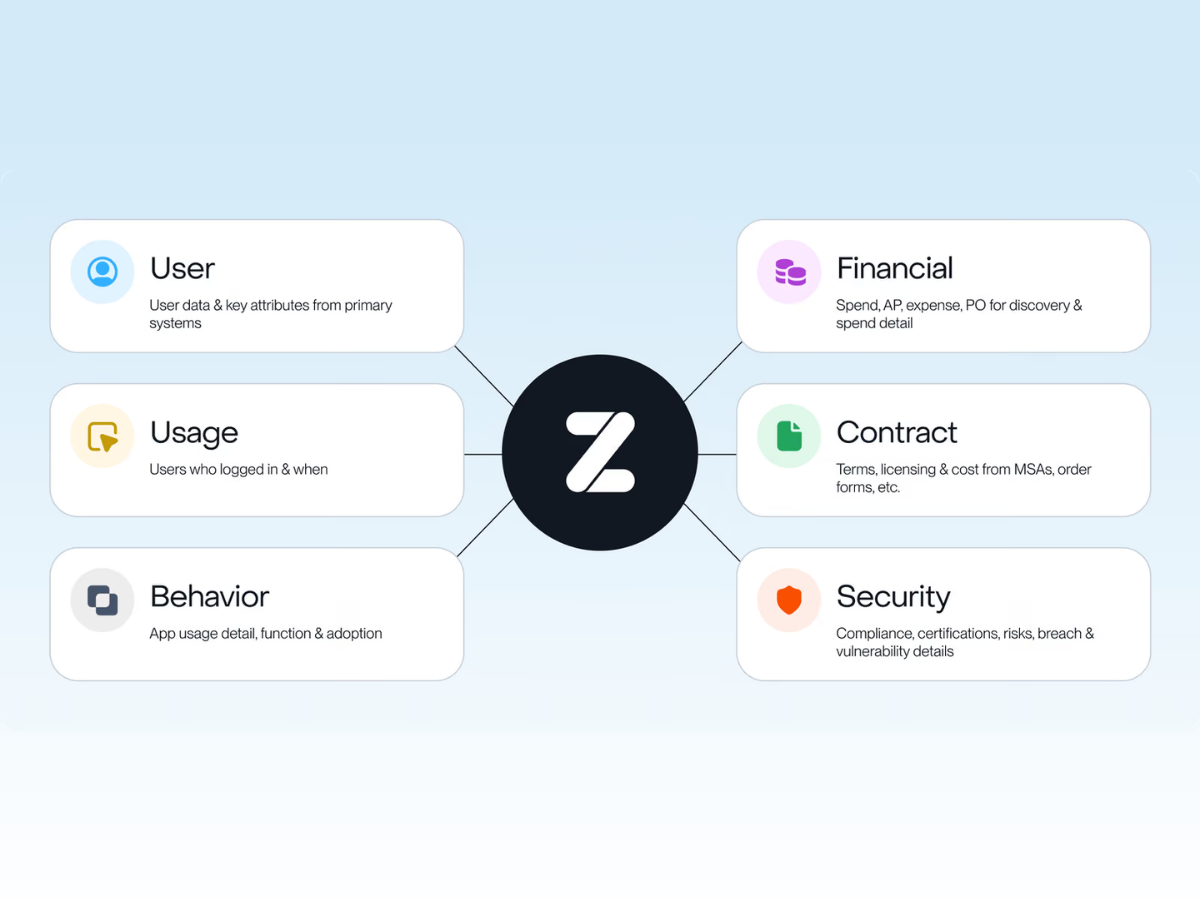
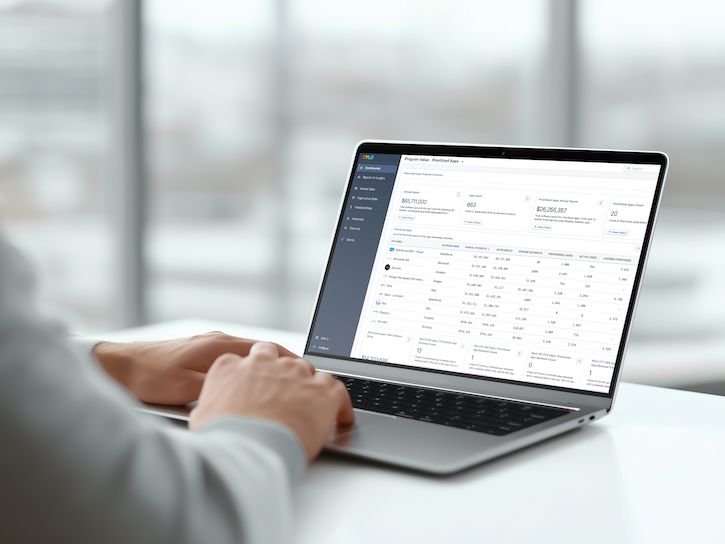
Zylo's SaaS management platform brings contract data, usage analytics, and renewal timelines into a single view so your team can rightsize licenses, benchmark pricing, and negotiate renewals with complete context. Powered by a dataset spanning more than 40M SaaS licenses and $100B+ in SaaS and cloud spend under management, Zylo powers proactive, data-backed renewals with agentic contract ingestion and renewal workflows.
Organizations that pair CLM tools with a dedicated SaaS management platform close the gap between signing a contract and getting sustained value from it. Request a demo to see how Zylo can help.