How to Measure the Business Impact of AI (Instead of Just Usage)

AI is becoming embedded across enterprise software, changing not only how employees work, but how software creates value and how vendors price it. As AI credits, consumption-based pricing, and hybrid licensing models become more common, tracking seats, prompts, and tokens no longer explains whether AI investments are creating business value.
The business impact of AI is reflected in measurable improvements such as productivity, operational efficiency, software delivery, cost savings, and customer outcomes. By measuring these results, organizations are better equipped to justify AI investments, govern AI responsibly, and make smarter technology decisions.
The Four Stages of Measuring AI Business Impact
Measuring the business impact of AI is an operational discipline that builds over time. Organizations typically progress through four stages, from understanding where AI is being used to optimizing AI investments.
The remainder of this guide explores each stage and explains how IT leaders can build a repeatable approach to measuring, governing, and optimizing AI investments.
Beyond AI Usage: Measuring Business Outcomes
AI business impact refers to the measurable improvements AI creates for an organization, including productivity gains, faster software delivery, higher-quality work, cost savings, improved customer experiences, and greater operational efficiency.
Historically, employees used software to complete work. Today, software is increasingly performing work on behalf of employees.
That shift changes how organizations should evaluate software investments. Measuring software activity alone is no longer enough because the value of AI comes from the work it performs and the outcomes it helps produce.
AI Usage Metrics vs. AI Business Impact
AI usage metrics explain how software is being consumed. Business outcome metrics explain what that consumption produces. Prompts, tokens, credits, and API calls measure activity. Productivity gains, software quality, customer outcomes, and financial performance measure business value.
What Metrics Should Organizations Use to Measure AI Success?
Organizations should measure AI success using business outcome metrics rather than activity metrics. Productivity gains, cycle time reduction, software quality, cost savings, customer outcomes, and AI ROI provide a clearer picture of value created than prompt counts or active users.
Consider how different teams use AI.
An engineer using Claude or GitHub Copilot should be evaluated by faster software delivery, improved code quality, or increased engineering capacity—not prompt volume. A marketer using ChatGPT Enterprise to create campaign briefs or content should be measured by faster execution, higher-quality output, or improved campaign performance. In both cases, software is producing work that can be evaluated against measurable business results.
McKinsey's The State of AI in 2025 reinforces this outcome-first approach. Organizations most frequently reported cost reductions from AI in software engineering, manufacturing, and IT, while sales, marketing, and product development generated some of the strongest revenue gains.
At the same time, nearly two-thirds of organizations remain in the experimentation or pilot stage, suggesting that consistently measuring business value—not simply increasing AI adoption—is the next phase of AI maturity.
Why Measuring AI Business Impact Matters
Measuring AI business impact helps IT leaders make more informed investment, governance, and budgeting decisions. Connecting AI costs to productivity, software delivery, customer outcomes, and financial performance provides the context needed to evaluate whether AI investments are delivering an acceptable return—not simply generating more activity.
That context shifts the conversation from "How much AI are we using?" to "What business outcomes has AI improved?" Instead of evaluating software usage, IT leaders can assess whether increased spending is producing measurable improvements for the business. Those insights strengthen governance, support budget planning, and build a stronger business case for future AI investments.
The goal isn't to ask, 'How much AI are we using?' The better question is, 'What business outcomes has AI improved?'
How Zylo's Engineering Team Measures the Business Impact of AI
Zylo's Engineering team measures AI success by engineering throughput. Every two weeks, the team measures sprint velocity by tracking how many work items are completed. This provides a consistent way to evaluate whether AI is helping engineers deliver more work over time.
After standardizing on Claude Code, the team saw approximately 50% more work completed compared to the same period the previous year. Productivity continues to improve from sprint to sprint. Rather than measuring how often engineers used AI, the team focused on whether AI helped deliver more software with the same engineering capacity.
Three practices contributed to those results:
- Measure throughput, not AI activity. Sprint velocity provides a consistent way to evaluate whether AI is improving engineering productivity.
- Standardize how AI is used. Reusable skills, commands, and coding standards help engineers generate more consistent, higher-quality code.
- Continuously refine the process. AI adoption creates new opportunities to optimize how teams work.
The increase in engineering throughput also revealed an important lesson. As development accelerated, new bottlenecks emerged in product requirements, code validation, and product marketing.
Rather than viewing those as setbacks, Zylo expanded AI beyond code generation to improve the entire software development lifecycle. From creating product specifications and automating code reviews to accelerating testing and documentation.
For Zylo's Engineering team, each improvement helps identify the next constraint to solve, creating a continuous cycle of optimization across the software development lifecycle.
Why AI Is Making Software Budgets Harder to Predict
AI introduces cost variability that traditional SaaS budgeting wasn't designed to handle. For years, organizations could forecast software costs using contracted licenses, expected headcount growth, and annual renewal increases. Those assumptions no longer hold true because software costs are increasingly tied to consumption, AI capabilities, and the work software performs.
Traditional SaaS Budgeting Doesn't Account for AI Consumption
Traditional SaaS budgeting assumes software costs remain relatively predictable throughout a contract. AI changes that assumption by introducing variable costs that fluctuate throughout the year.
Historically, software costs and headcount were closely connected. As AI becomes more capable of performing work inside enterprise applications, that relationship becomes less predictable. You may keep the same number of users while AI consumption—and software spending—continues to grow.
This shift is already affecting enterprise IT. Zylo's 2026 SaaS Management Index found that 78% of IT leaders experienced unexpected SaaS charges tied to AI or consumption-based pricing, and 61% were forced to delay or cut projects because of those unplanned cost increases.
Rather than isolated budgeting issues, these findings reflect a broader shift in how enterprise software is priced—and why traditional budgeting models no longer provide the predictability they once did.
Budgeting for AI Requires Better Business Context
AI spending should be evaluated in the context of business outcomes. While higher software costs may indicate waste, they may also reflect higher productivity, faster software delivery, or better business performance. Understanding the difference requires more than comparing budget to actual spend.
I like to frame this as evaluating the exchange of value. As AI pricing evolves, the critical question isn't simply whether software costs increased—it's whether the work software performed justified that additional investment.
When you can consistently connect AI spending to measurable results, your team is better equipped to forecast future investments, prioritize spending, and make informed renewal decisions.
Visibility Makes AI Business Impact Measurable
Complete visibility into AI applications, software spend, contracts, usage, and ownership is the foundation for measuring the business impact of AI. Connecting this information gives IT leaders the context needed to understand where AI is being used, how software is priced, what it costs, and whether those investments are delivering measurable business value.
Connect AI Data Across Your SaaS Portfolio
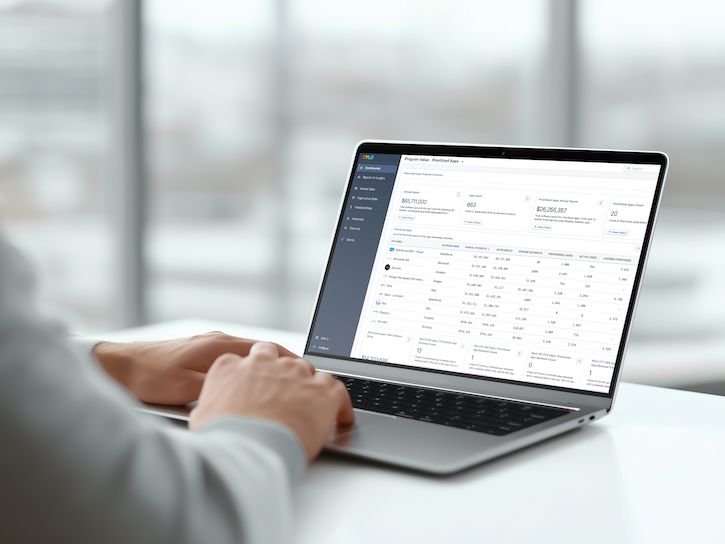
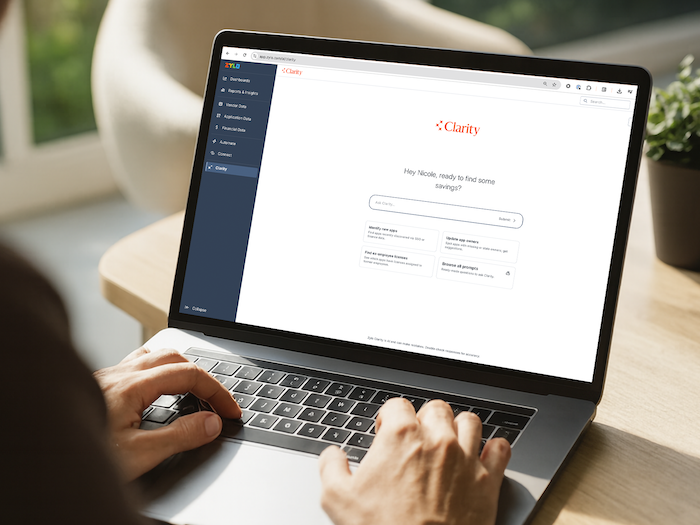
A centralized SaaS system of record like Zylo connects AI applications, software spend, contracts, licenses, and usage data into a single source of truth.
As AI adoption expands across departments, purchasing channels, and software vendors, IT teams need visibility into every AI investment. Without it, duplicate applications, shadow AI, and fragmented ownership make it difficult to understand total AI costs or connect spending to business outcomes.
Complete SaaS visibility helps IT leaders:
- Connect AI spending to measurable business outcomes.
- Identify redundant AI applications and optimization opportunities.
- Improve budgeting and renewal planning with complete spend and usage data.
- Strengthen governance by establishing clear ownership across the AI software portfolio.
These capabilities align closely with the priorities of IT leaders, who depend on a complete view of their SaaS portfolio to reduce risk, improve governance, and optimize software investments.
Business Context Turns AI Spending Into Better Decisions
Business context comes from connecting financial data, software usage, operational outcomes, and ownership information. Just because you bought the software doesn’t mean it’s a worthy investment. Understanding who is using AI, how it's being used, what work it performs, and what outcomes it produces provides the context needed to make informed investment decisions.
Evaluate AI investments by consistently connecting:
- Software costs to financial performance.
- Application usage to employee productivity and adoption.
- Operational outcomes to business goals such as faster software delivery, higher-quality work, improved customer experiences, or lower operating costs.
- Ownership and governance to budgeting, renewal, and optimization decisions.
With broader business context, IT, Procurement, and FinOps move beyond reporting AI costs to understanding whether AI investments are producing a fair exchange of value across the organization.
Signs Your Organization Is Ready to Measure AI Business Impact
Your organization can measure AI business impact consistently when foundational governance, visibility, and business metrics are already in place. Use this checklist to evaluate your current maturity.
✔ AI applications are inventoried across the organization.
✔ AI spending is visible across procurement, expense, and departmental purchases.
✔ Business owners are assigned to AI investments.
✔ IT, Procurement, and FinOps review AI investments together.
✔ AI investments are evaluated against measurable outcomes.
✔ AI usage data informs renewal and budgeting decisions.
✔ Duplicate AI tools are identified before new purchases.
✔ AI cost management is treated as an ongoing operational process.
If several of these capabilities are missing, improving visibility is often the first step toward measuring AI value consistently.
Create a Repeatable Approach to AI Cost Management
AI cost management is the practice of continuously monitoring, governing, and optimizing AI software investments to maximize business value while maintaining financial control. As AI-native tools and AI capabilities become mainstays in your software stack, you need repeatable processes to evaluate spending, standardize reporting, and connect AI investments to measurable business outcomes.
AI Governance Requires Cross-Functional Collaboration
Cross-functional AI governance begins when IT, Procurement, Finance, business leaders, and FinOps teams work from the same data so they can make consistent, informed decisions about AI investments.
IT and Software Asset Management provides centralized data, a source of truth for applications, usage, and security. Procurement manages vendor relationships and renewals, while Finance evaluates spending and budget performance. And FinOps teams contribute proven approaches for forecasting, monitoring, and managing variable consumption costs.
To build cross-functional AI governance:
- Establish a centralized SaaS system of record for AI applications, spend, contracts, licenses, and usage.
- Define ownership for AI applications, budgets, renewals, and business outcomes.
- Review AI investments together before renewals and major purchasing decisions.
- Standardize the metrics used to evaluate AI investments across teams.
These practices create a common operating model for evaluating AI investments and making consistent decisions across the organization.
AI Cost Management Needs Ongoing Evaluation
AI cost management requires continuous evaluation because AI consumption, software pricing, and business priorities evolve throughout the year. Annual budgeting alone cannot keep pace with changing usage patterns or new AI capabilities.
To create a repeatable AI cost management process:
- Monitor AI applications, spending, and usage throughout the software lifecycle.
- Measure AI investments against productivity, operational, and financial outcomes.
- Identify optimization opportunities before contract renewals.
- Reallocate savings toward AI initiatives that demonstrate measurable business value.
- Repeat the process as AI adoption, business priorities, and software portfolios evolve.
Treat AI cost management as an ongoing operational discipline rather than an annual budgeting exercise. By regularly evaluating AI investments against outcomes, IT leaders can scale AI adoption with greater financial control, stronger governance, and increased confidence that every investment is delivering value.
AI creates business value through ongoing management, not one-time measurement.
SaaS Management and AI Cost Management Work Together
SaaS Management and AI cost management address different—but closely related—business challenges. SaaS Management provides visibility into applications, software spend, contracts, licenses, and usage across the technology portfolio. AI cost management builds on that foundation by evaluating how AI investments contribute to productivity, operational efficiency, financial performance, and other business outcomes.
Organizations with mature SaaS Management practices are better positioned to manage AI investments because they already have the visibility and governance needed to measure business value consistently.
Measure AI by the Business Value It Creates
Measuring the business impact of AI isn't just an IT responsibility. It's a business capability that depends on shared visibility, consistent governance, and measurable outcomes across IT, Procurement, Finance, and business teams.
Ready to measure the business impact of AI? Request a demo to see how Zylo helps organizations measure, manage, and optimize AI investments at scale.