The Enterprise API Advantage: Embedding SaaS Management Into Your Business Systems


Updated February 9, 2026 with new data.
SaaS Management data is fragmented across your organization. Some usage insights might be available through individual app admin panels, but critical supporting data—like payment records, contract terms, and employee role changes—lives in finance tools, CLMs, and HRIS platforms.
When these systems aren’t connected, your ability to govern SaaS effectively is limited.Whether you’ve already adopted a SaaS Management Platform (SMP) or are considering one, the real challenge is making sure the right data reaches the right teams, in the right tools, at the right time.
An enterprise-grade API bridges that gap. It enables secure data flow between your SMP and the rest of your business systems, transforming SaaS Management from a standalone function into an embedded, automated part of your operating environment.
Why SaaS Management Needs to Be Embedded
According to our 2026 SaaS Management Index, lines of business are responsible for a whopping 53% of SaaS applications, whereas IT only owns a mere 13%.
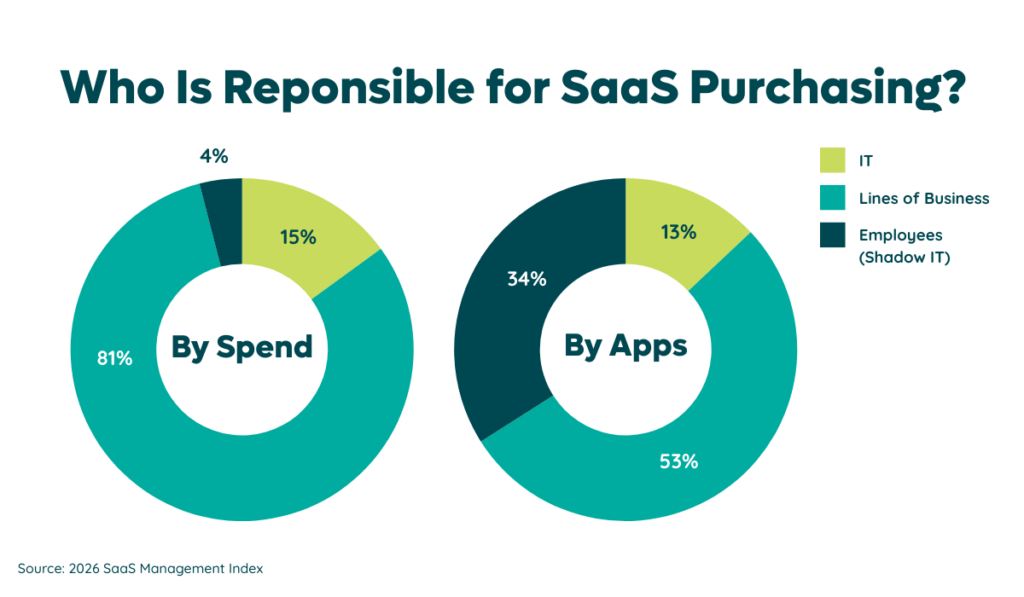
As the statistic above illustrates, SaaS Management needs to be embedded across your systems because SaaS itself is decentralized. Apps are purchased, owned, and used by different teams across the business, which means the data you need to manage them lives in multiple, disconnected systems.
“Anything outside of the space—in our case, technology we didn’t own—we now have to hunt down. We have to figure out who owns it, how they’re paying for it, where the contracts are, how many we have, who’s using it, and how many different tools we have that do the same thing. And we don’t know any of that stuff.”
—Ridge Fussell, Senior Manager of FinOps at The Home Depot
With so many apps owned and operated across teams, managing them requires coordination between tools, departments, and data sources.Disconnected systems force teams to:
- Manually pull reports and reconcile spreadsheets
- Chase down inconsistent data across platforms
- Respond reactively to license issues, risk, or renewals
These delays increase operational friction and introduce avoidable risk. An API eliminates these silos by allowing you to synchronize and manage data in your SMP with tools like CLMs, HRIS, and finance systems, so data is always up to date, accessible, and actionable where teams work.
What Makes an API Enterprise-Grade
An enterprise-grade API is built to support the complexity, scale, and integration needs of large organizations.Look for APIs that support:
- Automated, bi-directional data exchange with critical systems such as BI platforms, HRIS, CLM tools, and security solutions
- Full CRUD operations to power end-to-end automation across multiple workflows
- Custom fields and metadata support to enrich data with business-specific context like application owners or cost centers
- Enterprise-grade customization and governance to meet internal security, compliance, and operational policy requirements
- High reliability and performance at scale, whether integrating with one system or many
Together, these capabilities give your SaaS Management Platform the flexibility to connect with critical systems, as well as the stability to handle growing volumes of integrations and transactions. That’s how it stays extensible, integrated, and reliable, even as your SaaS environment changes in size and complexity.
How Enterprise Teams Use Zylo’s API
Zylo’s enterprise API is used across finance, IT, security, and procurement teams to embed SaaS insights into operational workflows.Enterprise teams use Zylo’s API to:
- Connect to BI tools like Power BI, Tableau, or Looker for departmental SaaS reporting
- Sync contract data from CLMs like Ironclad or Conga to manage renewals
- Share spend data with finance tools like Ramp or Zip for payment visibility
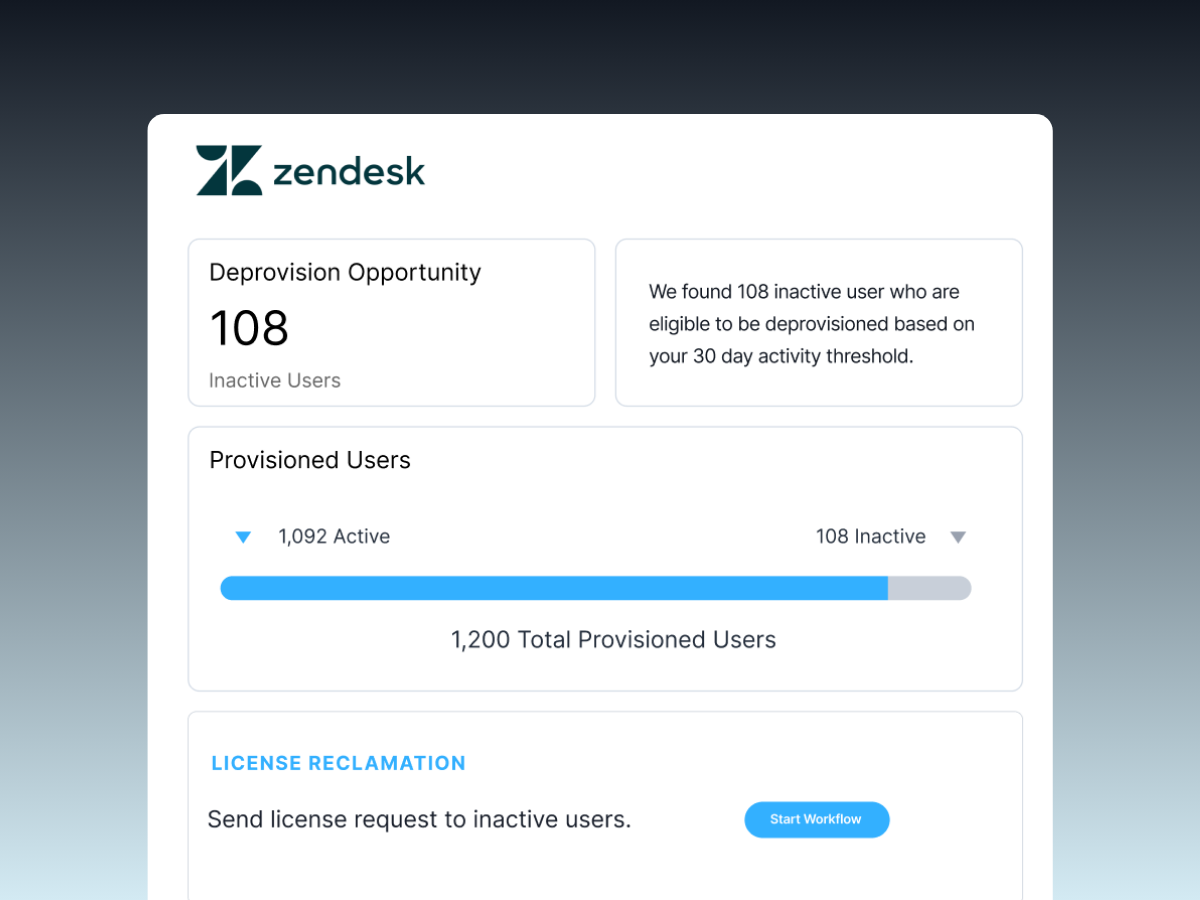
- Connect to ITSM tools like ServiceNow or JIRA to track and manage actions like user deprovisioning
- Share data with security tools like SSPMs or CAASMs for risk monitoring
These use cases help teams automate repetitive tasks and maintain data consistency, all without jumping between disconnected systems.
For example, one enterprise client uses Zylo’s API to combine SaaS usage data with on-premises software records in Snowflake, along with information from their CMDB and security tools. They calculate an internal risk score from this combined dataset, then write that score back into a custom field in Zylo via the API. That score now automatically informs renewal decisions and triggers notifications in Zylo, turning a manual assessment into a fully integrated, data-driven workflow.
SaaS Management Spans Multiple Systems and Teams
Your SaaS Management program doesn’t live in a vacuum. It supports every business function that touches software. Managing it effectively means activating SaaS insights across all of those teams’ systems, and an enterprise API is what makes that possible.
If you're looking to scale your program and increase value, it’s time to embed SaaS Management into the systems your teams rely on every day.
To learn how Zylo’s Enterprise API can help you embed SaaS insights across your existing systems, request a demo.