Strategy vs Tactics: Why IT Leaders Struggle to Cut SaaS Costs


Updated January 30, 2026 with new data
If you’re trying to cut SaaS costs right now, you’re not alone. Many CIOs face pressure to reduce spend, support innovation, and manage a growing stack without additional budget. You already see the waste in your environment, but turning that awareness into real savings isn’t always straightforward.
That’s why pinning down strategy vs. tactics in IT matters so much. When you zero in on unused licenses, overlapping apps, or last-minute renewals, you’re spotting symptoms—not the root cause. Without a clear strategy, every fix becomes reactive, and your team chases problems instead of driving meaningful cost reduction.
You can change that dynamic by tying long-term goals directly to the actions your team takes every day. When visibility, renewal readiness, and portfolio control support a defined objective, you unlock a path to repeatable savings and a SaaS environment you can manage with confidence.
Strategy vs Tactics in IT: What’s the Difference?
Strategy defines where you’re going, while tactics define how you get there. Your strategy sets the long-term direction for cutting SaaS spend, improving efficiency, and reducing risk. Tactics turn that direction into daily actions like reclaiming licenses, consolidating apps, and preparing renewals.
Here’s how both aspects can work together to save you money across the SaaS lifecycle.
Comparing Strategy vs Tactics
The Real Reason You’re Talking About Waste, Redundancy, and Renewals
When you raise concerns about unused licenses, overlapping apps, or chaotic renewals, you’re pointing to deeper structural issues instead of isolated problems. These are signals that the tactics aren’t aligned with a clear cost-saving strategy that eliminates waste. Once you recognize these patterns, it becomes easier to diagnose where execution is drifting from your long-term goals.
You’ll often hear several statements that highlight this misalignment:
- “We need to reduce license waste.”
- “We have too many overlapping apps.”
- “Renewals are reactive and out of control.”
Each one reflects a tactical symptom tied to a strategic objective like reducing waste, cutting spend, or tracking renewals.
“We Need to Reduce License Waste”
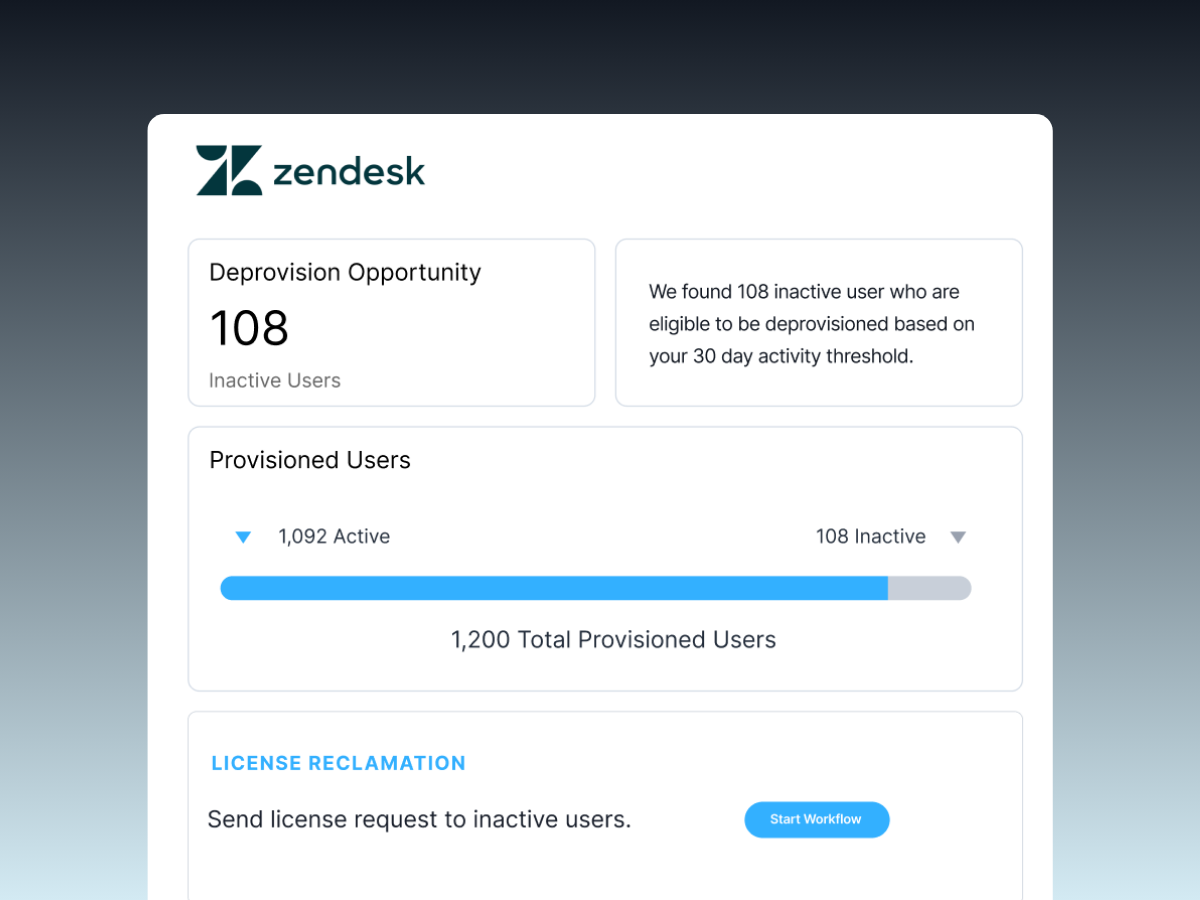
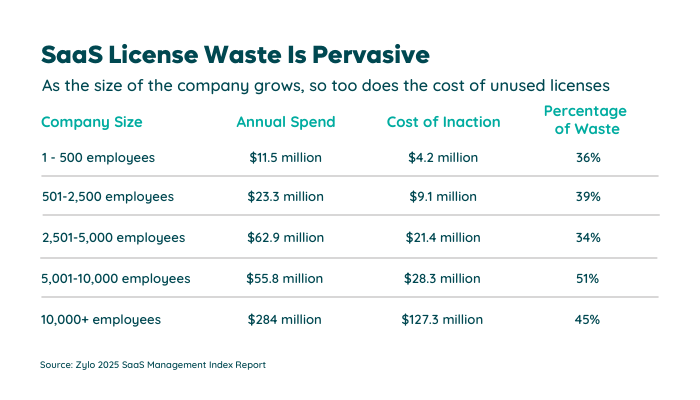
Unused licenses pile up when no one has visibility into who’s actually using what. Many organizations discover that seats sit idle across multiple tools, but without utilization data, there’s no reliable way to address the waste. According to the 2025 SaaS Management Index, an average of 46% of licenses are unused, amounting to $19.8M in annual waste.
The Strategic Goal:
Optimize SaaS spend without disrupting the teams who rely on these tools. You want to align access with actual need rather than cutting blindly.
The Tactical Approach:
Use utilization insights and workflows that reclaim or reassign licenses. This prevents waste from accumulating and keeps your license footprint tied to real usage.
“We Have Too Many Overlapping Apps”
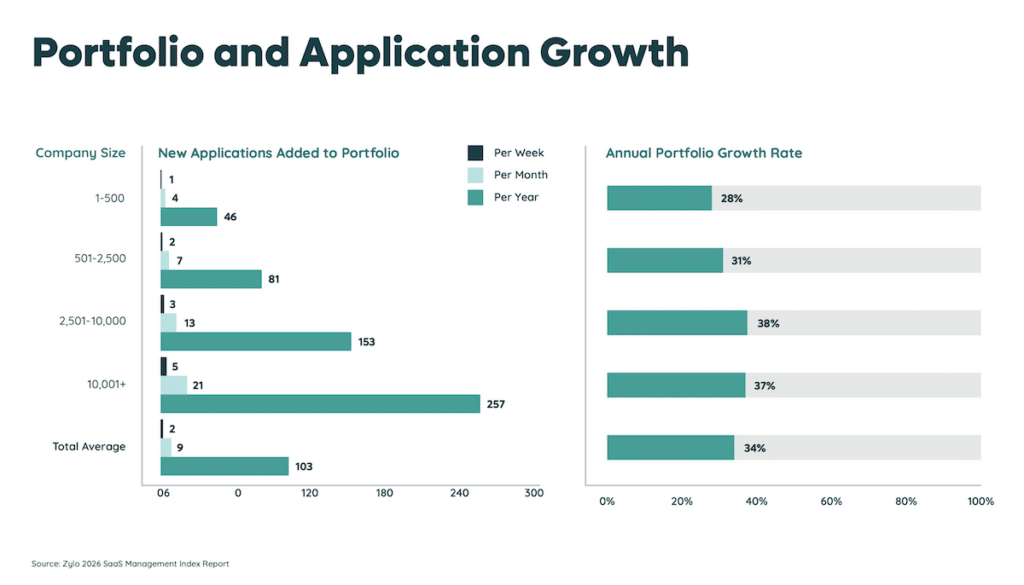
Shadow IT and decentralized purchasing make it easy for teams to adopt tools that duplicate existing functions. The result is redundancy, higher data risks, and fragmented ownership. Zylo data shows the average SaaS portfolio grows by 34% annually, and more than one-third of that expansion is due to shadow IT.
The Strategic Goal:
Portfolio rationalization, where you can reduce spend while reinforcing security and operational consistency. Cutting duplication frees budget and removes unnecessary complexity from your environment.
The Tactical Approach:
Centralize visibility so you can see all applications in one place, then tier them by business priority. From there, you can safely consolidate overlapping tools and direct spend toward the platforms that matter most.
“Renewals Are Reactive and Out of Control”
Renewals spin out of control when contract terms, usage data, and ownership details are scattered or unknown. You pay more when you take a reactive approach, especially since organizations manage 211 renewals a year, nearly one every business day. Missing even a few deadlines can lead to auto-renewals, unfavorable terms, or unnecessary spend.

The Strategic Goal:
Have a cost-saving renewal plan that relies on data instead of urgency. Without a clear playbook, your team spends more time scrambling than negotiating.
The Tactical Approach:
Proactive renewal management backed by usage insights and vendor benchmarks. This shifts renewals from last-minute emergencies to predictable, data-driven opportunities to reduce spend.
How CIOs and IT Teams Can Align Strategy and Tactics
Closing the gap between what you want to achieve and what actually happens day to day requires structure. CIOs and IT teams who succeed at SaaS cost optimization follow a predictable pattern: they set a clear target, build the operational foundation to support it, and turn that target into measurable actions the organization can execute consistently. The process includes five steps:
- Start with strategic cost-saving goals
- Establish an operational framework for execution
- Translate goals into measurable tactics
- Automate execution with the right tools
- Track progress and course-correct
Start with Strategic Cost-Saving Goals
Every aligned program begins with a well-defined result. Without a clear target, teams take action but struggle to demonstrate impact. Setting a goal, such as reducing SaaS spend by 15% within 12 months, gives you clear direction. It creates a path for prioritizing workloads, evaluating tools, and coordinating with Finance and Procurement.
This clarity helps prevent teams from chasing isolated efficiencies. Instead, it guides them toward savings that support broader business priorities.
Establish an Operational Framework for Execution
Your strategy only works when your operations support it. SaaS Ops plays a central role in shaping this foundation. A strong operational framework includes:
- Maintaining accurate data in the SaaS system of record
- Preparing for renewals with the right timing and ownership
- Driving visibility and reporting so leaders can act with confidence
With this structure in place, tactical teams can execute plans consistently rather than react to unexpected issues.
Translate Goals into Measurable Tactics
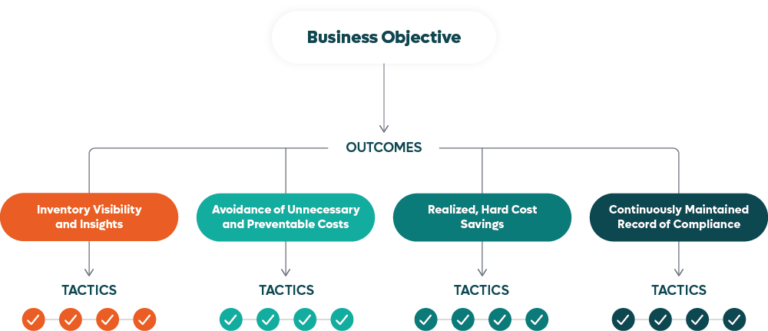
Once you set the direction and build the foundation, the next step is to convert strategy into actions that produce trackable outcomes. These actions turn high-level goals into something your team can influence every day.
Effective tactics include:
- License optimization workflows that target underused seats
- Application rationalization to eliminate overlapping tools
- Renewal tracking that prevents surprise spend and strengthens negotiation leverage
These are the levers that move your cost-saving strategy forward.
Automate Execution with a SaaS Management Platform (SMP)
As your SaaS environment expands, manual processes can’t keep up. Automation gives you consistency, accuracy, and speed—especially when reclaiming licenses, monitoring usage, or preparing for renewals.
A SaaS Management Platform supports this by providing:
- Workflow automation that keeps tasks moving without manual intervention
- Usage integrations that update data continuously
- A unified system of record that keeps IT, Finance, and Procurement aligned
Automation turns your tactical process into a repeatable engine for savings.
Track Progress and Course-Correct
Even the most well-designed strategy needs ongoing adjustments—especially as new insights emerge or business priorities change. Tactical team members surface real-time signals such as uncovering new waste or unexpected usage trends. From there, strategic leaders use that information to refine goals so the program stays aligned with organizational needs. The result is a program that stays aligned, responsive, and financially effective.
Strategy vs Tactics: Tracking the Metrics That Matter
To know whether your SaaS cost-saving efforts are working, you need visibility into your outcomes and your daily execution. Strong programs measure both, so you have a clear view of business impact and the actions supporting it.
Strategic KPIs
Use strategic KPIs to measure whether you are achieving your broader SaaS goals. To get a clear picture of program performance, track:
- Percentage of spend eliminated
- Number of vendors consolidated
- Level of audit readiness
These metrics help you:
- Understand how healthy your software landscape long term
- Determine whether your strategy is producing measurable financial and operational benefits
- Identify whether your governance approach is strong enough to sustain those improvements over time
When strategic KPIs trend in the right direction, it means your organization is reducing waste, tightening control, and lowering risk exposure.
Tactical KPIs
Tactical KPIs quantify the work happening every day to support your strategy. Understand whether your teams are taking consistent action on waste reduction by measuring:
- Unused licenses reclaimed
- Overlapping/redundant apps removed
- Renewals completed early
These indicators give you an early warning when your workflows start slipping. If license reclamation slows or renewal timelines slip, it signals a need to adjust workflows or revisit ownership. Tactical KPIs help you maintain momentum, ensure accountability, and keep your program aligned with leadership-level goals.
Connect Strategic Goals to Real SaaS Outcomes with Zylo
Reducing redundant apps, controlling renewals, and eliminating waste all point to the same underlying truth: these issues are symptoms of deeper misalignment, not solutions in and of themselves. Strong IT leadership solves them by connecting every tactical decision to a clear cost-saving objective, ensuring that daily actions support the financial outcomes the business expects.
When strategy and execution operate in the same direction, you move beyond chasing individual problems and start producing outcomes that matter: lower spend, fewer surprises, and a software portfolio you can defend.
Zylo’s SaaS Management Platform is the SaaS savings solution built for enterprise complexity and scale. Learn how Zylo can support your business objectives, and schedule a personalized demo to see it in action.
Frequently Asked Questions About Strategy vs Tactics
Your cost-cutting efforts stall when you chase isolated fixes instead of a clear outcome. Reclaiming licenses or negotiating renewals won’t create lasting savings without defined goals. You need accurate data, visibility into renewals, and shared ownership across IT, Finance, and Procurement. Without that structure, your team stays busy but doesn’t move in a coordinated direction.
Track indicators that reflect daily execution:
- Licenses reclaimed
- Overlapping apps removed
- Renewals completed early
If these numbers rise consistently, your tactics are reducing waste and strengthening your renewal position. When they plateau, it’s often a sign that workflows or data quality need attention.
A strong strategy answers three questions:
- What financial outcome are we trying to achieve?
- By when?
- Who owns each part of the work?
If any of these are undefined or debated, your strategy isn’t clear enough to guide execution.
Strategy sets the destination: your long-term goals for reducing spend, mitigating risk, or consolidating vendors. Tactics are the actions that move you toward that destination, such as reclaiming licenses, rationalizing apps, or preparing early for renewals. You need both for measurable impact.
Example One:
- Strategy: Reduce SaaS spend by 15% this year
- Tactics: Reclaim unused seats, consolidate overlapping tools, negotiate renewals using utilization data
Example Two:
- Strategy: Strengthen audit readiness
- Tactics: Maintain a complete inventory, track ownership, and centralize contract data
When your strategy and tactics align, you get benefits you can measure quickly. This alignment helps you:
- Reduce SaaS spend through predictable, repeatable savings
- Strengthen your negotiation position with usage and contract data
- Eliminate surprise renewals and unmanaged commitments
- Simplify your portfolio and remove unnecessary tools
- Improve coordination across IT, Finance, and Procurement
This clarity makes it easier to manage spend and prove the impact of your program.
A clear strategy focuses resources on the outcomes that matter, while strong tactical execution drives steady progress toward those outcomes. Together, they improve operational efficiency, reduce unnecessary spend, and ensure that SaaS investments deliver real business value.
You can document a strategy without tactics, but it won’t generate results. Likewise, tactics without strategy creates scattered activity that doesn’t drive meaningful savings. Sustainable improvement requires both aspects working together.