5 Industry Experts Weigh In on the 2026 SaaS Management Index


TL;DR: What Industry Experts Are Saying About SaaS in 2026
Five SaaS and ITAM leaders—from Capgemini, Anglepoint, and the analyst community—reviewed the 2026 SaaS Management Index and shared what the data confirms in the industry. Here’s what they want you to know:
- AI and usage-based pricing are redefining SaaS spend, and few teams are equipped to forecast or govern it effectively.
- SaaS visibility is improving, but risk and waste remain high without operational accountability.
- Organizations are spending more without adding apps, driven by consumption growth inside existing contracts.
- SaaS success depends on shared ownership across ITAM, FinOps, Procurement, and IT. Siloed models can’t keep up.
- Teams that are evolving their operating models are gaining more control over cost, risk, and strategic planning.
SaaS Is Changing Faster Than You’re Managing It
The way your organization buys, uses, and pays for software is being rewritten in real time. Most teams haven’t updated how they manage SaaS to keep up.
The 2026 SaaS Management Index reveals the biggest shifts in how software is governed today—from pricing and licensing trends to spend volatility and operational maturity. Based on over $100B+ in SaaS spend and 40M licenses under management, it’s the most comprehensive dataset of its kind.
We asked five industry experts to review the findings and share how they’re seeing the same patterns play out in real time:
- Jez Back, Cloud Economist and Global Offer Leader at Capgemini Invent
- Ross Milne, ITAM Practice Lead at Capgemini Invent
- Matt Harney, Founder at Cloud Ratings
- Ron Brill, President & Chairman of Anglepoint
- J.R. Storment, Executive Director at FinOps Foundation
Their message is clear: SaaS is becoming more decentralized, dynamic, and deeply embedded in the business. Without a modern SaaS Management strategy, organizations risk losing control of cost, compliance, and value.
SaaS Pricing Has Changed. Your Operating Model Hasn’t.
SaaS pricing models are evolving faster than most teams can adjust their management practices. Vendors are shifting from seat-based licensing to usage-based, hybrid, and AI-enhanced pricing. Meanwhile, many organizations still treat contracts as static.
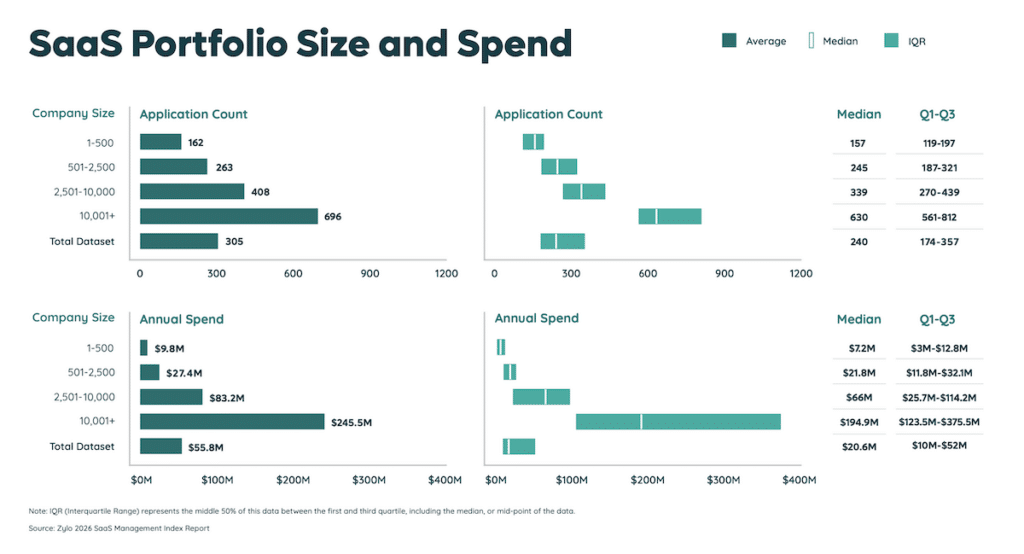
This shift is one of the most important SaaS trends highlighted in the 2026 SaaS Management Index. Even when app counts hold steady, SaaS costs are rising. The Index shows an 8% YoY increase in average spend across a flat application footprint. The rise is driven largely by pricing model complexity, not new tool adoption.
Pricing Volatility Is the New Norm
Usage-based SaaS creates unpredictability, making it difficult for:
- Finance teams to forecast accurately
- IT to maintain control over consumption
- Procurement to plan effectively for renewals
Ross Milne, ITAM Practice Lead at Capgemini Invent, pointed to a growing disconnect between vendor behavior and internal readiness. “Vendors are implementing these models without giving ITAM or Procurement teams the tools or context they need to manage them,” he explained.
Ron Brill, Chairman of Anglepoint warned that this cost volatility is already interfering with business operations. Zylo’s 2026 SaaS Management Index found that for 61% of IT leaders, unplanned SaaS costs impacted planned projects.
Brill explained the implication, saying, “This moves the issue from cost management to business outcome.” This underscores the need for a more responsive SaaS operating model that links spend to strategic outcomes.
Seat-Based Thinking Creates Blind Spots in Usage-Based Environments
Traditional license tracking and annual renewal cycles don’t match the real-time nature of usage-based models. Many organizations are now beginning to separate fixed-license and consumption-based SaaS into distinct categories for forecasting and management.
Brill noted that aligning ITAM and FinOps enables teams to combine entitlement governance with real-time usage tracking. This blended view helps teams understand both what was purchased and how it’s being consumed—a necessary shift to stay ahead of mid-cycle pricing changes.
AI Spend Is Expanding Faster Than Most Governance Models
A notable driver of SaaS volatility in 2026 is AI. Vendors are introducing AI-powered functionality mid-contract and often pricing it independently of the core license. This has introduced rapid spend growth in areas that aren’t budgeted or controlled.
J.R. Storment, Executive Director of the FinOps Foundation, explained how this shift is changing SaaS Management: “AI components to those licenses or seats... have a variable consumption-based model... It’s hard to forecast and predict. These things are driving a need for more FinOps-like behaviors in a SaaS world.”
Teams are recognizing that practices once applied to cloud are now essential for SaaS, especially when it comes to managing dynamic spend.
Jez Back, Cloud Economist and Global Offer Leader at Capgemini Invent, echoed this concern, warning that “without financial governance, without ownership of that AI-based spend, it will spiral.”
Without clear thresholds, rules, and tracking, teams are exposed to cost escalation without visibility into where spend is coming from—or what it’s delivering.
“AI spend governance is becoming a mainstream need, not a niche or experimental effort.”
— 2026 State of FinOps
Renewals Now Require a Pricing Intelligence Layer
Procurement leaders are rethinking their renewal strategies in response to these pricing shifts. Discounts alone are no longer enough. The most strategic teams are pushing vendors to clarify how:
- New features are priced
- Usage is measured
- Contracts will adapt over time
Milne emphasized that pricing mechanics must be questioned during every renewal, especially as vendors experiment with AI add-ons and unbundled tiering. This focus on clarity is becoming essential to support budgeting, forecasting, and long-term vendor accountability.
Visibility Isn’t SaaS Management. It’s Just the Starting Line.
SaaS visibility is foundational to effective management. But it only delivers value when paired with action, ownership, and process.
The 2026 SaaS Management Index shows that while many organizations have invested in SaaS discovery tools and dashboards, many still experience license waste, missed renewals, and redundant tools.
While visibility is more widespread, the challenge now is translating insights into results.
Matt Harney, Founder at CloudRatings, put it this way: “What matters now is what you do with that visibility.” This perspective reflects a broader shift in the market: discovery must be connected to decisions that drive business outcomes.
SaaS Discovery Is Gaining Priority and Being Operationalized
As organizations improve their visibility posture, the next challenge becomes turning those insights into control.
What’s starting to separate mature SaaS Management programs from the rest is consistent follow-through. In these environments:
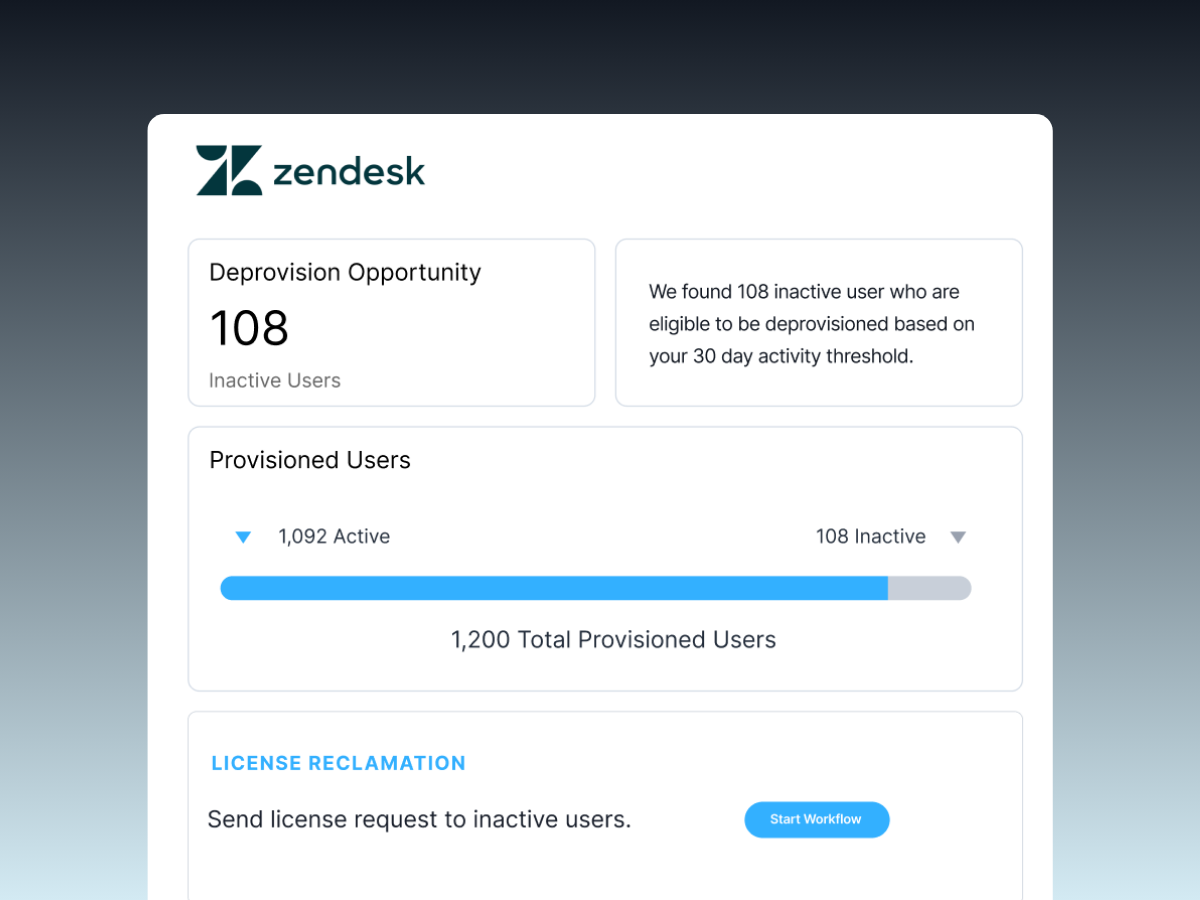
- Unused licenses are routed to procurement or SaaS managers for timely reclamation
- Renewal alerts trigger review workflows with the right stakeholders
- Redundant tools are flagged and assigned for rationalization
- Risky features are assessed based on policy or spend thresholds
Storment drew a direct line between visibility gaps and rising risk. “Security and compliance risks [are] increasing, driven by poor visibility... That same lack of visibility that has been, I think, largely solved in cloud is now starting to be applied better into SaaS and licensing.”
In addition, Back shared that many organizations have robust dashboards but limited ability to influence spend or risk. The tools are in place, but business impact depends on execution.
Clear Ownership Creates Accountability Across the SaaS Lifecycle
Teams are seeing better results when each insight leads to a defined action. Harney points to models where IT flags waste, but Procurement handles rightsizing. Or where SAM teams track usage, but business units review value.
This structure is helping organizations reduce SaaS sprawl, improve forecasting, and manage renewals with better data. Automation also plays a role. When workflows for license reclamation or rationalization are triggered automatically, teams respond faster and with greater consistency.
Aligning Visibility to Outcomes Improves Impact
Milne emphasizes that visibility gains more traction when it's aligned to business outcomes. Many organizations are now looking beyond usage stats to understand impact. For example, they may tie app usage to performance goals, training investments, or departmental budgets.
This evolution is expanding how teams define SaaS success, moving from login activity to value realization.
SaaS Consumption Is Rising. Business Value Isn’t Keeping Up.
Organizations are maximizing the value of existing platforms while consumption pricing and premium add-ons—especially for AI—drive up costs. This swift pace of growth is disrupting enterprise planning. Yet many organizations still lack the structure to assess whether that growth is delivering value. As usage-based pricing becomes the norm, organizations will begin to measure value by category and reinvest SaaS savings in innovation.
Higher SaaS Usage Is Disrupting Enterprise Planning
As consumption grows, many leaders are struggling to assess whether that growth is productive. Brill put it plainly: “Organizations are struggling to tie increased consumption to increased business value.”
Storment reinforced this pattern. “SaaS spend is increasing without portfolio growth... because of the consumption models,” he shared. “It’s easier to spend more on the same contracts without actually adding licenses or seats.”
These usage-driven increases often go unnoticed until they begin affecting budgets and forecasts. That impact is especially acute for IT and Finance teams trying to balance innovation with predictability.
Harney shared an adjacent concern from the vendor side. “Instead of net revenue retention of 110 or 115%, vendors are getting reset to 83%.”
For SaaS buyers, that kind of reset reflects tighter scrutiny and smarter renewals. At the same time, it speaks to the urgency of aligning consumption to measurable outcomes.
SaaS Savings Are Becoming Fuel for Innovation
Another emerging practice is treating SaaS savings as reinvestment capital. According to the Index, 34% of leaders who drove SaaS savings reinvested them into growth initiatives such as expanding strategic platforms, funding new IT projects, or investing in enablement.
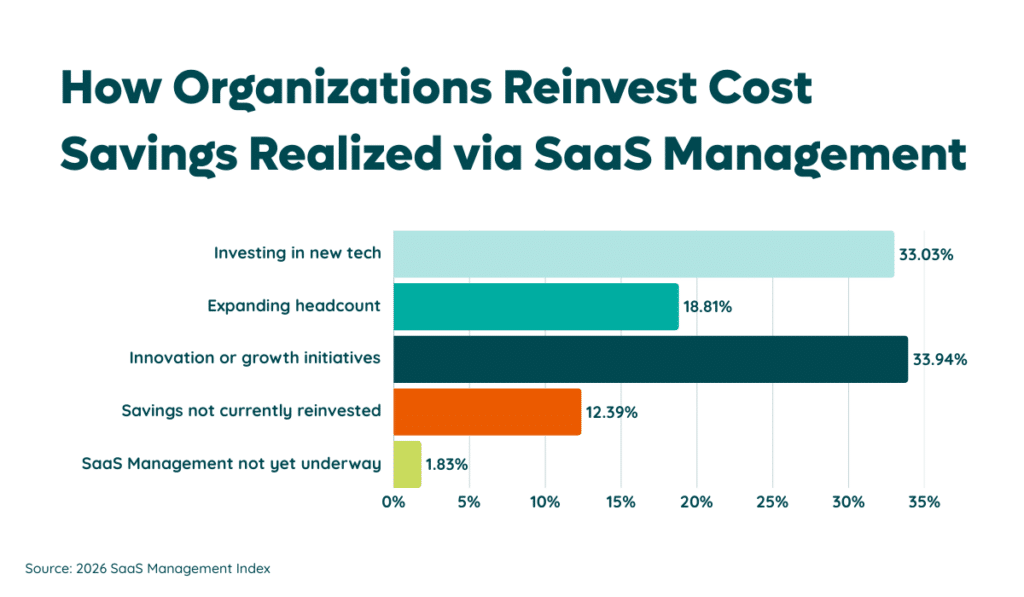
Brill noted this as a leading indicator of maturity. Teams that are reclaiming waste and optimizing contracts are also the ones with budget room to innovate. That shift has implications across Procurement, FinOps, and IT. When SaaS is managed strategically, it becomes a funding lever.
Value Measurement Is Evolving by SaaS Category
Milne points out that teams are also beginning to define SaaS success differently by application type. Collaboration tools, for instance, might be evaluated on engagement rates, while security platforms are judged on coverage or policy compliance.
The key is that SaaS performance is being tied to business impact metrics, not just system logs or contract status. This broader lens is helping organizations align their software strategy with real outcomes: enablement, productivity, and spend control.
ITAM and FinOps Can’t Work in Silos Anymore
SaaS governance now spans entitlement management, cost optimization, risk mitigation, and performance tracking. This makes cross-functional collaboration a requirement.
Historically, ITAM and FinOps operated separately. IT Asset Management owned licensing and renewal governance, while FinOps managed cloud and infrastructure spend. Today, both teams are finding common ground with SaaS Management.
Cross-Functional Roles Are Converging Around SaaS Governance
Milne underscored the criticality of this shift: “The crossover of the skills between [ITAM and FinOps] is going to be paramount.” In 2026, more organizations will have these two teams working in tandem.
The Index shows that organizations moving toward integrated SaaS governance are better equipped to:
- Manage complexity
- Anticipate pricing shifts
- Align renewals to usage
According to the 2026 State of FinOps, “FinOps integration and collaboration continues to deepen” with ITAM/SAM, “propelled by SaaS and hybrid licensing optimization.” The convergence is prompting more teams to align their workflows and data. Doing so gives each function a clearer view of
- SaaS ownership
- Performance
- Spend
When ITAM and FinOps share systems and goals, renewal planning, budgeting, and compliance all become easier to coordinate.
Treating SaaS as a Unified Portfolio Improves Decision Making
Brill noted that hybrid and usage-based SaaS models “require a different operating model than most organizations use today.”
More organizations are responding by managing all SaaS contracts—whether fixed, hybrid, or consumption-based—as a single, governable portfolio. This allows for more comprehensive oversight and fewer blind spots across teams.
Common patterns among unified programs include:
- Shared access to contract and usage data
- Aligned intake and rationalization processes
- Consolidated dashboards for app inventory, spend, and compliance
These capabilities allow teams to respond faster to vendor changes, internal demand, or emerging risks.
Program Maturity Is Reflected in Cadence, Coordination, and Consistency
One of the most visible indicators of SaaS Management maturity is team alignment. Back observed that regular collaboration between IT, Finance, and Procurement is becoming embedded rather than ad hoc.
Storment emphasized the same shift: “The processes that were set up for SaaS Management are not operating in the way a consumption-based model needs... We need to bring visibility earlier into the process and empower teams to act with better data.”
This proactive posture marks a turning point for many teams. Instead of reacting to renewal cycles, they are governing SaaS as a dynamic, continuous investment.
These organizations are standardizing how they:
- Plan for renewals
- Review usage trends
- Audit consumption-based contracts
- Reclaim underutilized licenses
Consistent governance practices like these reflect a well-developed SaaS operating model that turns visibility into action and spend into strategy.
Download the 2026 SaaS Management Index
The 2026 SaaS Management Index is the definitive benchmark for how enterprises manage SaaS today. Based on $100B+ in spend and 40 million licenses under management, it reveals how top teams reduce waste, improve governance, and drive measurable outcomes.
Zylo’s data backs where SaaS is heading—and what high-performing organizations are doing to stay ahead. To get all the data and insights, download the full 2026 SaaS Management Index today.
FAQs About SaaS Management Trends in 2026
The SaaS Management Index, published annually by Zylo, is an industry benchmark that tracks how enterprises buy, manage, and optimize SaaS at scale. Built on Zylo’s proprietary dataset of real SaaS spend, usage, and license data, it provides an objective view into SaaS economics, risk, and operational maturity.
Vendors are shifting toward usage-based, hybrid, and feature-level pricing—especially for AI functionality. This introduces cost variability even when the number of apps remains stable.
Vendors are shifting toward usage-based, hybrid, and feature-level pricing—especially for AI functionality. This introduces cost variability even when the number of apps remains stable.
ITAM provides entitlement and compliance oversight. FinOps brings real-time consumption and spend data. Together, they create a single model for governing SaaS investments across the full lifecycle.
Organizations with mature practices report improved forecasting, reduced waste, and more effective renewals. Zylo customers saw a 5.3% reduction in license waste and up to 17% savings during contract resets, enabling reinvestment in innovation and growth.