Blog
From Chaos to Control: Applying FinOps Thinking to SaaS
Table of Contents ToggleWhat Is Cloud Cost Forecasting?What Cloud Cost Forecasting...


Back

Back

Search for Keywords...
Blog

Table of Contents
If you’ve ever watched a cloud budget drift off course mid-quarter, you already know why cloud cost forecasting matters. You need a way to estimate spend before invoices hit so that Finance can plan, Engineering can build, and FinOps can keep the trade-offs visible. But forecasting cloud spend costs from forecasting traditional IT spend because usage changes quickly, pricing is layered, and commitments can either stabilize or distort your baseline.
This guide breaks down what cloud cost forecasting is, why it’s hard, the most common methods teams use, and the tools and practices that can help you improve accuracy over time.
Cloud cost forecasting is the process of estimating future cloud spend based on historical usage, current infrastructure patterns, and planned changes. It helps you predict how much you’ll spend across providers, services, and teams before costs are incurred, rather than reacting after the bill arrives.
In practice, cloud cost forecasting turns variable, usage-based cloud consumption into a forward-looking financial view that Finance, IT, and Engineering can plan around.
At its core, cloud cost forecasting combines usage data, pricing models, and business context to estimate future spend. The process typically includes the following inputs:
Together, these elements allow teams to estimate future spend based on how cloud environments actually operate rather than assuming static usage.
Effective cloud cost forecasting is an ongoing process that adjusts as usage fluctuates, architectures evolve, and pricing changes. Teams rely on historical trend analysis, growth assumptions, and scenario modeling to account for uncertainty and reduce reliance on a single projection.
Cloud cost forecasting sits at the intersection of financial planning, engineering operations, and cost governance. Within a FinOps framework, forecasting supports proactive decision making by showing the cost impact of technical and business choices before they’re made.
In practice, forecasting supports FinOps and budgeting efforts by enabling teams to:
A shared view helps Finance and Engineering work from the same assumptions. It reflects the FinOps Foundation’s emphasis on collaboration and accountability as core principles of effective cloud cost management.
A good cloud cost forecast is directionally accurate, transparent, and continuously updated. For Finance, this means supporting quarterly and annual planning with realistic spend expectations. For Engineering, it means understanding how growth, architectural changes, or new services affect costs.
Strong forecasts generally:
When these elements are in place, forecasting helps teams move from reacting to overruns toward evaluating tradeoffs earlier and making informed decisions before costs escalate.
The biggest challenges to cloud cost forecasting include:
Cloud cost forecasting is difficult because cloud environments evolve faster than most financial planning models are built to handle. Usage is elastic, pricing is layered, and responsibility is distributed across teams operating on different timelines. Even organizations with mature FinOps practices struggle to produce forecasts that stay accurate for more than a short window.
Cloud cost forecasting depends on historical usage data, but that data is often limited or unreliable. Common issues include:
Without a stable baseline, forecasts become assumption-driven, increasing variance and reducing confidence across Finance and Engineering.
Multi-cloud environments add structural complexity that makes forecasting more difficult such as:
A multi-cloud SaaS stack also obscures total exposure. Costs may decrease in one environment while increasing in another, leading to fragmented forecasts that miss cross-platform tradeoffs.
Cloud usage rarely grows in a smooth or linear way. Variability is driven by factors such as:
Because many forecasts assume consistent growth rates, they struggle to account for short-term volatility. This gap between real-world usage and forecast models is a persistent source of inaccuracy.
Accurate forecasting requires reliable cost and usage data, yet visibility is often incomplete. Common gaps include:
When cost data lacks context, forecasts become abstract totals rather than actionable insights for Finance or Engineering.
Cloud platforms evolve continuously, introducing new services, pricing models, and consumption patterns. Forecasting challenges increase due to:
As infrastructure assumptions change, forecasts built on earlier models can quickly become outdated.
Forecasting accuracy declines when Finance, Engineering, and IT operate independently. Breakdown points often include:
Without shared ownership of inputs and outcomes, forecasts tend to reflect partial views rather than a complete picture of future cloud spend.
The Ultimate Guide for Wildly Effective SaaS Renewals
Learn MoreSome of the most common cloud cost forecasting methods are:
Cloud cost forecasting methods vary in sophistication, data requirements, and accuracy. Most organizations use multiple approaches simultaneously, depending on the maturity of their cloud environment and the decisions they aim to support. Some methods are better suited for short-term visibility, while others are designed for longer-term planning or scenario analysis.
Historical trend-based forecasting analyzes past usage and cost patterns to estimate future cloud spend. It typically relies on:
This approach works best when workloads are stable and usage patterns remain consistent. It is most effective in mature SaaS environments with predictable demand. However, it becomes less reliable when architectures change, new services are introduced, or usage volatility increases.
Simple, or naive, forecasting uses recent spend data to project future costs with minimal adjustment. This method generally includes:
Naive forecasting can be useful for quick estimates or early-stage environments with limited data. Its accuracy declines as usage scales, since it does not account for seasonality, growth drivers, or planned infrastructure changes.
This approach links cloud spend to specific operational drivers rather than relying on historical cost alone. Common drivers include:
By forecasting underlying activity first, this method helps teams understand how growth or product changes affect cloud costs. It improves alignment by grounding forecasts in operational inputs instead of historical averages.
Machine learning forecasting applies algorithms to large volumes of cloud usage and cost data. These models typically account for:
This approach is most effective in large, dynamic environments with frequent change and high data volume. While it can improve accuracy, it depends on strong data quality, consistent inputs, and careful interpretation, and is often adopted as forecasting maturity increases, alongside guidance from organizations such as Gartner.
Cloud cost forecasting tools help you turn raw usage and billing data into forward-looking spend projections. Tools include:
These tools vary widely in scope, from basic estimates built into cloud provider consoles to more advanced platforms that centralize data across environments and teams. The right tool depends on:
Native cloud provider forecasting tools like AWS Cost Explorer and Amazon Cost Management are offered to FinOps teams operating in a single cloud environment. Typically, they provide:

Their limitations are primarily related to scope. Native forecasts generally:
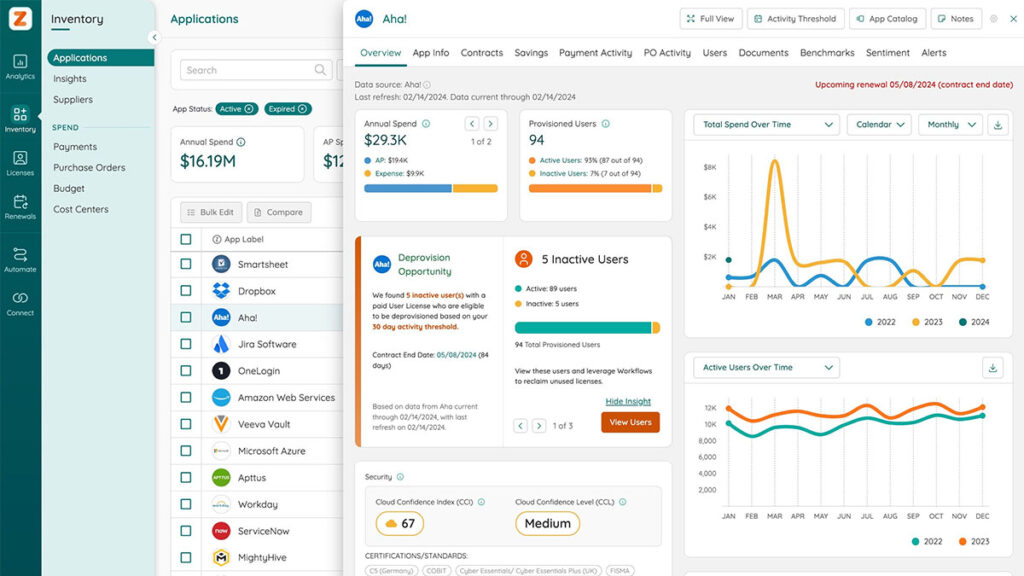
SaaS Management Platforms (SMPs) extend cloud cost forecasting to large cloud software (SaaS) environments by centralizing spend, contract, and usage data. SMPs typically enable:
Platforms like Zylo will be essential for cost forecasting as FinOps teams take on responsibility for SaaS Management. Today, SMPs don’t include cloud infrastructure, but must be used as a complementary tool for comprehensive spend management and forecasting.
Third-party forecasting platforms focus on modeling and prediction rather than cost aggregation. These tools commonly offer:
While these platforms can improve accuracy in large or fast-changing environments, they depend heavily on clean, well-structured input data. Without strong cost allocation and visibility, even advanced models can produce misleading forecasts.
Cloud cost forecasting rarely relies on a single tool. Teams commonly supplement forecasting platforms with:
These supporting inputs do not forecast costs on their own. Instead, they provide context that helps connect technical usage data to financial expectations and improves the relevance and credibility of forecasting outputs.
2025 Gartner® Peer Insights™ Voice of the Customer Report
Learn MoreWhen applied together, the following best practices help cloud cost forecasts stay relevant, explainable, and actionable as your environment evolves:
Improving cloud cost forecasting is less about finding a perfect model and more about building habits that reduce uncertainty over time. The most effective practices directly address the challenges outlined earlier, such as volatile usage, limited historical data, siloed teams, and poor visibility.
Cloud environments change rapidly, resulting in spend volatility and unpredictable cloud usage patterns. That makes it paramount to continuously monitor your environment so that your forecasts are:
Review forecasts regularly rather than quarterly or annually. That way, your team can spot deviations early and adjust assumptions before small changes turn into budget overruns.
Conduct a historical trend analysis to get a baseline understanding of normal usage behavior and identify seasonality or recurring spikes. More importantly, treat historical data as context to counter over-reliance on short-term data that may not tell the whole story.

Cross-team collaboration between Finance, Engineering and IT help improve the accuracy of your cloud cost forecast. When you follow this best practice, it also helps eliminate mismatched assumptions and timing gaps that can lead to forecasting errors. Create a shared planning tool by aligning on:
Use bottom-up budgeting to build forecasts from individual services, workloads, or teams rather than applying top-level growth percentages. In complex or multi-cloud environments where costs behave differently across platforms, this approach makes forecasts more resilient.
By tying spend to specific owners and usage drivers, bottom-up budgeting improves accountability and highlights where assumptions are most likely to break.
Accurate forecasting requires knowing where costs originate. Use detailed tagging and cost allocation to improve spend visibility into services, teams, and environments, which directly addresses data accuracy and visibility gaps.
Without consistent tagging, forecasts become generalized estimates that are difficult to validate or explain. Strong allocation practices give forecasts structure and credibility.
Engineering teams understand how systems scale, which services are being adopted, and where experimentation is likely to increase usage. Incorporating engineering input helps ensure forecasts reflect real operational plans and surprises caused by new workloads, architectural changes, or rapid technology adoption.
Use a native cloud provider forecasting tool for quick access to usage-based projections and to serve as a starting point. While limited in scope, they provide immediate visibility and help validate assumptions against provider data. Implementing a native tool alongside broader platforms allows you to compare perspectives and identify blind spots early.
Forecasts become more meaningful when cloud costs are tied to business metrics such as cost per user, transaction, or workload. Account for unit economics to help explain why costs change and how growth impacts spend. This approach is especially valuable when usage patterns fluctuate, as it anchors forecasts to measurable business drivers rather than raw consumption alone.
Conduct a “What if” analysis to enable your FinOps team to model scenarios such as traffic spikes, new product launches, or changes in pricing commitments. Doing so directly addresses uncertainty by replacing single-point forecasts with ranges and scenarios. In addition, scenario planning prepares stakeholders for variability instead of assuming ideal conditions.
Set anomaly detection alerts to:
Involve Finance, Engineering, IT, and business leaders in the process to ensure forecasts reflect shared priorities and constraints. As a result, forecasts are more accurate and trustworthy and become a live input for decision making.
The next phase of cloud cost forecasting is being driven by:
Cloud cost forecasting is moving beyond static models and short-term projections. As cloud environments expand to include SaaS, licensing, and AI workloads, forecasting is becoming more adaptive, automated, and tightly integrated with real-time decision-making. The next phase of forecasting focuses less on predicting a single number and more on continuously adjusting expectations as SaaS environments change.
AI and machine learning are changing cloud cost forecasting by improving pattern recognition, adaptability, and scale. AI-driven models increasingly support forecasting by enabling:
Industry data highlights the pace of this shift. According to the FinOps Foundation, the percentage of organizations actively managing AI spend has increased significantly year over year. Among teams not yet managing AI spend, most have planned AI investments within the next 12 months, pushing expected adoption to 96% by 2026. As AI usage accelerates, forecasting models that cannot adapt in near real time will struggle to remain relevant.
Forecasting is expanding beyond traditional public cloud infrastructure as technology footprints broaden. Current trends include:
SaaS and licensing costs are playing a growing role in this shift. FinOps data shows that SaaS spend management is the most common add-on scope at 65% adoption, with projected growth of 25% over the next year. Licensing follows at 49% adoption with a projected 21% increase. As these categories expand, forecasting models must unify cloud, SaaS, and licensing data to present a complete financial view.
Forecasting ownership is shifting from isolated Finance or IT teams to shared responsibility across the organization. This shift is driven by:
As forecasting becomes more dynamic and comprehensive, it functions less as a periodic task and more as a continuous planning capability. Organizations that succeed will combine adaptive technology with shared accountability, using forecasts to guide decisions before costs are incurred.
As cloud cost forecasting expands beyond infrastructure to include SaaS, licensing, and AI-driven services, visibility across all spend categories becomes essential. Forecasts are only as strong as the data behind them, and gaps between cloud and SaaS Management make it harder to understand true cost drivers or plan with confidence.
Zylo complements your existing cloud cost management tools by addressing the complexities of SaaS licensing, usage, and costs. Centralizing SaaS spend and connecting costs to owners and business context, Zylo helps IT teams gain a more complete, forward-looking view of technology spend. Together, cloud and SaaS cost management enable better decisions before budgets are exceeded.
Request a demo and see how Zylo goes to work for you.
Table of Contents ToggleWhat Is Cloud Cost Forecasting?What Cloud Cost Forecasting...

Table of Contents ToggleWhat FinOps Means in the Modern Cloud EnvironmentWhy...
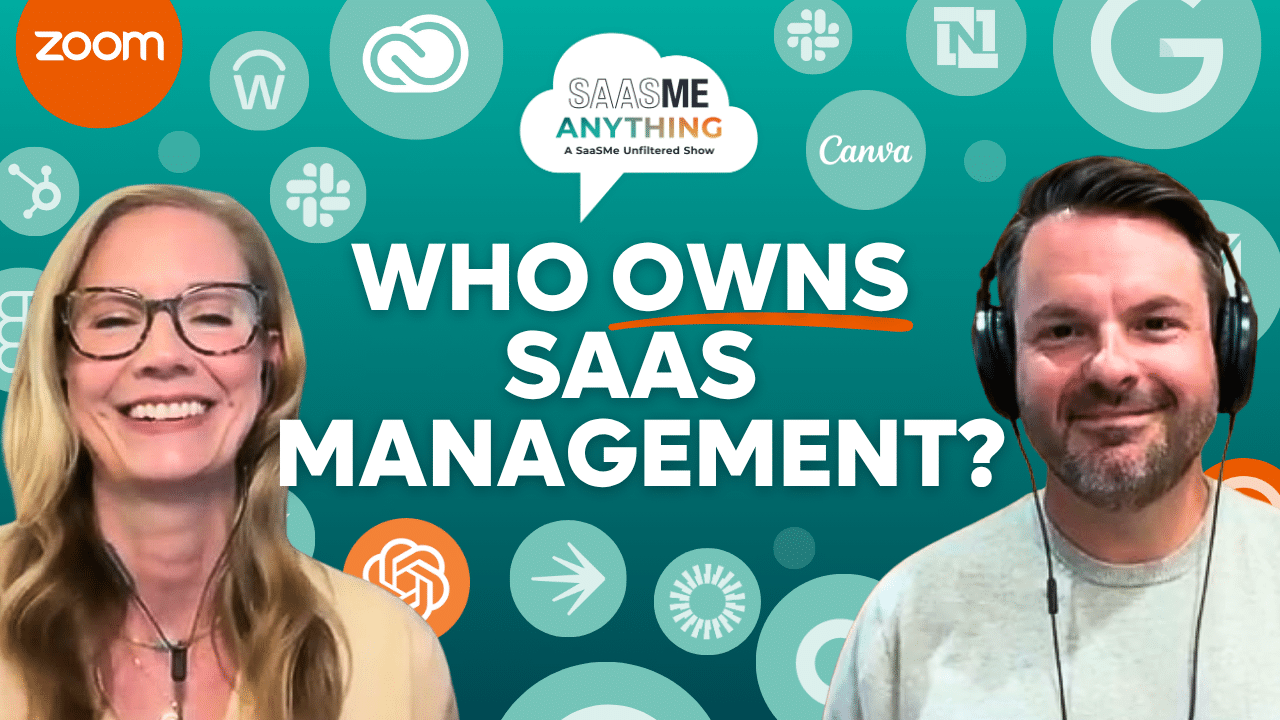
Who owns SaaS Management—IT, FinOps, or both? As FinOps officially brings SaaS into its framework, Zylo’s Meredith Albertson and Cory Wheeler dig into what that means for leadership, accountability, and collaboration across teams. You’ll learn how leading organizations are structuring ownership, aligning executive stakeholders, and managing risk in today’s complex software environments. If you’re unsure who should take the lead, this episode brings clarity and next steps.
Chapters
00:00 Introduction to SaaS Management Ownership
02:59 The Role of CIO in SaaS Management
05:52 FinOps and SaaS Management Convergence
08:35 Accountability vs. Ownership in SaaS Management
11:15 C-Suite Engagement in SaaS Management
14:03 Conclusion
To learn more about SaaS Management ownership, accountability, and roles, check out The Definitive Guide for SaaS Management.

Table of Contents ToggleWhat Is Cloud Cost Forecasting?What Cloud Cost Forecasting...