The IT & SAM Leader’s Guide to Smarter Zoom License Management


Updated February 9, 2026 with new data.
Zoom is a business-critical tool—but managing Zoom licenses across an enterprise? That’s where things get messy.
From complex license tiers to constant pricing changes, IT and procurement often get stuck in reactive mode. They are overpaying for unused licenses, scrambling to track ownership, and racing against renewal deadlines. I’ve seen organizations surprised to discover how many licenses sit idle, draining budget with zero return.
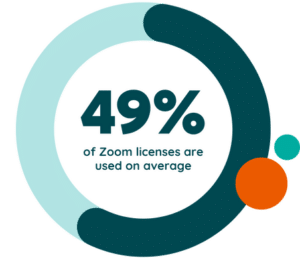
Zylo’s data confirms this: More than half of Zoom licenses go unused—a massive source of waste in today’s cost-conscious environment.
With average Zoom spend topping $330k annually, missteps in license management are more than operational headaches—they’re budget risks. And with Zoom clamping down on free users and expanding offerings like Zoom Phone and AI Companion, the pressure to manage licenses strategically is only increasing.
This blog is your tactical guide to doing just that. I’ll show you how to assign, manage, and optimize Zoom licenses with precision—and how IT, SAM, and procurement teams can use data and automation to turn license sprawl into measurable savings.
What Is Zoom License Management?
Zoom license management is the process of assigning, tracking, and optimizing Zoom licenses across an organization. It ensures users have the appropriate access based on their needs—without overpaying or creating risk.
Key tasks include:
- Tracking license assignments and types
- Monitoring usage to flag inactive or underused accounts
- Reclaiming or reallocating licenses as roles change
- Using data to inform renewal and downgrade decisions
In my work with Zylo clients, I’ve seen firsthand how quickly Zoom license costs grow when left unmanaged. But I’ve also seen how quickly teams can regain control. Once they replace manual tracking with clear data and automation, they shift from reactive cleanup to proactive optimization.
With Zoom’s license models growing more complex, centralized license oversight is critical to control costs and keep systems aligned with business needs.
Why Zoom License Management Matters for Enterprise IT
Zoom is easy to deploy, but without deliberate license management, it becomes a hidden source of waste and risk. Enterprise IT teams need more than basic visibility—they need ongoing control, compliance readiness, and scalable processes.
In my experience, Zoom license management consistently delivers three high-impact outcomes:
Cost Containment and License Visibility
Without visibility, IT teams can’t identify inactive licenses or adjust plans based on real usage. With over 50% of Zoom licenses going unused, the cost of unmanaged access is significant. License optimization starts with a real-time view of who has access and how often they use it.
License Reassignment and Provisioning Workflows
As roles change and employees exit, licenses often stay assigned unnecessarily. Automated provisioning and deprovisioning—such as through SSO groups—ensures timely reclamation. It also minimizes risk by eliminating manual gaps in user offboarding.
Compliance and Renewal Management at Scale
Zoom renewals come with risk: license minimums, add-on bundles, and limited downgrade windows. Without centralized renewal tracking, companies miss opportunities to rightsize. A license management solution gives IT access to usage trends and renewal timelines, enabling proactive decisions before contract lock-ins.
Types of Zoom Licenses, Add-Ons, and Pricing Explained
Zoom offers a variety of license tiers and add-ons, each with distinct features, user caps, and pricing. Understanding these options—and aligning them to user roles—is essential to avoid overprovisioning and wasted spend.
Core Zoom Meeting Plans
Unlike suite solutions with a matrix of plans and products (think: Microsoft 365), Zoom is more straightforward. Organizations select just one type of plan and receive a capacity of free licenses based on the number of users they have.
- Basic (Free): For light users or contractors. Allows meetings up to 100 participants, capped at 40 minutes. No cloud recording or admin controls. Note: Zoom now limits organizations to one free Basic user for every 10 paid licenses, reducing flexibility for large teams.
- Pro: Ideal for small teams or frequent hosts. Includes up to 30 hour meetings, 5 GB of cloud storage, and Zoom AI Companion access (included with all paid plans).
- Business: Suited for mid-size teams. Requires 10+ licenses. Supports 300 participants, SSO integration, company branding, and unlimited meeting durations.
- Business Plus: Best for roles needing integrated calling. Includes all Business features, adding Zoom Phone and 10 GB cloud storage per user.
- Enterprise: Built for large-scale deployments. Custom priced for 250+ licenses, with higher participant limits (500–1,000), unlimited cloud storage, and white-glove support.
Moving from Pro to Business or Enterprise adds cost and complexity fast. My recommendation is to always start by mapping license types to actual roles and usage. License minimums and bundled features can quietly inflate spend if plans aren’t aligned. Usage data helps validate what each team truly needs—and what they don’t.
Zoom Add-Ons and Product Suite
- Zoom Phone: VoIP calling with domestic or international plans. Available as a standalone product or included in Business Plus and Enterprise tiers.
- Zoom Webinars and Events: Paid separately. Best for teams running large-scale external sessions.
- Zoom Rooms: Licenses for hardware-based conference rooms.
- Zoom AI Companion: Included in paid plans. Provides AI-powered meeting summaries, live insights, smart recording chapters, and more—at no additional cost.
Zoom’s add-ons expand functionality, but only if they’re used. I’ve worked with teams that unknowingly paid for Webinars, Phone, or Rooms features assigned to inactive users. These add-ons are often over-assigned by default. Regular audits and smart reassignment help keep high-cost features where they deliver value—and out of places they don’t.
Zoom Pricing Overview
Zoom pricing varies by license type, add-ons, and contract structure. Here's a general breakdown based on annual pricing
- Pro: $149–$159 per user/year
- Business: $199–$219 per user/year (10-license minimum)
- Business Plus: $240–$300 per user/year (includes Zoom Phone)
- Enterprise: Starts around $240+ per user/year with negotiated terms
- Zoom Phone (Standalone): $120–$180 depending on call regions
- Webinars: From $690/year for 500 attendees
- Zoom Rooms: $499/year per room
Price jumps between tiers can appear incremental per user—but add up quickly across large teams. I’ve seen organizations get locked into higher tiers during renewals without reassessing actual feature use. Always evaluate utilization before committing to bundled pricing or long-term contracts. Negotiation leverage improves when you bring usage data to the table.
Zoom License Plans Breakdown
4 Common Challenges with Zoom License Management
The most common issues with Zoom license management are manual tracking, poor visibility, and over-assignment of costly features. These gaps drive unnecessary spend and make it harder to manage licenses proactively at scale.
Manual Tracking and Spreadsheets
Many teams still manage Zoom licenses in spreadsheets. The problem? They don’t update in real time, can’t connect to usage data, and require constant manual effort. That makes it nearly impossible to make timely, informed decisions before renewals or reassignments.
Underused and Unassigned Licenses
Licenses are frequently assigned to users who rarely or never log in or have a Pro license but never host meetings more than 40 minutes. Worse, others sit as shelfware due to role changes or employee turnover. Without usage data, these idle licenses persist and inflate software costs with no return.
Visibility Gaps Across Departments
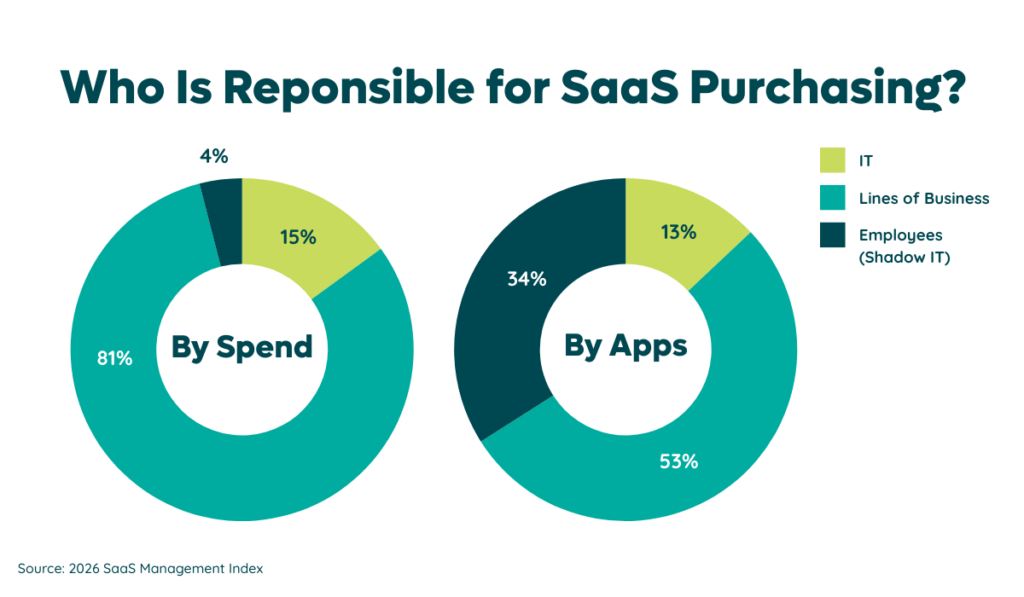
Decentralized purchasing makes license management even harder. Zylo data shows that 85% of SaaS spend and 87% of apps are purchased outside of IT—and Zoom is no exception. Business units and individual employees often acquire licenses directly, resulting in duplicate accounts, inconsistent license types, and limited visibility across the enterprise.
Over-Assigning Costly Features
Zoom add-ons like Webinars, Large Meeting licenses, and Zoom Phone provide advanced capabilities—but only when used. Without clear criteria for assignment, these features often go to users who don’t need them, leading to bloated costs and missed downgrade opportunities.
How to Assign and Reassign Zoom Licenses
To manage Zoom licenses effectively, organizations need to combine basic administrative steps with automated workflows and usage insights. This ensures licenses are only assigned when needed, easily reclaimed when unused, and always aligned to user roles.
Step-by-Step: Assigning Licenses in Zoom
Assigning a license manually via the Zoom Admin portal involves:
- Go to User Management > Users.
- Add or select a user.
- Choose the correct User Type (Basic, Pro, Business, etc.).
- Assign relevant add-ons, if needed.
- Click Save.
For assigning multiple users at once, Zoom allows bulk assignments via CSV upload. This works for small teams—but in enterprises, manual assignment is inefficient and prone to errors.
Deprovisioning and Reassigning Zoom Licenses
Deprovisioning and reassigning Zoom licenses is made more efficient with a SaaS Management Platform (SMP). For instance:
- Identify inactive and downgradable licenses with login activity and meeting duration data.
- Confirm license reclamation with users through automated workflows.
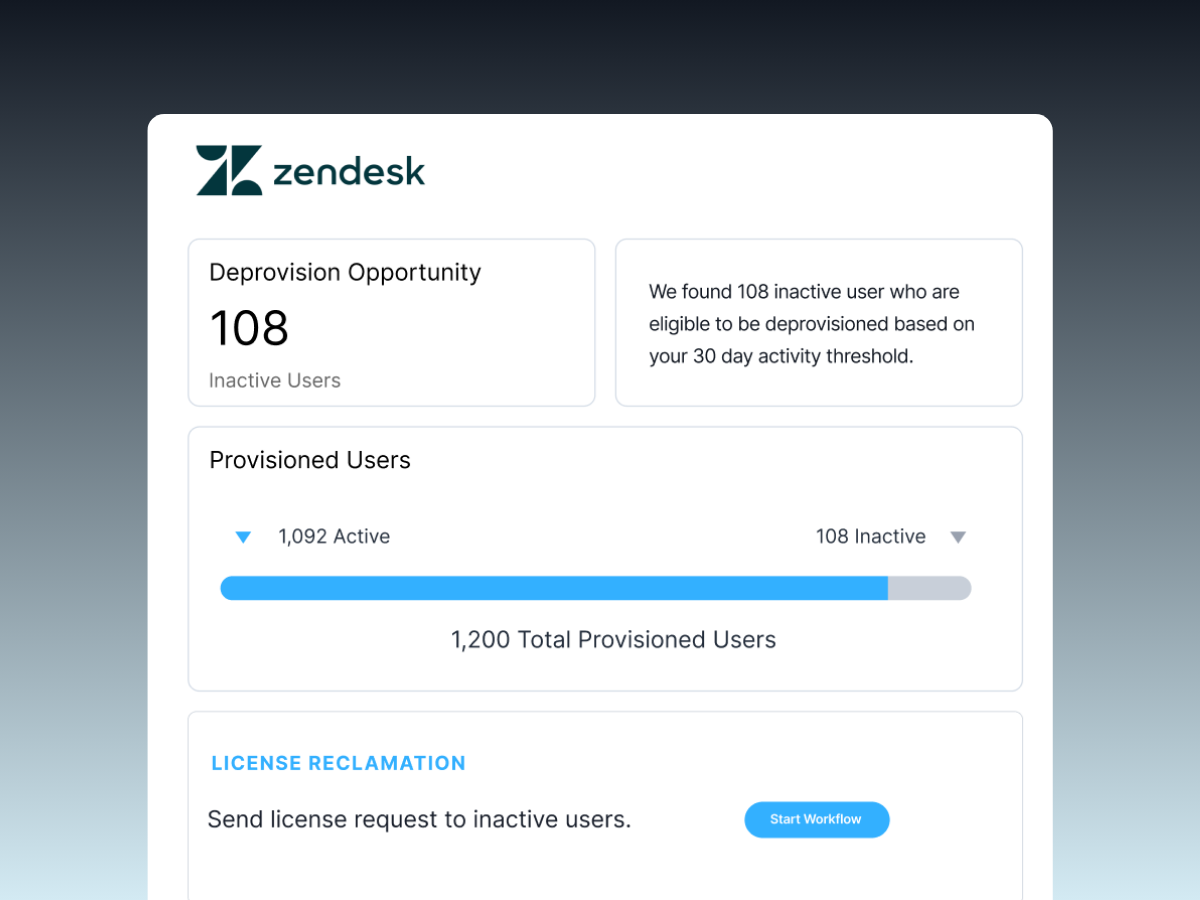
- Deprovision inactive users with Zylo or by sharing a list with your IT admin.
- Reassign licenses to new users based on real-time needs.

5 Steps to Optimize Zoom Licenses at Scale
To optimize Zoom licenses, organizations must combine visibility, automation, and data-backed decision-making. These five steps create a repeatable framework to reduce waste and keep Zoom aligned with business needs.
1. Centralize License Visibility
Start by consolidating all Zoom license data in one place. Use a SaaS Management Platform to connect admin panel data, SSO activity, expense records, and HRIS systems. This gives you a complete view of:
- Who has a license
- What license type they hold
- How often they use Zoom—whether they’re hosting meetings and for how long
- Where licenses are inactive or underutilized
Without this visibility, optimization is guesswork.
2. Set Usage Thresholds to Identify Inactive Licenses
Define what “inactive” means for your organization—30, 60, or 90 days with no logins or meeting activity. Then, use those thresholds to automatically flag users who aren’t using or are under-using their licenses. This is the foundation for safe, scalable license reclamation.
3. Automate License Reclamation
Manual reclamation doesn’t scale. Instead, build workflows to automatically remove or reassign licenses based on inactivity. Effective programs
- Notify users before reclaiming their license
- Require revalidation if a license is still needed
- Auto-reassign or downgrade licenses based on usage patterns
Automation ensures ongoing optimization without burdening IT teams.
4. Align License Types with Actual Needs
Not every user needs a paid license (e.g., Business Plus, Enterprise). If a user does not host meetings longer than 40 minutes, a Basic license likely will suffice. Use role and usage data to match users to the appropriate tier. The goal is to prevent over-licensing by default.
5. Prepare for Renewals with Accurate Data
Don’t wait until a month before your contract renews to evaluate your needs. Use real-time data to forecast license demand and identify opportunities to rightsize. This enables IT and procurement to renegotiate based on facts, not assumptions.
Zoom License Optimization in Action
One Zylo client came to us with a familiar problem: Zoom costs were climbing, but no one could say exactly why. Licenses were over-assigned, usage was unclear, and renewals felt more like guesswork than strategy.
By using Zylo’s SaaS Management Platform, the team transformed their approach to Zoom license management.
Here’s how they did it:
- Integrated Zoom with Zylo to gain a unified view of license assignments and activity.
- Identified more than 1,700 paid licenses with no activity in the last 90 days.
- Automated license reclamation workflow to deprovision inactive users.
- Realigned license types based on actual needs.
- Leveraged usage data to eliminate unnecessary licenses at renewal.
They saved $164,000 over two years, cut license bloat, and built a sustainable license management process. And because it runs on automation, they’re optimizing continuously.
Make Zoom License Management Easier with Zylo
Managing Zoom licenses through the admin portal alone leaves too much to chance. Manual reviews, inconsistent assignments, and decentralized purchasing quickly spiral into overspend and risk.
Zylo is purpose-built to solve these challenges. With the industry’s most advanced SaaS Management Platform—and direct integration with Zoom—Zylo gives IT, SAM, and procurement teams continuous control and measurable results.
Designed for Continuous Control: Ongoing Visibility
Zylo unifies license, usage, and financial data in one system of record. It surfaces:
- Which users have which Zoom licenses
- How often those licenses are actually used
- The duration of each meeting per user
- Where the costly Webinar add-on is underutilized
Instead of relying on static spreadsheets or admin panels, teams get real-time visibility that scales across the enterprise.
Direct Integration with Zoom
Zylo integrates directly with Zoom to pull in license assignments, feature usage, and login activity. This eliminates the guesswork and ensures data stays accurate—without manual exports or uploads.
With Zylo’s Zoom integration, organizations can:
- Spot inactive licenses faster
- Track adoption of add-ons like Webinars
- Reduce reliance on native admin tools that lack context
Turn Insights Into Savings
Zylo shows you where waste exists and gives you the tools to act on it. License utilization dashboards and cost benchmarks help prioritize which licenses to reclaim or downgrade. Customers regularly reduce Zoom costs by tens of thousands of dollars through informed reclamation alone.

Automate License Governance with Zylo Workflows
Manual reviews and license cleanup often fall behind. Zylo Workflows automate routine decisions, reduce risk, and keep your Zoom environment efficient.
Here’s how Zylo helps
- Survey users to confirm if Zoom access is still needed
- Reclaim inactive licenses automatically
- Suppress execs or critical roles from automation
- Maintain license hygiene with less manual effort
Confidence at Renewal and True-Up
Renewal season is no time for guesswork. Zylo arms you with usage trends, license adoption rates, and benchmarks to:
- Forecast true license needs
- Eliminate shelfware
- Strengthen your position in vendor negotiations
By combining real-time data with renewal timelines, IT and procurement teams can partner more effectively—and avoid surprise costs at true-up.
Take Control of Zoom Licenses Today
Zoom sprawl, unused add-ons, and license overages don’t have to be the cost of doing business. With visibility, automation, and clear workflows, IT and SAM teams can cut waste, improve governance, and take back control—without chasing spreadsheets or missing renewals.
I’ve seen it firsthand: organizations that manage Zoom licenses as an ongoing process save more, negotiate better, and strengthen their role as strategic partners to the business.
Ready to find your Zoom waste—and reclaim it? Book a demo to see how Zylo makes it possible. Or explore the latest trends in the 2026 SaaS Management Index Report.
FAQs About Zoom License Management
Go to User Management > Users in Zoom’s admin portal. You’ll see assigned license types, but not usage. For deeper visibility—like login activity or inactive users—integrate Zoom with your SSO or a SaaS Management Platform like Zylo.
Yes. You can manually reassign licenses via the admin portal. For scale and accuracy, use automation to flag inactive users, reclaim licenses, and reassign based on actual usage.
Zoom plans range from Pro ($149/year) to Enterprise (custom pricing). Add-ons like Webinars or Zoom Phone increase cost. Pricing varies based on volume, contract length, and features bundled.
Zoom offers Basic (free), Pro, Business, Business Plus, and Enterprise. Each tier adds features like longer meetings, SSO, or phone integration. Choose based on role and usage needs.
AI Companion is now included in all paid Zoom plans. No separate license is required. Focus on adoption to ensure your teams get value from AI features already included.
Use the admin portal under User Management to assign, remove, or change license types. For large teams, automate these tasks through integrations with your SSO provider or a SaaS Management Platform.
In Zoom’s admin portal, go to Account Management > Billing > Current Plans to view total, assigned, and available licenses. For faster insights and license trends over time, use a SaaS Management Platform to monitor availability and automate alerts.
Zoom Basic is free with 40-minute group meetings and no cloud recording. Zoom Pro allows longer meetings (up to 30 hours), cloud storage, and additional admin controls.