Blog
How to Control OpenAI API Costs Before They Escalate
Table of Contents ToggleWhat Is OpenAI API Pricing?Usage-Based Pricing vs. Subscription...


Back

Back

Search for Keywords...
Blog
Table of Contents
Updated on April 16, 2026 with new data
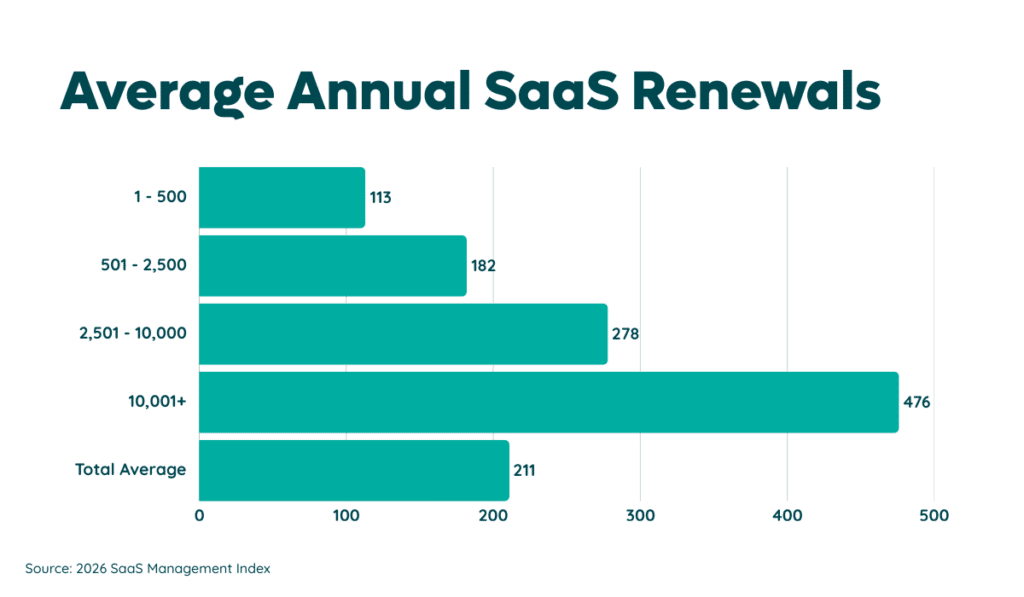
SaaS applications are used all across your organization. Keeping track of all these SaaS applications and their contracts, and your SaaS subscription renewals can be difficult, especially when you consider the pace of SaaS acquisition. Consider that the average organization has experiences 211 renewals each year, or approximately one per business day, according to Zylo’s 2026 SaaS Management Index. If you’re missing renewals or constantly feel like you don’t have time to proactively manage them, it’s time to improve your SaaS renewal strategy.
If you’re adopting SaaS, renewals have become a part of your reality. For many organizations, they see renewals sky-rocket at the end of the year.
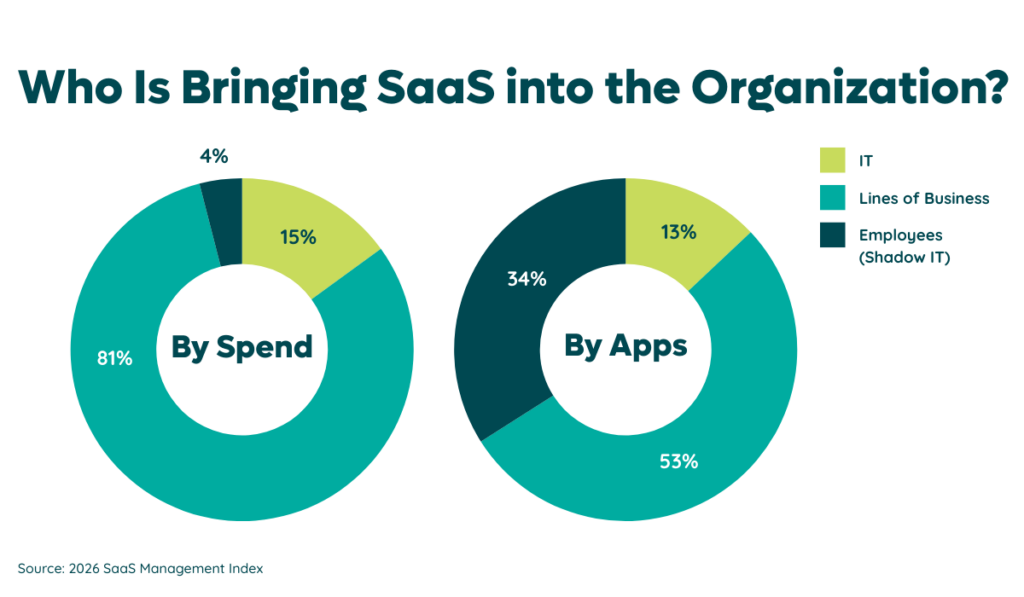
One of the reasons renewals catch people off guard is that they don’t have a central system to document all of their SaaS applications. SaaS is often decentralized: IT controls only 15% of SaaS spend and manages only 13% of those applications. The other 85% of SaaS applications are being purchased and renewed by teams and individuals who likely don’t have insight to your organizational SaaS strategy.
Not being prepared for renewals is more than an inconvenience. When SaaS automatic renewals slip by unnoticed you could be missing out the opportunity to negotiate your contracts, or even allowing your organization to pay for entire systems you don’t need. When renewals aren’t planned for it’s easy to make quick decisions that aren’t based on data, and simply go with your gut. All of the above can put compliance and security policies at risk and can be a slow hemorrhage for budgets.
Proactively managing renewals is one of the key elements of a holistic SaaS Management strategy. If your organization only deals with renewals only when they pop up in a reactive fashion, you likely aren’t maximizing the value of your SaaS investments. A strong SaaS renewal strategy empowers you to cut SaaS costs and risk. Renewals are an important element to optimizing your SaaS investments.
 Creating a SaaS renewal strategy prevents you from getting surprised by auto-renewals. When you take the time to invest in a strategy and a proactive approach, you’re no longer at the mercy of looming deadlines and surprise auto renews. Rather you have the time to partner with business units and leverage data to make informed decisions. All of the above will keep your entire organization on the same path.
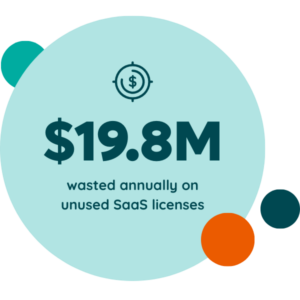
A strong renewal strategy can also help rightsize your portfolio – ensuring you’re only paying for the apps you need and functionality your team is actually using. An average company wastes $19.8M on unused SaaS licenses. A SaaS subscription renewal tactical plan can prevent that loss. For example, ModMed achieved $3M in cost savings and avoidance through license rightsizing at renewal.
The Practical Guide to Rationalizing, Rightsizing and Renewing SaaS
Learn MoreNow that you know the importance of a proactive approach to SaaS renewals – how you can put these subscription renewal best practices into action? The first step is gaining insight into your software renewal process, then developing a strategy using the following:
Take a 30,000 foot view of your organization. When you have a complete list of the SaaS applications purchased by every business unit and individual in your organization, you can begin to see what has likely gone unnoticed. Discovery is vital! You can’t effectively plan for renewals when you don’t even know an application is being used in your organization.
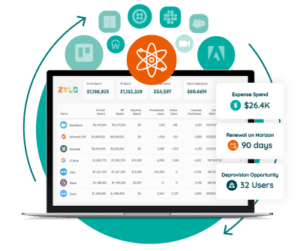 Proper discovery allows you to get a full picture of your SaaS portfolio – from the company-wide, enterprise level licenses approved by the CFO, all the way to rogue applications purchased by teams and individuals. Applications obtained via free trials need to also be included in your review, considering that most free trials will automatically charge a credit card on file once the initial period is over.
A renewals calendar is the cornerstone to an effective SaaS renewal strategy. By creating a high level view, you can more effectively anticipate renewals and have the time you need to make better renewal decisions.
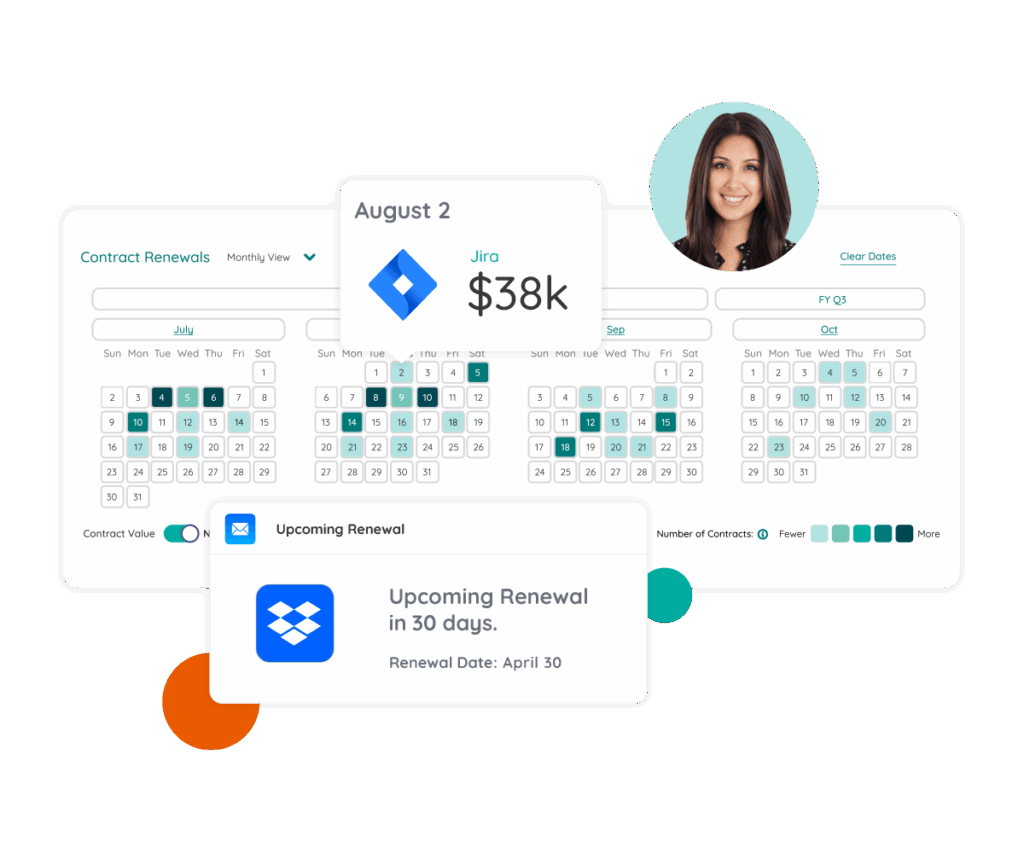 This calendar should have a few key details like renewal dates and information about your SaaS agreements in one location. A renewal calendar equipped with contract insight enables you to work with the appropriate business units, teams, or employees to proactively tackle each SaaS renewal.
Make it a priority to build relationships with the team leads who purchase SaaS applications regularly. Meet with these people often to understand their goals for each SaaS tool. It’s also important to understand who purchased each application and why. This allows you to assign SaaS ownership, make sure those stakeholders are also aware of renewal dates, and work together as a team to understand usage and best optimize contracts for future use.
Data is king. When you can make strategic insights into your SaaS health — understanding the current use, spending, and other characteristics for each SaaS application — you can make informed decisions about whether or not to renew. This data can help you negotiate better terms with the SaaS vendor when those renewals roll around.
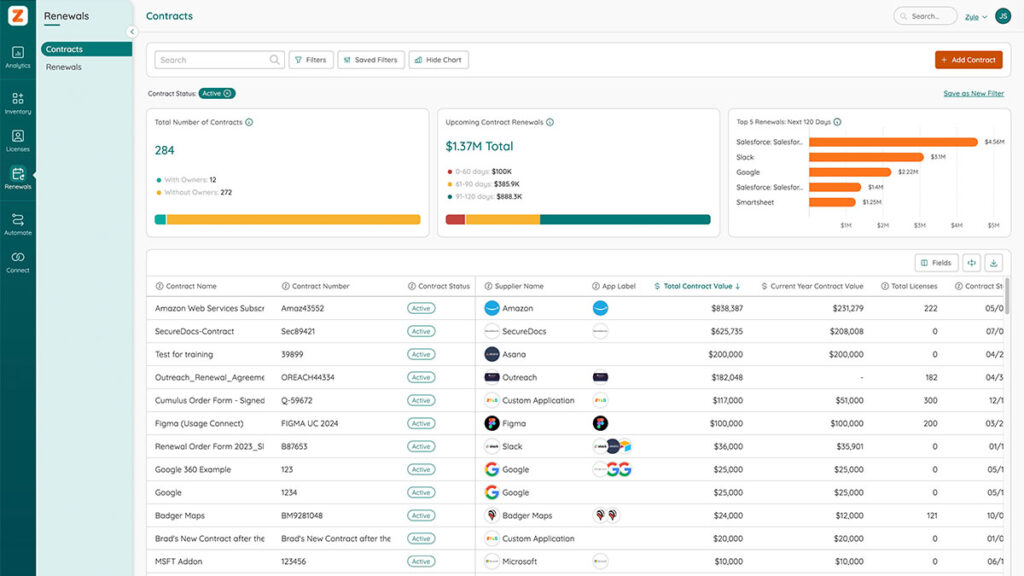
When organizations are first starting out with SaaS Management, it’s not uncommon for them to use a manual, spreadsheet-based approach to managing renewals. SaaS portfolios are constantly changing; this manual approach is time-consuming and prone to error. Instead, consider partnering with a SaaS Management vendor that offers an up-to-date calendar of all SaaS renewal dates and notification periods. You can also receive alerts when a renewal is approaching.
Improving your SaaS renewal strategy can be a powerful way to cut the costs and risk of unmanaged SaaS growth. The few steps listed above will set you on a path to success.
Are you doing everything you need to for a more effective SaaS renewal strategy? Check out the Practical Guide to Rationalizing, Rightsizing, and Renewing SaaS, grab this free renewals checklist, or visit our SaaS Renewal Management Resource Center.
Table of Contents ToggleWhat Is OpenAI API Pricing?Usage-Based Pricing vs. Subscription...

Table of Contents ToggleTL;DR: FinOps Cloud Cost Optimization Expands in ScopeWhat...
Table of Contents ToggleIntroducing Zylo’s Consumption Cost Management SolutionSystem of Record...

Table of Contents ToggleWhy Businesses Need a Better SaaS Renewal StrategyHow...